
 •
Rating:
•
Rating:
THE REVIEW
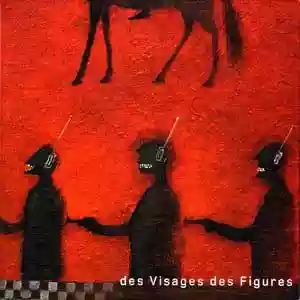
September 11, 2001 is a tragic date in our collective imagination; the terrible attack on the Twin Towers shocked the entire world and the lives of countless families who lost their relatives on that dramatic day. But on September 11, 2001 in France, Des Visages Des Figures by the Noir Désir was released, a well-regarded band from across the Alps that had already gained appreciation for high-quality albums such as Tostaky and Du ciment sous les plaines. This release had also gained attention beyond the national borders (for example, Tostaky was produced in London).
One might object to this introduction with a legitimate assertion: "What's the connection between the two events?"; well, Bernard Cantat, leader of the Bordeaux band and lyricist, named track number two "Le grand incendie". This makes the album even more enigmatic and mysterious.
It's their most "commercial" album (clearly, to call this album commercial would be like saying that donkeys fly, and you know very well that donkeys do not fly), as evidenced by its stay at the top of the charts among the most listened tracks of "Les vents nous porteront", the million copies sold, and the countless awards brought home by the band.
But the entire album is infused with a dark, desolate, stagnant atmosphere of anger and melancholy. Poetry reigns supreme, as demonstrated by the compositional skill of the frontman, who is adeptly its main interpreter. With his shy and sensitive, angry, and alluring tone; the other band members skillfully paint an impressionistic background instrumentally.
This is the key to the album's interpretation, then the erudite and sophisticated lyrics, as well as the themes addressed in them by the visionary Cantat, provide further depth to the work. Overall, the already mentioned "Le vent nous porteront", which also features Manu Chao on guitar, stands out, as does the title track "Des Visages des Figures", a ballad that is both subdued and inherently incendiary; as well as "L'envers à l'endroit", a track both electronic and subtle (On peut caresser des idéaux sans s'éloigner d'en bas, On peut toujours rêver de s'en aller mais sans bouger de là), which, along with "L'enfant roi" and the marvelous "Des armés" set to the tune of a poignant piece by Léo Ferré, are all delicately balanced between singer-songwriter and refined psychedelia.
Other tracks worth noting for the change in pace compared to the album's guidelines are "Le grand incendie" itself, tense and urgent, straight to the heart, "Son Style 1" (with clearly electro-punk undertones) and "Lost": lively pieces with a significant impact.
The most challenging (even to review) and pretentious track of the album deserves a separate chapter: track number 12, "L'europe", a true act of mockery against Europe; 24 minutes of bitter reflections written by the singer along with Hungarian multi-instrumentalist Akosh Szelevényi and Brigitte Fontaine: against everything and everyone. A critique of the entire Western world with a harsh and raw language. Urgent and passionate, distressing and epic, wonderfully set to music in perfect conformity with the writing.
This is clearly the album of their international consecration, given the sudden visibility obtained by Noir Désir, who entered (and then quickly exited) the Mtv circuit and the musical Main Stream. If you focus on the band aside from this, you notice an educated and refined use of music, musically impeccable, visionary, and dreamlike. The highest point of their artistic production, which oddly coincided with their success.
A superb album with infinite symbolic value, loaded with emotions and sentiments as strong as they are sincere.
Loading comments slowly
Summary by Bot
Noir Désir's Des Visages Des Figures is a seminal French rock album blending poetic lyrics with a dark, melancholy atmosphere. The album features standout tracks like "Les Vents Nous Porteront" and the epic "L'Europe," showcasing the band's artistic peak. Despite its commercial success, the album maintains a raw, emotional depth and political critique. It marks Noir Désir's international breakthrough and remains a powerful, symbolic work.Tracklist Lyrics Videos
Noir Désir
Noir Désir are a French rock group from Bordeaux. They rose with Tostaky (1992) and reached broad recognition with Des visages des figures (2001) and the hit Le vent nous portera featuring Manu Chao. Their career ended following events in 2003; the band disbanded in 2010.09 Reviews
Other reviews
By Rivo
A poor product, far from their best ideas.
This mix is neither fish nor fowl.
By Rohan
It’s a superlative concentration of French ethnic rock punk sounds, sadness, and anger towards the political world in general.
L'Europe, a magnificent piece that despite its 20 minutes never becomes boring but rather with its frenetic rhythm changes is irresistible!
