
 •
Rating:
•
Rating:
THE REVIEW
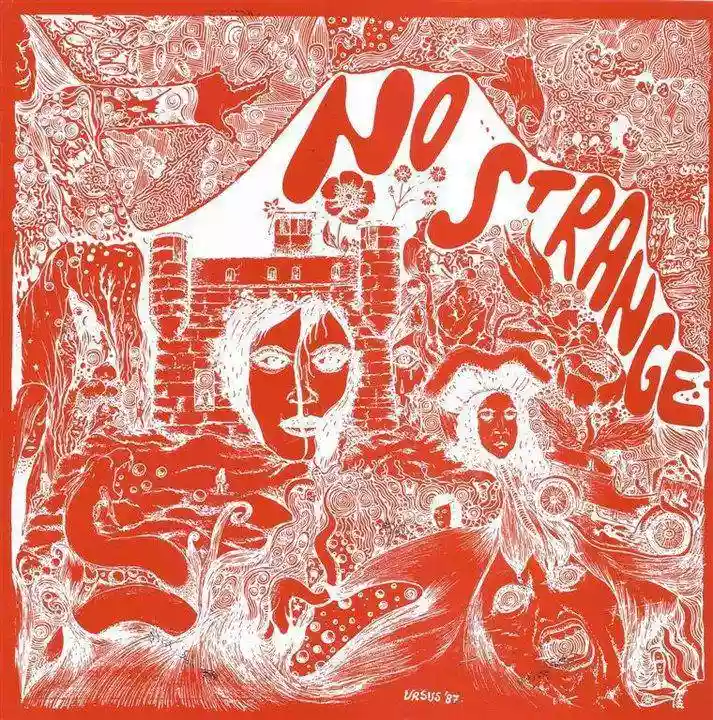
In the whirlwind of sonic colors and astral visions of 1990, No Strange, guardians of the psychedelic essence, gifted us with their magic-infused masterpiece, "Flora di Romi". Founded by Salvatore 'Ursus' D'Urso and Alberto Ezzu in the dark 1980, these musical alchemists embraced a fluid and cosmic psychedelia, a sonic journey influenced by indo/raga trance, acid folk, and krautrock innovation.
In this sonic enchantment, the No Strange have always rejected the chains of labels, immersing themselves in psychedelia as an exploratory ritual, rather than a limited genre. "Flora di Romi" emerges as a monolith of their existential philosophy, a symphony of visions dancing between oriental philosophies, kaleidoscopes of colors, and sounds suspended in infinity.
Although the journey of "Flora di Romi" presents the absence of Alberto Ezzu, the rest of the group, with Salvatore "Ursus" D'Urso, Laura Tommasi, Pino Molinari, Sandro Becchis, Lucio Molinari, and Paolo Avataneo, continues to illuminate the path with the same intensity. The voice of "Ursus" is a spell, the percussion a heartbeat of mystic rhythm, the winds of Laura Tommasi weave the cloak of the unknown. Guitars, keyboards, drums, and bass unite in a symphonic embrace, guiding the listener through timeless soundscapes.
"Flora di Romi" is more than an album; it is a portal to a dimension beyond the everyday, where the boundaries between music and magic vanish. The tracks unfold like dreamlike paths, revealing soundscapes in constant metamorphosis.
The legendary psychedelic legacy of No Strange has not dissolved over time. Even today, the group persists in its journey, releasing new sonic spells that continue to defy conventions. Their music is an invitation to explore the unknown, a call to follow them into the recesses of the mind. "Flora di Romi" is their visionary manifesto, a timeless celebration of sonic freedom. No Strange, guardians of the infinite sound, still guide us through the maze of musical possibilities, demonstrating that their journey is an endless continuum, an eternal dance between the past, the present, and the future.
The record was recorded live, without overdubs, in the home studios of Alberto Ezzu who at the time lived in Avigliana, near the lakes. Practically, it is as if it were a live album. Currently, "Flora di Romi" is considered the rarest record of No Strange, because the editions were more limited in that graphic design, and few copies circulated in Italy; most of them went abroad, especially to Japan where they now reach very high market prices. The title FLORA DI ROMI refers to an Indian squaw that appeared in a 1950s comic book. The album remained in the Toast archives for about 2 years before being printed. The vinyl pressing happened thanks to the collaboration of the collector Francesco Leo, unfortunately deceased. But Toast stubbornly refuses to reprint anything from the old catalog. Available on YouTube: https://www.youtube.com/watch?v=0w0tZO96--U.
Loading comments slowly
Summary by Bot
Flora Di Romi by No Strange is a vibrant psychedelic album from 1990 blending cosmic and oriental sounds with influences from acid folk and krautrock. Despite the absence of founding member Alberto Ezzu, the band creates a mystic, immersive sonic experience recorded live in home studios. This rare vinyl record is highly valued, particularly in Japan, and exemplifies No Strange's enduring legacy as pioneers of sonic exploration.Tracklist
No Strange
No Strange are a Turin-based Italian psychedelic group formed at the end of the 1970s, led by Salvatore “Ursus” D’Urso and Alberto Ezzu. Reviews describe them as a cult cornerstone of Italian neo-psychedelia, blending kraut/cosmic influences, acid-folk, raga/oriental elements, and a strong visual-art identity (with Ursus credited for the band’s covers).19 Reviews
