
 •
Rating:
•
Rating:
THE REVIEW
There exists, especially in the realm of classical music but not only, the concept of "absolute" music. We could try to simplify it by saying that music, of any genre or era, has intrinsic characteristics, internal structures that, like a mathematical formula, manage to make what I often call the container and content merge. In this way, a composition of absolute music is born; that is, music that manages to surpass the limit represented by what were originally the expressive intentions of the artist who created it. This introduction seemed to me the best way to talk about a work by a group like Nine Inch Nails, an undisputed icon of Industrial music.
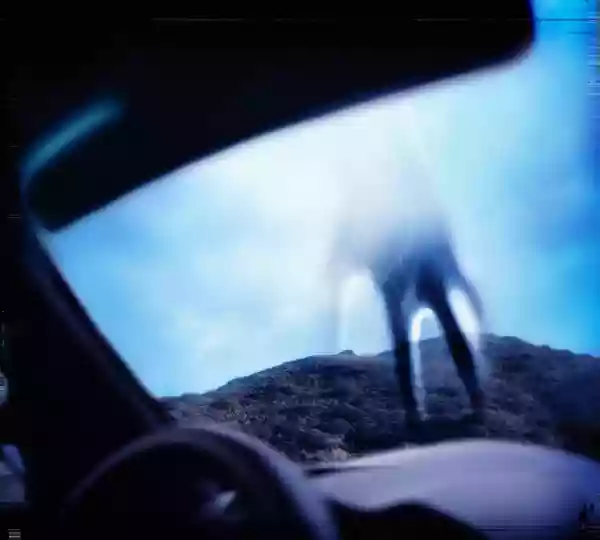
Beyond Trent Reznor's undisputed ability to "translate" the typical language of Industrial into something more accessible to broad audiences, mainly approaching more traditionally rock sounds, the infinitely greater merit of his work lies in the creation of powerfully "absolute" musical structures. It is also true that an album like "Year Zero" is an openly political and direct work, certainly compared to "The Fragile," where Reznor laid bare his more intimate and personal side. But the great merit of this realization, in my view underrated, is that it surpasses precisely the limits of what is directly stated in the sounds and lyrics of the individual tracks. It is entirely superfluous to know, for instance, that "The Good Soldier" refers to something related to wars, and even less so that it concerns those fought under the Stars and Stripes: for its admirable fluidity, the barely contained tension, the piece is a spiritual gem that could be about anything. What we perceive then is not merely a trite invective against war itself, but even a "regret" for the wars of yesteryear, when there was no pettiness in fighting them using unmanned aircraft; this is the "depth" of a piece of absolute music. That is, not forcing us to go in a single direction in our perception of a track, but leaving our consciousness open to the reception of a broader truth. The pressing drums with which "Hyperpower!" and the entire album open are simply and absolutely a workers' tumult in the face of advancing technology in factories, perhaps at the beginning of the 1900s. This is the point: it does not matter if an alien appears on the album cover. The absoluteness - and the objectivity - of this music is such as to lead the listener toward a broader interpretation of what would seemingly be suggested to him. Nothing prevents us from considering the mechanical noises that serve as the background to "Vessel" an allusion to the machinery of a 1970s factory, where work still had dignity. Or again: why force ourselves to receive "Capital G" perhaps as an obvious denunciation of current consumer alienation? It can mean an infinite number of other things. While "God Given" brings us back to pure Nine Inch Nails, "The Greater Good" is the epitome of the most alienating and grotesque aspects of globalization: a hallucinatory atmosphere with a vaguely tribal undertone, almost the image of the contrast between prehistoric Africa and the computer age. Something similar also appears in "Another Version Of The Truth" where, however, that ethereal piano lets us glimpse the light at the end of the tunnel, tells us that, as in "Blade Runner," the rain will eventually stop, and the sun will reappear to light up our lives... A feeling completely sealed by "Zero Sum," which closes the work almost with a sense of redemption.
In the end, in conclusion, we are faced with an excellent example of absolute music. A work that demonstrates the ability to transcend its label, in this case, Industrial, with which it is nonetheless classified. It is the essence of great music, from every time and every genre.
Loading comments slowly
Summary by Bot
This review praises Nine Inch Nails' 'Year Zero' as a powerful work of absolute music that transcends its industrial label. Trent Reznor's ability to blend political messages with expansive, multi-interpretative musical structures creates an album of significant depth and accessibility. The album's tension, themes, and fluidity invite listeners to discover broader truths beyond the lyrics, making it an underrated masterpiece.Tracklist Lyrics Videos
Nine Inch Nails
Nine Inch Nails is an American industrial rock project founded by Trent Reznor in 1988. Reznor is the primary creative force (songwriter, producer, multi-instrumentalist). The project is known for landmark albums such as The Downward Spiral and The Fragile.40 Reviews
Other reviews
By Enkriko
This album is the confirmation that our esteemed Trent Reznor has always been a pop music writer in disguise.
One really wonders where the author of 'March of The Pigs' or 'Closer' has gone.
By beso
Perhaps we are witnessing a multi-instrumentalist genius who has decided at 40 to drop the mask and reveal a part of his soul intentionally hidden until now.
This, in my opinion, is an album much more beautiful than the previous one. More complete, more mature, and damned technical.
By Omega Kid
Year Zero is truly a great album, beware of reviews that trash it.
It seems that Trent Reznor wanted to revisit and expand the architectures of his beautiful Closer.
