
 •
Rating:
•
Rating:
THE REVIEW
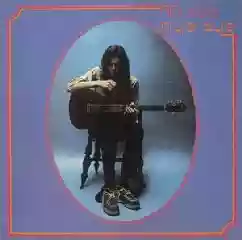
Bryter Layter is Nick Drake's second work after the disappointment of the previous album Five Leaves Left, which did not find the success it deserved.
The album contains its genesis and its story already in the title, which takes up a phrase often used by weather forecast speakers: "brighter later", which means "clearing later" (onomatopoeically rendered in Cockney dialect: precisely Bryter Layter). With this album, in fact, Nick wanted to somehow seek an existential clearing that had been missing for some time, brighten his "northern sky" too often laden with clouds, fears, anxieties, to push back his demons, perhaps coinciding all this with the approval and applause of the people who never (at least while he was alive) understood how great his genius was.
For this album, which was supposed to be the one of consecration, Nick wanted the very best, and not by chance did he work with John Cale on the sumptuous arrangements; Cale was already with Velvet Underground and a regular at Andy Warhol's Factory, and he was literally struck by the figure of the young man from Tanworth-in-Arden.
The result was actually something that borders on absolute perfection... listening to it gives you almost the sensation of entering a parallel world, something detached, disconnected from earthly reality. It's like being suspended in air, almost floating, perpetually moving between Life and awareness, and Death (which will prevail in Pink Moon) and the most complete incomprehension.
The album reaches its highest points with the bittersweet and frivolous "Hazey Jane I", the jazzy "At the Chime Of a City Clock" born from his London stay, but also the melancholic "One of These Things First", where he lists the things he could have been, but will never be... and the surprising and intimate "Poor Boy" and "Northern Sky", a beautiful love song, also centered on the complete acceptance of the other - "Would you love me for my money, Would you love me for my head, Would you love me through the winter would you love me 'till I'm dead".
In addition to the songs, instrumental pieces, magnificently arranged and intertwined, open, close, and support one of the most beautiful albums of all time.
In Bryter Layter, folk-blues - cultured jazz-pop - classical arrangements (Nick Drake loved Bach and just consider Cale's classical training) are mixed and combined perfectly... resulting in an album not to be missed by anyone who appreciates good music and for those who do not yet know Nick Drake.
Loading comments slowly
Summary by Bot
Bryter Layter is Nick Drake's second and more acclaimed album, blending folk, jazz-pop, and classical influences. Collaborating with John Cale, Drake delivers lush arrangements that evoke existential clarity and emotional depth. Highlights include 'Hazey Jane I,' 'Northern Sky,' and 'One of These Things First.' The album is praised as a near-perfect, timeless work not to be missed by lovers of refined music.
Nick Drake
Nicholas Rodney "Nick" Drake (19 June 1948 – 25 November 1974) was an English singer-songwriter noted for three studio albums: Five Leaves Left (1969), Bryter Layter (1971) and Pink Moon (1972).36 Reviews
Other reviews
By Dune Buggy
"You feel like leftover of something that’s gone, immersed in the instrumental sunset of the title-track."
"It’s hard to stay angry when there’s so much beauty in the world."
By andy66
What some consider a virtue, to me is the real great flaw of Nick Drake: the voice.
On a cheerful day, I would never dream of putting on this Bryter Layter.
By maxgit
I was blown away by this record.
"Bryter Layter" is a very beautiful record. Perfect. The best I have ever listened to.
By luludia
This is one of those rare cases where the whole exceeds the sum of its parts.
"Northern Sky" is a song full of hopes, but which does not neglect the subtle cracks, the too-tight shoes of the dream traveler.
By zaireeka
Bryter Layter represents an oasis, an interlude, a hope of happiness in Nick Drake’s world.
I see, I saw, in Nick Drake’s voice in that section, the voice of a mountain stream, and in the saxophone that accompanies it, a butterfly that follows it, painting light paths in the air.
