
 •
Rating:
•
Rating:
THE REVIEW
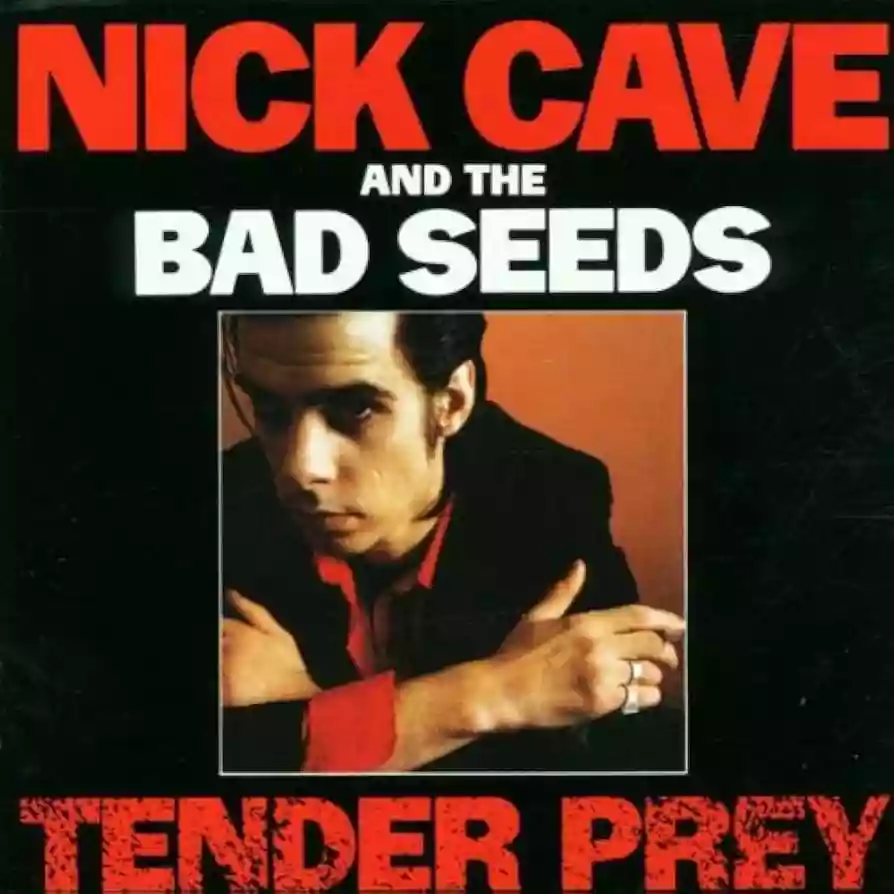
The fifth official album signed by Nick Cave and his loyal Bad Seeds, Tender Prey (Tenera Preda) was released in 1989, marking the beginning of a second phase of artistic maturity for the renowned Australian singer-songwriter. Coming off the critical acclaim of the intense and poetic Your Funeral... My Trial, with this new work Cave raises the stakes. Inspired in some way by the darkest and most ominous sides of society (and the human soul), he writes a handful of songs that once again leave their mark.
The work is expressly dedicated to Pixote, alias Fernando Ramos da Silva, the young protagonist of the film Pixote: la legge del più debole (Pixote: a lei do mais fraco, by Hector Babenco - 1981), which tells the harrowing realities of the Brazilian favelas and the ninos da rua, the children exploited by crime in the most sordid criminal affairs. This tribute to Ramos, the actor who died tragically at the age of twenty, represents the trait d'union between the spirit that moved Cave and—in part—guitarist Mick Harvey, his longtime collaborator in the Bad Seeds, and the romantically cursed atmosphere that imbues the album and its lyrics.
The opening track The Mercy Seat—co-written with Mick Harvey—is in itself a masterpiece within the masterpiece, almost a standalone work, such is its resonance in terms of writing and pathos. Considered by many to be the most beautiful and important song ever written by Nick Cave—and indeed one of the most powerful songs in rock history—it is a kind of intimate river-like confession by a man condemned to the electric chair (the mercy seat), who stubbornly repeats his innocence and his utter serenity in the face of death.
Occhio per occhio
e dente per dente
e comunque io ho detto la verità
e non ho paura di morire
Visually translated by a videoclip in which Cave himself plays the song's protagonist, sitting on the cot of a bleak death row cell, The Mercy Seat is truly one of the pinnacles of his poetics: a cold, brash, disenchanted awareness from a criminal who repeats his perspective endlessly—but never surrenders—only to admit in the final line that he might, after all, have told a lie.
The song’s evocative power alone is worth the price of the album. The strident sounds of violins and guitars, the relentless drumming reminiscent of the execution drums of the past, the steady gait of a voice rich in dramatic nuances capable of sketching out the protagonist's figure and attitude even if one does not understand English. An incredible tour-de-force lasting several minutes that sweeps up and overwhelms the listener. There are numerous references to the tradition of Christian worship and more. From the above biblical quote to the double meaning of mercy seat—which refers not just to the electric chair but also to the propitiatory, the golden lid of the mythical Ark of the Covenant. The truth is, just analyzing the lyrics themselves would deserve a separate review.
About the song and his perception of death, Nick Cave said in an interview: "Once I was able to write things like ‘I am not afraid to die.’ And kids would come up to me and say: ‘Hey, that line means so much to me.’ But I have to say I don’t feel that way anymore. I don't feel so arrogant about death as I once did. I wake up sometimes in a panic about death drawing nearer."
Tender Prey thus continues with nine more songs, and one might say that lined up behind The Mercy Seat they struggle to stand out, even though some display remarkable poetic and artistic quality. Personally, I've always found the tracklist a bit uneven, musically speaking. While the lyrics almost always keep the fil rouge of a romantic and disenchanted gaze on guilt and forgiveness, at times the sound becomes predictable and formulaic. Songs like Deanna, for example, have the flavor of a filler divertissement. The same goes for the insistent and frankly tedious City of Refuge. This, however, is not the case with the nostalgically delicate Watching Alice—the story of a woman shut away in her room and her sad routines—and Mercy (here's a word that comes back), an invocative lament that seems to follow the inner labyrinths of the aforementioned The Mercy Seat; not by chance, also co-written with Mick Harvey. Then comes Slowly Goes the Night, a melancholic ballad that Cave delivers with a crooner’s voice over vintage piano textures. And again, Up Jumped the Devil, the only song co-signed by all the Seeds, with a syncopated and deliberately approximate aura, typically "Cave-like", which we will find again on future albums.
A forerunner of those albums, Tender Prey is, in fact, like a new planting with some forgivable missteps that would soon bear good fruit. Starting with the next remarkable The Good Son, which definitively established the Bad Seeds as flag-bearers of a stylistic crossover rooted in distinguished masters like Johnny Cash and Bob Dylan and itself became a creative template for countless other bands.
Nevertheless, over time the album has solidified its cultural stature. In Australia it is considered a cornerstone of national musical history, included in various elite rankings and halls of fame. At the time, Nick Cave himself did not cast a serene or constructive light on the making of the album, declaring that it had been a nightmare and reflected an almost idea-less collective, with dreadful performances from a musical perspective. Though later he reconsidered, with hindsight.
Loading comments slowly
Summary by Bot
This review delves into 'Tender Prey' by Nick Cave & The Bad Seeds, praising its raw intensity and thematic depth. The reviewer highlights the album's distinctive sound and emotionally charged lyrics, underscoring its impact on fans of gothic and alternative rock. Despite a few flaws, the record stands out as a bold, influential release in the band's discography. Highly recommended for those seeking dark and poetic musical experiences.Tracklist Lyrics Videos
Nick Cave & The Bad Seeds
Australian rock group led by singer-songwriter Nick Cave, formed in 1983; known for dark, literary songwriting that spans blues, post-punk, gospel and experimental sounds.44 Reviews
Other reviews
By Enkriko
"A slap, a horrendous scream of despair, and a cry for help: all these things are locked in the unhealthy treasure chest of Tender Prey."
"'Mercy Seat' is a masterpiece of arrangements and a true sonic maelstrom without borders to contain it."
By RedStrawHat
"He declares himself innocent in the legendary 'The Mercy Seat' from the darkness of a cell to the electric light of the chair."
"'Slowly Goes The Night' piano-bar-heroin, torments, pleas, bitterness, and darkness blend softly with the most sentimental Cave."
