
 •
Rating:
•
Rating:
THE REVIEW
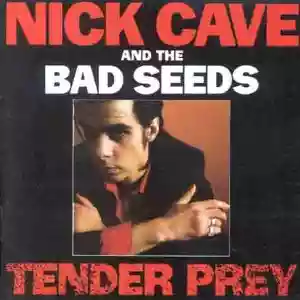
How is it possible that on a quality music site with a bucketful of reviews of Burzum, Defecatius Intestinalis, and Motosega Agguerrita, there isn't a mention of King Ink's masterpiece, here at the peak of his musical and self-destructive career?
Drenched in genius and shabbiness, he throws himself full throttle against a wall of damnation along with the loyal Bad Seeds and the insane Kid Congo Powers, co-opted from the Gun Club.
The result is a melee of drugged mysticism, ancestral fears, alcohol-induced dementia, and a punch in the face to those who praise the heroin-chic style... a slap, a horrendous scream of despair, and a cry for help: all these things are locked in the unhealthy treasure chest of Tender Prey, conceived under extreme and all-consuming psychological and physical conditions.
"Mercy Seat" is the masterpiece we all know, the song that even Johnny Cash honored in the third volume of his American Recordings: a wild and paranoid ride lodged in the mind of a death row inmate babbling about his final days, first denying and then admitting his guilt, all adorned with solemn biblical references and street curses... a masterpiece of arrangements and a true sonic maelstrom without borders to contain it. "Deanna" is an "O happy days" on the roads of Natural Born Killers or Terrence Malick's Badlands: a disjointed and rowdy song about the love story between a murderer and his accomplice, a fun road fantasy and assorted gruesomeness.
"Mercy": probably the lyrical masterpiece of this album, narrating the dirty parable of a prophet abandoned to himself, clad in camel skin and dripping swamp water, raising his eyes to the sky and begging the Lord for mercy. There's something of Durer's The Temptation of Saint Anthony in this song... an atrocious and despairing anthem but at the same time convinced of being able to overcome one's weaknesses and reach the shore... salvation.
"Up Jump The Devil" is a song in Kurt Weill style, very theatrical and colorful, illustrating the birth of a dispossessed and retracing the character of Cave's only novel: And the Ass Saw the Angel, a small masterpiece in the footsteps of Steinbeck, where a poor cripple is born in a valley of sinners and then redeems it like a hunchbacked Christ. "Slowly Goes The Night" is a ballad in Burt Bacharach style, performed with grace and class and somewhat anticipates the future artistic inclination of our skinny storyteller. This piece pairs with "Watching Alice": a sad and spleen-filled track, which very candidly paints in pastel shades a voyeur engaged in his daily practice... spying on Alice as she undresses, as she changes, and outside, it's June, while outside the heat begins and he retreats, a new Raskolnikov, into his bedroom-tomb-place of wild onanism.
"Sugar Sugar Sugar", a song not listed in the tracklist, bursts in like a cavalry charge... determined bass strokes and a wall of distortions cover Cave's violated singing, his singing to prayer, the only lifeline seeming to be this barbaric faith filled with fear of the Father. Cave's God is not a good God, but a terrible judge, a catastrophic fist ready to strike down the erring brother... it is the God of battlefields flooded with corpses; and it is this atrocious panorama but also this hope that whispers gently in "New Morning": a sweet farewell of a general to his defeated troops while the sky is blood-red and the soldiers have been massacred. But perhaps there is still hope to move forward, to cleanse oneself again, to face one's demons and no longer see others with clenched claws but hands ready to grip, caress, and comfort.
After this album, and after almost losing his life, Cave will shed the clothes of the terminal addict to wear those of the surviving crooner, a singer-songwriter of broken loves and life on the wrong side of the road; but this compositional and human peak will never again be equaled in urgency and creative fire, due to the extreme existential condition of the author.
Loading comments slowly
Summary by Bot
Tender Prey stands as Nick Cave & The Bad Seeds' poignant masterpiece, combining raw emotional depth and dark storytelling. The album explores themes of addiction, despair, and salvation through powerful tracks like "Mercy Seat" and "Deanna." Crafted amid extreme personal turmoil, it reflects a peak in Cave's creativity and self-destruction. This album marks a pivotal moment before his transformative artistic evolution.Tracklist Lyrics Videos
Nick Cave & The Bad Seeds
Australian rock group led by singer-songwriter Nick Cave, formed in 1983; known for dark, literary songwriting that spans blues, post-punk, gospel and experimental sounds.44 Reviews
Other reviews
By RedStrawHat
"He declares himself innocent in the legendary 'The Mercy Seat' from the darkness of a cell to the electric light of the chair."
"'Slowly Goes The Night' piano-bar-heroin, torments, pleas, bitterness, and darkness blend softly with the most sentimental Cave."
By Saleppe
"Tender Prey stands as a dark pillar, pounding with narrative and sound."
"Its brooding tone expands the boundaries of alternative rock."
