
 •
Rating:
•
Rating:
THE REVIEW
Foreword: the writer is not an Emo music enthusiast. I believe this is due to being a generation behind those who live on Emo music, even though talking about different generations is strange, considering that the undersigned is in their twenties. Even if its origin (as a derivative of rock and punk) dates back to the eighties, Emo has gained worldwide visibility only in this century, when some (clever) music producer decided to associate it with pop, hoping to replicate the success achieved in previous years by the mixing of genres (consider pop-punk like Blink-182, Nu Metal like Korn, or rapcore like Linkin Park, just to give some examples). Bands like Fall Out Boy, Panic! at the Disco, Something Corporate, or indeed, My Chemical Romance were born. The success is great, especially in America, and emo boys and emo girls start to be seen much more frequently (visiting some profiles on MySpace to get an idea…), and all that this implies (haircuts, ways of dressing, behaving, and so on). Details that can help us recognize an emo(tional) are the perennial sadness (caused largely by the belief that the world is always and in any case against them), introversion and consequently little loquacity, the black color of the clothes (similar to goths, but it seems that emos don't like being confused with them), and death as a constant thought.
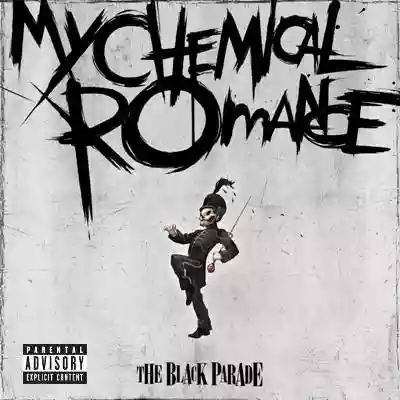
Now that I have more or less defined the genre of music, I'll get into the details with this My Chemical Romance album (perhaps the most famous band among the new era Emo bands), The Black Parade. You should already have an idea about the type of songs present on this album: very dark lyrics, often taken to the extreme and therefore almost apocalyptic. It must be said that the album's title faithfully reflects the songs, as it seems like you're really witnessing a gigantic parade in which the band members perform with great pomp and absolutely out of the ordinary, accompanied by darkness and death. Paradoxically, however, when listening to the album, you don't only feel the constant presence of death but also its opposite, life, imposed through the voice of singer Gerard Way, noisy, sad, but also strong and melodic. A similar opposition arises also in the listener, always balancing between depression and the desire for revenge inspired by the album's great energy.
In conclusion, we are faced with a truly well-made album, a must-have for emo boys and emo girls but also recommended for those who simply want to listen to 52 minutes of good music.
Loading comments slowly
Summary by Bot
This review examines My Chemical Romance's The Black Parade within the emo music scene, highlighting its dark, theatrical themes and emotional depth. The album balances themes of death and life through powerful vocals and energetic music. Though the author is not an emo fan, they recognize it as a well-crafted album that appeals beyond just emo enthusiasts.Tracklist Lyrics Videos
My Chemical Romance
My Chemical Romance is an American rock band from New Jersey, led by vocalist Gerard Way. They rose to mainstream prominence in the 2000s, are closely associated with emo and alternative rock culture, and are especially known for the concept album The Black Parade.17 Reviews
Other reviews
By Francis1
"Already the single 'Welcome To The Black Parade'... redeemed me from the doubt of having characterized MCR as a kind of boy band for 'alternative' girls."
"'Cancer' is one of the most touching songs I’ve ever heard... I’m not ashamed to say I cried listening to it, and I think it’s impossible to remain indifferent to it."
By Birbabirba
"The best track is 'Welcome to the Black Parade', truly splendid and a perfectly chosen single."
"'Teenagers'; I listen to it continuously lately and never get tired, it gives me an incredible boost!"
By lovelorn
"'Welcome To The Black Parade' is the best track on the album: a continuous crescendo, emphatic from the piano note-based intro to the energetic and singable chorus."
"A decidedly varied and well-played album... enjoyable to listen to, including several pleasant moments."
By flebo
The Black Parade is the classic example of commercialization caused by MTV and mass media, transforming a band aiming to make music into cover personalities.
The worst can be heard in Cancer, Disenchanted, and I Don’t Love You, which wouldn’t look out of place on a Backstreet Boys album.
By Fede89
"Many people who consider emo garbage... surely know only two things about it: the band’s name and the music videos."
"Critics have considered The Black Parade an album of generational impact like Nevermind and American Idiot were. History repeats..."
