
 •
Rating:
•
Rating:
THE REVIEW
1967.
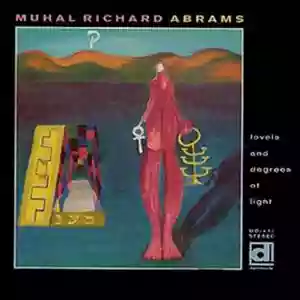
Once upon a time, there was a guy from Chicago who played the piano, clarinet, cello and who must have listened well to the works of people like Bud Powell, Lennie Tristano, Thelonious Monk. A guy who had enrolled in university but left shortly after because, according to him, what was studied had no practical utility nor any correlation with the real world around him, and so he decided to study on his own, perhaps adopting Mark Twain's maxim "I have never let my schooling interfere with my education".
Someone who, in 1965, was elected president of the AACM and therefore couldn't have been that much of a fool. An anarchic spirit but not detached, who had noticed that in the meantime there had been Sun Ra, Ornette Coleman, John Coltrane, and Cecil Taylor. What to do, then?
You call two saxophonists like Maurice McIntyre and the then semi-unknown Anthony Braxton (here in his first official recording and who would explode shortly afterward), a violinist like Leroy Jenkins, Gordon Emmanuel on vibes, garnish it with a respectable rhythm section and you're ready. Almost.
The first track, "Levels and Degrees of Light", features the vocals of Penelope Taylor and Emmanuel's vibes clashing (metaphorically but not too much) with Abrams' harsh clarinet; "The bird song" starts with a poem recited by David Moore. Ah, those were the days when you could easily insert a reading in a record without arousing suspicion of trying to win the favor of seventeen-year-old radical-chic kids who have just discovered the Nouvelle Vague and put on airs by going to Baustelle concerts.
But if those of you with ill-intentions are not convinced, just skip forward in the track to find yourself thrown into a hurricane of crazy horns, violins, pianos, double basses, drums, hand grenades, and firecrackers and so on for a good 23-24 minutes until your exasperated neighbor will cut your power and your dad wonders why you don't listen to Vasco Rossi like all normal kids do.
At this point, it's the turn of the third and final track "My Thoughts Are My Future --Now and Forever" which highlights the individual musicians' capabilities with various solos, particularly noting Abrams' work on the piano and Clark's precision on the double bass, a truly underrated musician endowed with almost perfect technique and intonation.
With the album briefly described, let's move to personal considerations: this is history, gentlemen, and if you like the freer and wilder side of jazz (the one of Free Jazz, Ascension, and Magic City, to be clear) it will not leave you indifferent.
If you don't like it, so be it. Dad and the neighbors will be happy.
Loading comments slowly
Summary by Bot
This 1967 album by Muhal Richard Abrams is a historic and landmark release in free jazz. Featuring early recordings of Anthony Braxton and contributions from AACM members, it delivers complex, anarchic, and wild performances. The review praises Abrams’s leadership, the intense ensemble work, and highlights key tracks for their innovative style. It is essential listening for lovers of the freer, experimental side of jazz.Tracklist
Muhal Richard Abrams
Muhal Richard Abrams (1930–2017) was an American jazz pianist, composer, and bandleader from Chicago. He co-founded the Association for the Advancement of Creative Musicians (AACM) in 1965 and became a central figure of the avant‑garde and free-jazz movements. His debut album, Levels and Degrees of Light, features Anthony Braxton’s first official recording.01 Reviews
