
 •
Rating:
•
Rating:
THE REVIEW
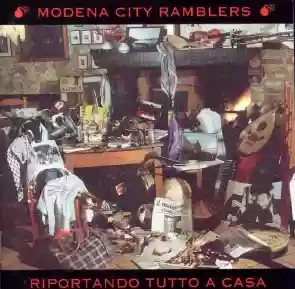
Riportando tutto a casa is the first official work of what has now become a rather well-known group throughout Italy and beyond, the Modena City Ramblers. Their first appearance was in a collection called Combat Folk, which would then be labeled as the genre adopted by the band. Therefore, this is the first major MCR album, still the best among all to date, together with the wonderful "La grande famiglia".
The work begins with one of their classic tracks, one of the most beautiful: "In un giorno di pioggia", a superb folk ballad of inexpressible sweetness. The second track is divided into two parts: the first is "Tant par tachèr" ("just to start" in Modenese dialect), where for the first time we hear the voice of the frontman Cisco; the second part, "The atholl highlanders", is an explosion of pure folk with violins, accordions, guitars, and more. A pyrotechnic start...
The album continues with a song of open denunciation, namely "Quarant'anni", clearly dedicated to Silvio Berlusconi. It is here that the group declares itself "partisan", and absolutely intolerant towards the horrors committed by the right wing up to that point. The album goes on with "Delinqueint ed Modna", a slightly less engaging track, and with "Morte di un poeta", which blends an overall melancholic text with a melody of great joy.
The sixth track has an uncheerful title, "Funerali di Berlinguer", but in reality, it is anything but a sad song: the MCR, in fact, seem to face the thought of that tragedy with heads held high, without melancholy, almost to honor the protagonist even more. It continues with "Il bicchiere dell'addio" and "Canto di Natale", one of the peaks of this album (remarkable as always for the lyrics).
The ninth track is "Ahmed l'ambulante", which is taken from a poem by Stefano Benni, a Bolognese writer who invented the famous "Bar Sport". It is followed by "Contessa" and "Bella Ciao", a revisited version of the popular song of the World War partisans. We are almost at the conclusion with "The great song of indifference", but there is still the last, great ballad of this amazing album: "Ninnananna". This is the song that closes practically all their concerts, of an indescribable beauty.
This review is meant to honor this group, which was once inimitable, but unfortunately has shamelessly sold out, and after "Terra e libertà", has produced really pitiful albums with few ideas (I hope it's not necessary to mention the useless collection "Appunti partigiani"). Moreover, Cisco, the backbone of the group (given his incredible voice), has left – and furthermore, he has given rise to an excellent album, "La lunga notte", which makes it clear that he has not lost his touch at all, but above all that he still has many things to say.
It is therefore appropriate to say that this is an unmissable album, which has shaped a different and "combative" folk.
Practically nothing is wrong with the aforementioned work, and that is no small thing.
Loading comments slowly
Summary by Bot
Modena City Ramblers' 'Riportando Tutto A Casa' is celebrated as their best album alongside 'La grande famiglia,' featuring classic folk ballads, political denunciation, and passionate performances. The album mixes sweet melodies with combative lyrics, shaping a unique folk identity. Despite later decline, this debut remains essential, highlighting frontman Cisco's talent. It is viewed as an unmissable milestone in Italian folk music.Tracklist Lyrics Videos
Modena City Ramblers
Modena City Ramblers sono un gruppo italiano nato a Modena nel 1991, noto per unire folk irlandese/celtico, rock e cantautorato sociale. Tra i lavori più citati: Riportando tutto a casa, La grande famiglia e il progetto corale Appunti partigiani.19 Reviews
Other reviews
By El
"Poetry mixed with popular roots, songs of struggle and anger, the cheerfulness of Romagna, and the bitterness of Guinness in Irish pubs."
"The rhythms are very engaging, drums and guitars with the full flavor of Ireland, the hard and rhythmic sounds of the drums reminiscent of the cliffs of the Irish seas."
By MosMaiorum84
Folk sounds merge with powerful lyrics in this standout Italian album.
