
 •
Rating:
•
Rating:
THE REVIEW
Superficially categorizable among the many dance-pop groups of the eighties, Missing Persons was also and above all a gathering of musicians with serious chops, not for nothing coming largely from the band of the late Zappa. It was Uncle Frank himself who advised them to go commercial by exploiting the extravagant talents, both artistic and aesthetic, of his backup singer Dale Consalvi, who had recently married colleague drummer Terry Bozzio. This new musical/family partnership was reinforced by other defectors Warren Cuccurullo on guitars and Patrick O'Hearn on bass, and completed by keyboardist Chuck Wild, the only one not to have come into contact with the mustachioed genius from Baltimore.
Bozzio, O'Hearn, and even Cuccurullo are high-profile musicians: the drummer is like a Bill Bruford (Yes, King Crimson) but more powerful and versatile, the bassist possesses one of the most lethal grooves I know, as well as quite a lot of creative execution; Cuccurullo, finally, is the creator of a sound all his own, very mid-range and thick, but he was also capable of moving it with exquisite creativity within the funky scores of the virtuous rhythm section of Missing Persons.
The quintet burst onto the scene with their explosive debut album in 1982 "Spring Session M" (an anagram of their moniker): three or four danceable yet quite melodic singles, skillfully pushed at the video level by the colorful and at the time very à la page new wave verve of Dale, allowed them to rival various acts like Duran Duran, Spandau Ballet, Depeche Mode, and company. But the artsy, experimental, and adventurous nature of the musicians, forged in the school of a true master of spontaneity, courage, and open-mindedness like Zappa, led them toward a second album, this one, more oblique and avant-garde, dry and not too aestheticizing.
The commercial feedback was significantly weaker than the explosive debut: the group was instantly shelved by the more distracted and superficial portion of fans. The record label at least gave the group a third chance, financing the release of the third work "Color In Your Life", once again aligned with the more linear and pop style of the first. At that point, however, the marriage between singer and drummer hit a crisis, and the Missing Persons machine shut down.
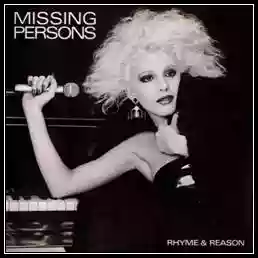
Needless to say, I find this second album from 1984 to be the most interesting of their career: I am particularly fond of the second, highly dynamic track "Give", an urban high-class funky where the rhythmic whirlwind of the energetic instrumentalists is barely scratched by the singing, admittedly very weak and disharmonic yet very original, of the colorful Dale. Strong too is "Surrender Your Heart", more melodically draped and pop, and very powerful are "Right Now" and the engaging "Walking in L.A.".
The group has recently reorganized, after a long oblivion, around the indispensable figures of the talented frontwoman and the gifted guitarist, who finally got tired of being the third wheel to the tepid Duran Duran. The drummer, Dale's ex-spouse, did not intend to participate, being busy with a thousand collaborations and other reunions, the latest involving UK along with his former companions John Wetton and Eddie Jobson. Patrick O'Hearn, on the other hand, has for a lifetime been busy with entirely different matters and continues relentlessly to produce alternating ambient music records (indeed!) and soundtracks, neglecting his great talent on the four strings.Loading comments slowly
Summary by Bot
Missing Persons' 'Rhyme & Reason' is a 1984 album showcasing their transition from dance-pop to a more avant-garde and experimental sound. The review highlights the band's high-level musicianship rooted in Frank Zappa's influence and praises several standout tracks. Despite weaker commercial success compared to their debut, this album stands as the most interesting in their career. Key members have since pursued diverse musical projects, with the band recently reorganizing without some original members.Tracklist Lyrics Videos
Missing Persons
American new wave band formed in Los Angeles in the early 1980s. Key members included Dale Bozzio (vocals), Terry Bozzio (drums), Warren Cuccurullo (guitar), Patrick O'Hearn (bass) and Chuck Wild (keyboards). Debut album Spring Session M was released in 1982.02 Reviews
