
 •
Rating:
•
Rating:
THE REVIEW
He breaks down the door and arrives around half past two. I get up quietly, walk barefoot into the next room, open the window. Tomorrow the last month of the year begins and it’s finally starting to get cold. The silence is nearly total; I watch my breath rise from my mouth towards a sky dotted with incredibly bright stars. Everything is peaceful, but it doesn’t last. He comes in yelling, slamming everything around to make me scared shitless with rotten, putrid thoughts in the gray crevices of my brain. In certain moments I use a few drops under my tongue; lately I’ve found two new and powerful weapons. Two mighty weapons to land an uppercut on his chin, tear off his jaw and leave him there, sprawled on the mat.
The first consists in writing. I pick up my laptop in the dead of night, settle in the kitchen—I don’t have a study—and start tapping away slowly. But suddenly the rhythm picks up crazily, the words gush out from my mind to pour onto the screen. They come in bursts and gusts, like in a classic, powerful summer thunderstorm. It’s as if I’m pissing out all the filth with a firehose. After an hour and a half, I’ve written ten or fifteen pages, and only then can I sleep.
The second consists in finding peace through reading. But it can’t be a book that requires study, and it can’t be any ordinary work either. In those cases, the rotten thoughts just keep twisting around me and I can’t read more than a sentence. That period becomes an unbearable loop. Once—these are things you just don’t do—I found myself furiously tearing up pages. So this weapon only works if I can find something I love. So far it’s only worked with three books out of my, not small, library. My mind in those rare cases finds relaxation, gets lost in the dazzling beauty of prose that kidnaps me and sucks away everything else, like a black hole.
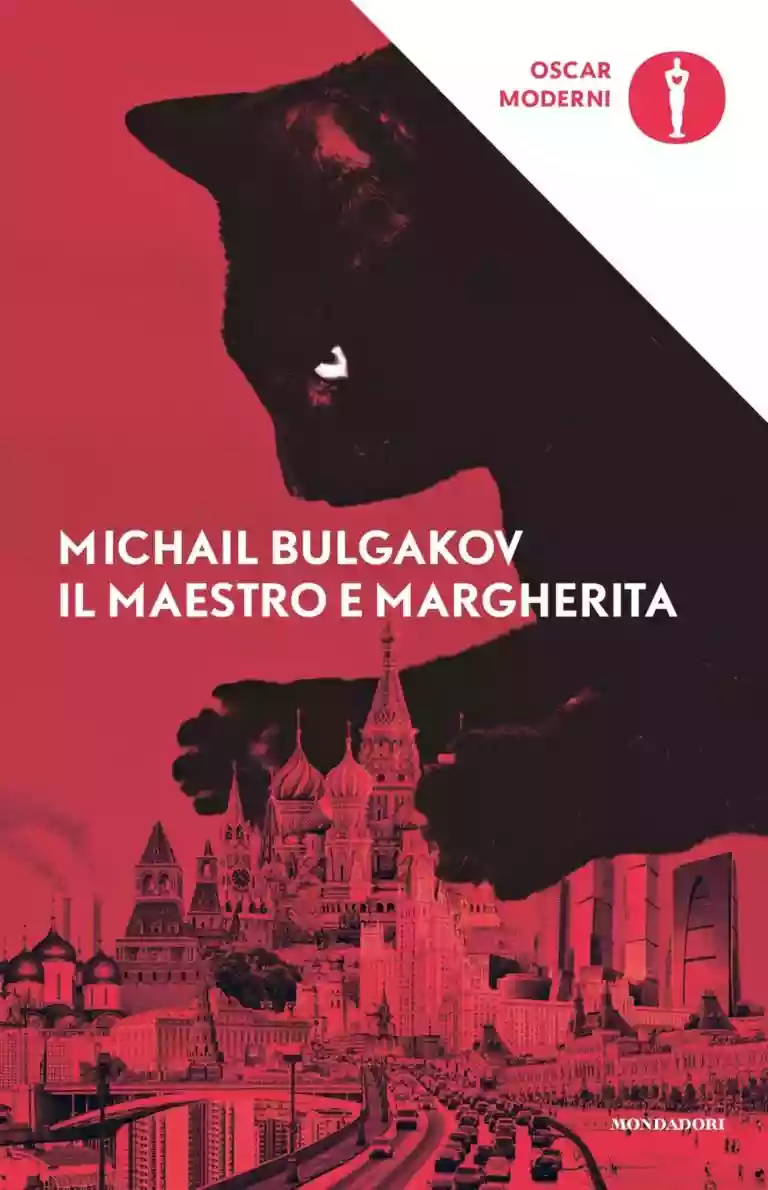
THE MASTER AND MARGARITA
I haven’t checked, but I’m sure there are quite a few reviews of this book: if I started writing out the Wikipedia plot, telling you about Pontius Pilate, Woland, the cat Behemoth—my favorite character—what would I add to the work already done by others? If I want to make decent use of both my time and yours, I think it’s better to use another approach and give you the historical context in which this novel was written, and highlight some key moments from the tormented life of the author. This information is fundamental for fully understanding this 20th-century masterpiece.
Mikhail Afanasyevich Bulgakov, born in Kiev at the end of the 19th century, had a difficult character. Let’s just say he was an asshole—but also a genius. His family, deeply religious, was well-off and “white” in the sense that they supported the Tsar, which, of course, mattered after the Russian Revolution. Before the Great War, he graduated in medicine and, when war broke out, was sent to various fronts as a military doctor. In 1921 he decided to abandon that career to devote himself to his great passion: literature. With the new regime, the capital shifted from St. Petersburg to Moscow, and so there he went to try to build a career. Moscow in those years, according to him, was a shithole: if you were a writer, you had to grovel to the regime for a comfortable life; bureaucracy was monstrous, and the number of sycophants and incompetents was astonishing, on par with usurers and crooks of every kind. Contrary to what you might think, given that Bulgakov will always be remembered for the immortal novel I’m reviewing, his passion was actually theater. His talent was so immense that one of his first plays, “The Days of the Turbins,” was watched by Stalin at the theater fifteen times, even though the plot centered on a “White” family—the Turbins. But those were Joseph’s first years in power; soon he had other things to do than protect good old Bulgakov. Bulgakov didn’t let himself be corrupted and wrote very uncomfortable works—for example, “The Fatal Eggs” and “Heart of a Dog”—and promptly, trouble arrived. The embryo of the future KGB spied on him and seized various of his writings; finding work became impossible. He complained strenuously that reviews of his work were almost always negative, suggesting a conspiracy against him. He began to starve, divorced twice, and ended up thinking about exile. Even suicide. It was February 1930 when he wrote to the government about these thoughts, asking for a job to get him out of that miserable situation. In despair, he burned the first draft of what would become “The Master and Margarita” in his stove. At the time, he called it “The Novel about the Devil.” A few months later, a tragedy brought an abrupt and unexpected turn in his life. The poet of the revolution, Vladimir Vladimirovich Mayakovsky, committed suicide with a gunshot in April 1930, shaking the Russian literary world. He shocked it because his voice was unanimously recognized as the most aligned, the most obedient to the dictates of the Soviet regime. It’s not clear what drove him, but criticism was increasingly fierce and scrutinizing, even of him, the party’s control ever tighter, as was the ever-present censorship. Bulgakov attended the funeral and the next day received a phone call from Stalin. It’s reasonable to assume that the regime did not want another suicide or exile of a great Russian poet, and so, in a very short time, he was given a stable job at the theater, which granted him some peace. He rewrote the second draft in 1936 and completed the third in 1940, just days before he died. Reading the novel, it’s clear he was aware he held a work of “enormous” quality in his hands, but he never got to enjoy its success and never saw firsthand the work of another Devil who, only a few years later, would try—and fail—to conquer Russia.
Now, I don’t think it takes much to understand that this is a heavily autobiographical work. I know it’s not everyone’s view, but in my opinion the evil Devil, who helps the Master, is none other than Stalin. He’s not absolute power itself, but the dictator portrayed in a hyperbolic and disguised manner—don’t forget when this novel was written. The Master is clearly Bulgakov, and Margarita is none other than his beloved third wife, Elena Sergeevna Silovskaya, who helped him finish the third draft when he was too weak to sit up. The residence where Woland and his entourage live is exactly the address where Bulgakov lived in Moscow. The Devil and his crazy gang direct their atrocities—hilarious to read—at bureaucrats, compliant writers, and the bourgeoisie. It’s a brilliant way to mock post-revolutionary Russia and all the mediocrity, ignorance, hypocrisy, and fear that characterized the capital’s scene. The book would only be published decades later, in the mid-1960s, in a censored form.
In fact, in “The Master and Margarita,” Bulgakov wrote two novels in one. The one about Pontius Pilate—the novel, not by chance burned, that the Master was writing—is actually “The Master and Margarita” for Bulgakov. The novel has a structure I would call unique. It closes like a gigantic circle, yet the protagonist is only introduced to the reader in the thirteenth chapter. The two storylines—the one set in Moscow and the one describing Pontius Pilate—alternate constantly throughout the chapters, intertwining only towards the end. The author moves from historical, religious, and satirical genres to a love novel, with hilarious pages alternating with others of heart-wrenching poetry and delicacy. The common denominator is the compelling and superb prose that literally glues the reader to the page. Probably all of you have read it ONCE. But this is an immortal masterpiece, one of those “manuscripts that doesn’t burn,” to be read MANY times in a lifetime.
One terrible night, a month ago, I found myself in front of a very deep abyss, and I stumbled upon these pages again, almost by chance. I think “The Master and Margarita” is a miracle that may even have saved me. But I’m not saying anything new—Pavese already said it.
Loading comments slowly
Summary by Bot
This review covers Mikhail Bulgakov’s celebrated novel The Master and Margarita, focusing on its literary merits, core themes, and satirical elements. The reviewer considers both its recognized masterpiece status and personal impressions, resulting in a balanced perspective. Key motifs, character portrayals, and the book's place within Russian literature are highlighted. The analysis remains insightful yet reserved.
Michail Afanas'evic Bulgakov
Born in Kyiv in 1891, Mikhail Bulgakov was a physician turned playwright and novelist who lived and worked in Moscow. He clashed with Soviet censorship, wrote landmark satires like Heart of a Dog and The Fatal Eggs, and completed The Master and Margarita shortly before his death in 1940.04 Reviews
Other reviews
By EffePuntato
It truly is a masterpiece: a literary polyphony, a small modern mythology that manages to filter through irony the beauty of classics by rinsing away all their weightiness.
Because, Bulgakov warns, the artist cannot sit there, attentive to bureaucratic norms and party directives, forced to repeat the lesson of the spirit of the times.
By ilfreddo
Bulgakov managed to capture the regime through brilliant, original, and courageous works like this one.
The dog obviously embodies the proletariat victorious after the revolution, and the sudden return to canine features is all too exhaustive.
By asterisco
The devil... tears away every pretense and mask from humans’ faces, rendering them thus naked and transparent.
When seen clearly, the Master in the book and his author outside are masks as well.
