
 •
Rating:
•
Rating:
THE REVIEW
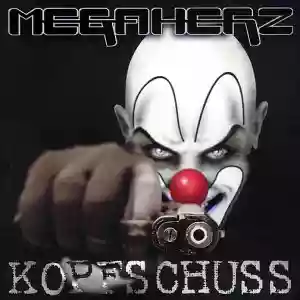
Stagnation is the enemy: analyzing the artistic paths of the most important entities in the NDH landscape, it quickly becomes apparent that there is no band that has remained the same as when they started; least of all Megaherz, who have had a far more tumultuous history than other pillars of the movement that have made the granite-like solidity of the collective their primary driving force. The Bavarian formation has always been a sea harbor, from its beginnings, and this has significantly influenced the dynamic nature of their sound: the first demo album, "Herzwerk", a quite interesting and highly commendable work, was not fully classifiable as Neue Deutsche Härte but rather as alternative metal in a broader sense due to the substantial absence of the industrial component, which began to manifest with the first official album, the excellent "Wer Bist Du", and then took a more decisive and characterizing foothold with "Kopfschuss", in the year 1998. A small curiosity: in the USA, the album was marketed as "Megaherz II" and the clown on the cover was stripped of his gun; you know, some things bother those who have a guilty conscience.
This second official album arrives at a moment of stability for the lineup, which is practically the same as its predecessor: Alexx on vocals, X-Ti on guitar, Wenz on bass, Noel Pix on keyboards; the only change is the drummer, with Frank Gegerle replacing Tommy Eberhard. "Kopfschuss" is a transitional album; enjoyable, compact, with some tracks above average but overall the least "sparkling" of the Megaherz albums with Alexx Wesselsky: not because it is inferior, but because the other three are above average. Compared to "Wer Bist Du", the sound is undoubtedly heavier: X-Ti's guitar is more saturated and aggressive, the groove much more pronounced, and Wenz once again proves to be the most incisive bassist in NDH. Among the standout tracks on the album are the epic "Rappunzel", the second twisted fairytale of Megaherz after the previous "Hanschklein", which strikes with Alexx's perfect and more roaring than ever interpretation, and tracks like "Jordan" and especially the midtempo "Freiflug", where the excellent arranging work by Noel Pix stands out, capable of adding a hypnotic and alienating flavor to the MHZ sound. Worthy of praise are also a great anthem like "Herz Aus Stein", featuring a nice guitar riff and a great refrain, immediate and impactful, "Miststuck" and the title track "Kopfschuss", which see a polished Alexx reviving the rap-like style of "Wer Bist Du", supported by greater instrumental vigor than the album of the previous year; somewhat surprisingly, but not too much if you know the background on which NDH was born, the album closes with a beautiful and entertaining cover of the cult "Rock Me Amadeus" by Falco, interpreted by Alexx with just the right amount of "arrogance".
The lead single from the album is the opener "Liebestoter", which personally raises some perplexity: a good track, with a nice drive and an engaging, cheeky, and brash rhythm, yet, especially in the riffing, it appears decidedly too close to the style of Rammstein, as if it came straight out of "Herzeleid", which is not a bad thing at all, but from a band as substantial as Megaherz, it's reasonable to expect more. Nevertheless, it's a catchy and apt single complementing the album along with other good tracks like the intriguing "Teufel", "Blender", "Meine Sunde", and "Schizophren". One component that, like in "Wer Bist Du", deserves great praise is undoubtedly Alexx Wesselsky's songwriting, always direct, emotional, intelligent, and sharp: in "Kopfschuss" (headshot), the title deemed unsuitable for the cultured, sensitive, and refined redneck audience, he delivers a cutting satire on the much-mythologized figure of the cursed rockstar, in "Meine Sunde" the oppressive specter of heroin looms, evoked without too much beating around the bush. The fantasies of death in "Jordan" and "Freiflug" contrast with a visceral attachment to love, and thus to passion, and thus to life that emerges from "Herz Aus Stein", "Miststuck", and "Teufel", and the fairytale princess Rapunzel becomes a whore, imprisoned in a brothel rather than a tower, surrounded by unhealthy and decadent images.
"Kopfschuss" is a crucial junction for the Megaherz of Alexx: it is with this album that the transition occurs from the electro-alternative metal sounds of the early days to the heavier, industrial, and NDH sound that, through "Himmelfahrt", will culminate in "Herzwerk II": transition albums as convincing and successful as this one are rare; from a personality perspective, "Wer Bist Du" remains superior, the two aforementioned successors will be more mature and convincing, but the importance of this record remains, akin to "Sperm" for Oomph!, not the best product but a fundamental piece for the MHZ, with many bright points and some slightly lower moments, but the final outcome, while not fully reaching the four-star threshold, far surpasses sufficiency, so it's worth rounding up.
Loading comments slowly
Summary by Bot
Megaherz’s Kopfschuss is a pivotal album marking the band’s shift to a heavier, industrial NDH sound with a stable lineup. While not their most outstanding work, it holds important artistic value, featuring strong tracks and Alexx Wesselsky’s sharp songwriting. The album showcases a blend of aggressive guitars, hypnotic arrangements, and provocative lyrics dealing with themes of passion, death, and societal critique. Kopfschuss remains a fundamental release in the band’s discography and the wider NDH movement.Tracklist Lyrics Videos
Megaherz
Megaherz are a German Neue Deutsche Harte/industrial metal band from Munich, formed in 1993 and active to the present. Early releases like Wer bist du (1997) and Kopfschuss (1998) defined their mix of heavy riffs, electronic textures, and German-language lyrics. Over time they evolved through albums such as Himmelfahrt, Herzwerk II, 5, Heuchler, Götterdämmerung, Zombieland, and Komet.03 Reviews
