
 •
Rating:
•
Rating:
THE REVIEW
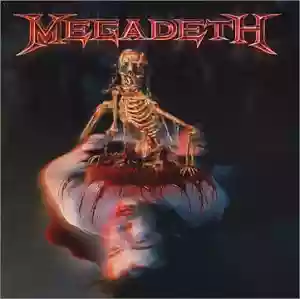
On the occasion of the release of the new "United Abominations," I find myself reviewing this "The World Needs a Hero", the 9th album by the American band Megadeth, released in 2001.
The album in question hit the market after not-so-happy years for the band: on one hand, the very poor sales results of the previous "Risk" (the first real flop after 15 years of their career due to its total estrangement from the Megadeth sound, a pop-rock mixed with electronic inserts), on the other, the departure, not without heavy controversies, of Marty Friedman, now in constant conflict with MegaDave...
No matter, with Al Pitrelli (formerly of Savatage and Alice Cooper band) recruited on guitar, with the trusty David Ellefson on bass and the confirmed Jimmy DeGrasso behind the drums, Mustaine decided to dive into this new work, trumpeted as a return to harder and purer metal, a clear cut from the recent, unconvincing (but above all unprofitable...) past!
Yeah... pity that even if the two previous mediocre ones, "Cryptic Writings" and "Risk," haven't provided a nice image of the band's health status, this "TWNAH" doesn't do much to raise their profile, quite the opposite... it is, in fact, a bland CD, lacking ideas, sometimes even too slapdash.
The problem is: you can't label it as a "return to the hardness of early metal" if there is still a strong search for melodies and solutions that favor easy listening and assimilation by a wide audience; melodies that inevitably end up not matching the hardness and ferocity of the thrash so much sought after.
So, it's not enough to recover the old, angular writing or to resurrect the old (now a bit dusty too...) mascot Vic Rattlehead for "a return to the origins": rather it is a pathetic attempt to attract the old fans again, deluding them into thinking they have really returned to the "mother house" of thrash.
Not even self-celebrating (or self-plagiarizing, which is somewhat the same in this case...) with a song ("Return to Hangar", a squalid revisitation of the classic "Hangar 18," drawn from "Rust in Peace," from a period when 'Deth really had ideas and technique to show off) is enough, just as shamelessly plagiarizing a classic of '80s metal (the concluding "When", which, apart from presenting the identical opening riff to "The Call of Ktulu" of the "cousins" Metallica, from minute 2:30 onwards reveals itself to be a perfect copy of "Am I Evil?" by Diamond Head, albeit not presenting a shred of the power and fascination of the original...) is enough to make believe they have made a great comeback on the metal scene of the time: metal which was in terrible condition, stifled by the new nu currents.
Another negative factor is however the alarming lack of creative inspiration by MegaDave: too many banal songs that are supposed to act as fillers, but unfortunately constitute the majority of the album! The opener "Disconnect" is a perfect example of this: it starts with a nice riff, solid and heavy, but then loses itself in a boring and uninspired mid-tempo; even the various "1000 Times Goodbye", "Burning Bridges", while trying to propose new sounds, soon fall into the banal, ending up being quickly forgotten.
In the end, the best tracks turn out to be the sweet semi-acoustic ballad "Promises", truly inspired and atmospheric, but above all the adrenaline-fueled "Dread and the Fugitive Mind" (also appearing in the "Capitol Punishment" collection of the previous year), with its verses closely resembling those of "Sweating Bullets": good rhythm, catchy refrain, and excellent final solo.
For the rest, there is little or almost nothing: the leading single "Moto Psycho" proves to be too commercial and too oriented toward an MTV-dependent audience that wants to present itself as "grown-up" by listening to metal, but it is the most "sustained" track of the batch and overall is enjoyable: if returning to harder and rawer sounds materializes in this, there's real concern for what the future of 'Deth might be.
A future which shortly thereafter would bring the news of the band's breakup, which took place in 2002, also due to Dave's well-known wrist problems... fortunately, since 2004 there has been a return to the scene (this time much more convincing) of the American combo: a new lineup, new ideas that led to a good "The System Has Failed" and the latest, excellent release, that "United Abominations" mentioned at the beginning.
Here, instead, there is little to do: we find ourselves still in the darkest period of the band's history, a period that started after 1994 and would continue right up to the breakup; few ideas, unwillingness, attempts to mix their sound with external contaminations poorly suited to the spirit and genre proposed, just as many attempts to arduously lift their heads and return to their roots, only to end up tripping up again and offering a product as weak as this album; it's sad to give a negative review to a work of good old Dave, but there's little to do, denying the evidence is useless!
If with "Risk" the group had declared they wanted to produce an album with new sounds, capable of astounding critics and audiences (and they succeeded, unfortunately for Dave and associates), with this "TWNAH", there was no much-anticipated return to thrash or at least more generally to heavy metal, and the fact of presenting themselves to the public with shameless and front intentions like the prominent display of Vic on the cover and a "Return to Hangar" truly scandalous even just for having been conceived (despite it paradoxically could prove to be a success, based as it is on one of their best compositions), smacks of a mere commercial operation and too, really too much, of pulling the wool over everyone’s eyes...
Loading comments slowly
Summary by Bot
The review critically assesses Megadeth’s 2001 album 'The World Needs a Hero' as a disappointing and uninspired attempt to return to their thrash metal roots. Despite personnel changes and deliberate shifts back to heavier sounds, the album suffers from bland songwriting and a lack of creativity. Attempts to revive past glories through self-referencing tracks come off as unconvincing and commercially motivated. Only a few songs stand out, but overall the album fails to meet fans' expectations during a difficult period for the band.Tracklist Lyrics
Megadeth
Megadeth are an American thrash metal band formed in Los Angeles in 1983 by Dave Mustaine and David Ellefson. As part of the Big Four with Metallica, Slayer and Anthrax, they’re known for technical riffing, socio‑political lyrics and the mascot Vic Rattlehead. Landmark albums include Rust in Peace (1990) and Countdown to Extinction (1992).56 Reviews
