
 •
Rating:
•
Rating:
THE REVIEW
But what does an African American know about Africa?
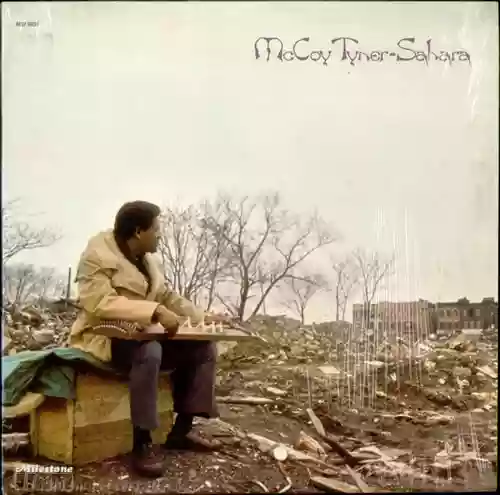
Because we are still talking about an American, a bourgeois from a good family. And all dressed up, in a nice tuxedo, playing the piano keys for John Coltrane, Miles Davis, and other people of that caliber. What do you want to know about Africa? They say that for an African, Africa runs in their veins, they have it there, attached to their guts. They don't shake it off, even dead. Having realized this burden on his shoulders, this inevitable responsibility, a McCoy Tyner in full artistic maturity, well-trained as already mentioned in first-rate groups and embarked on a still rather uncertain solo career, Annus Domini 1972, pulls out what is now an indelible piece of history, but was then a punch in the stomach, breathtaking: Sahara.
But Sahara, despite the name, instead of being a regurgitation of clichés chewed up millions of times, as such a title might suggest, tells the story of a great compromise, of an intriguing yet repulsive contamination. In this album, the most ancestral African influences clash and merge with Asian ones, blending until they disappear into one another.
The percussive style, a formidable left hand (Tyner's extra quid), a handful of wonderful and free pieces (but not 100% free), a group with monstrous technical prowess backing him, and the game is done: one of the most beautiful jazz albums of the 70s is served.
Tyner's playing style resembles a lava flow or a maelstrom you accidentally get caught in and from which you never escape, and, depending on the case, a tremendously earthly or tremendously mystical experience.
A magnificent album, an immense (never has this word not been wasted in this case: I always distrust this word because most of the time it is used inappropriately, for everything and everybody, for dogs and pigs) MASTERPIECE.
Loading comments slowly
Summary by Bot
McCoy Tyner's 1972 album Sahara is an extraordinary jazz recording that goes beyond clichés to blend African and Asian influences. Featuring powerful percussion, technical mastery, and Tyner's dynamic piano style, the album is regarded as one of the greatest jazz works of the 1970s. It represents an artistic milestone for Tyner, known for his time with Coltrane and Davis. Sahara offers both an earthly and mystical listening experience, cementing its status as a masterpiece.Tracklist Videos
McCoy Tyner
American jazz pianist and composer. A cornerstone of the John Coltrane Quartet in the early 1960s, he became one of the most influential modern jazz pianists, defining a modal, percussive approach and leading classic albums such as The Real McCoy and Sahara.07 Reviews
Other reviews
By Samuele
McCoy Tyner unleashes himself on the piano throughout the album.
This album is PERFECTION.
