 •
Rating:
•
Rating:
THE REVIEW
Morricone of the poor, naive wandering cowboy lost in the Irish prairies, and so on and so forth... Mark Knopfler has faced quite a few potsherds for his work outside Dire Straits, particularly his involvement in composing soundtracks. But it is known that critics are a sort of "gathering of the embittered" (as Vinicio Capossela would say) targeting those who have achieved great commercial success, assuming it to be a sign of low quality. Coincidentally, Mark Knopfler's music has also become much more famous than the respective films, and it's not the fault of the usual ignorant audience.
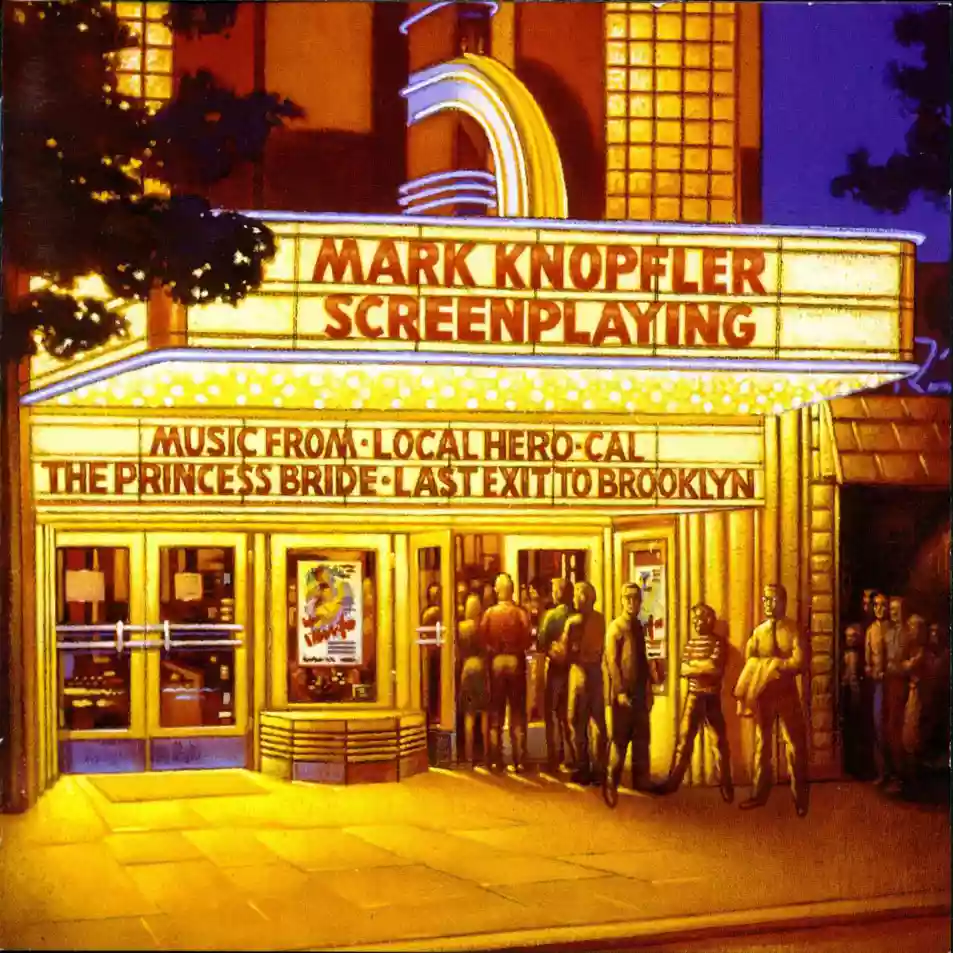
"Screenplaying" is a generous collection that condenses the first four soundtracks of the great guitarist, from a last name that's a bit Germanic but Scottish from Glasgow. The Celtic roots of his music, rarely surfaced in Dire Straits, here emerge strongly, becoming a dominant trait. Although even the harshest criticisms have a kernel of truth, it must be admitted that this album is a clear demonstration of how Mark Knopfler's limitations come out when he attempts to "do the Morricone," engaging in a somewhat syrupy orchestral blend, with a great expenditure of strings. Meanwhile, the true gems are the soundtracks where he remains himself, giving full voice to his guitar polyphony and sound closer to the unmistakable one of Dire Straits.
Listening to the music of "Last Exit To Brooklyn" and "The Princess Bride" you get the clear perception that it is film music, and nothing else. Although sometimes the themes are truly clever (the finale of "Last Exit To Brooklyn," "Guide My Sword" from "The Princess Bride") there's always the impression of an artificial mix between the increasingly overwhelming orchestra and the rare and timid appearances of the guitarist. Other times, such as in "A Love Idea," from "Last Exit", unexpected chamber effects emerge between violins and acoustic guitar, pleasant yet giving an impression of a self-serving display of skill.
A completely different atmosphere is found in the two masterpiece soundtracks, where the orchestra steps aside: "Cal" and "Local Hero". The first is more typically Celtic and contains traditional episodes like "Father And Son" and "Potato Picking", with tin whistle and bagpipes, that wouldn't be out of place in a Chieftains album. Not surprisingly, some of them will collaborate with Mark Knopfler in his "Golden Heart," while the guitarist himself will guest in their grand "reunion" titled "The Long Black Veil." But more convincing still are the pieces where the guitar, or rather the guitars, become protagonists: in "Irish Love" they murmur languid love phrases, in "Irish Boy" and especially in the splendid "The Long Road" their crystalline sound definitively asserts itself, depicting typically Irish landscapes, large green spaces where the "wandering cowboy" is not lost at all, but seems to have been born there. "The Long Road," incidentally, has also been used in advertising (Doria cookies, and it would be interesting to note how much good music cookie ads attract, but that would lead us far afield). Even in "Local Hero" the atmosphere is Celtic, but with more variations. One is undoubtedly "Boomtown," which with its flawless sax and jazzy sound seems born from a rib of "Your Latest Trick." The mysterious and archaic atmospheres of "Cal" bring us back to "The Mist Covered Mountains," a title I like to think derived from a verse of the splendid "Brothers In Arms": I don't know if it is so, but it would be a beautiful example of music generated by words.
The main theme of "Local Hero" is perhaps the highest achievement reached by the cinematic Mark Knopfler. First sweetly presented by the acoustic guitar ("Wild Theme"), then taken up by the sax and accelerated for a rich triumphant finale ("Going Home", also included in the live "Alchemy") it's one of those whistleable yet by no means trivial motifs that bear the unmistakable mark of inspiration, in defiance of the "Morricone of the poor."
Loading comments slowly
Summary by Bot
Screenplaying collects highlights from Mark Knopfler’s earliest soundtracks, showcasing his Celtic roots and distinctive guitar work. While orchestral segments sometimes feel overwhelming or syrupy, his best pieces rely on guitar-driven themes that evoke Irish landscapes. The album offers a rich mix of cinematic moods, with standout tracks from Local Hero and Cal. Critics who dismiss Knopfler’s soundtrack work may overlook the clear inspiration and heartfelt musicianship present here.Tracklist Lyrics Videos
Mark Knopfler
Scottish guitarist, singer-songwriter and composer; founder and leader of Dire Straits and later a solo artist and soundtrack composer.31 Reviews
