
 •
Rating:
•
Rating:
THE REVIEW
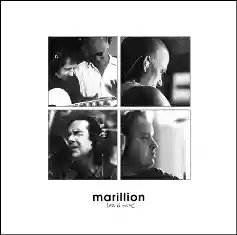
What are the old Marillion offering us this autumn of 2009? An album of old tracks rearranged acoustically: a sort of greatest hits with the concession of the new sound style or a true new work? A bit of both, depending on how you consider the almost thirty-year career of the five former English lads, once the flag bearers of new prog.
Certainly, this "Less Is More" (L=M), produced over the last summer and soon to be associated with an obviously acoustic tour (only one date in Italy, November 16, in the splendid setting of the church of Santa Maria all'Ara Coeli in Rome, don't miss it if you can), is not exactly the successor of the excellent "Happiness Is The Road", but neither is it a useless collection put together to scrape in a few bucks from the hardcore fan base. The tracks, selected here and there (but not by chance) throughout the entire "H phase" of the career (since 1989, when the little Steve Hogarth joined the group after the departure-expulsion of the gigantic - in many ways - Fish, the frontman of their early days and worldwide successes), have undergone not a simple reduction, but almost a stripping down, deconstruction, and re-dressing. In almost all cases, despite missing the more typically electric sound, they've been enriched with new nuances, small pearls generously shared by the band members (a concept that matches well with the album's title, "Less Is More"). Twelve old tracks, almost an hour of music that contrary to what might have been feared, is rich in novelty and creative freshness.
And so "Hard as Love", the hardest chapter from the masterpiece Brave (and perhaps the entire Marillion career), takes on a soft guise, with a splendid piano accompanying Hogarth's intense singing and a cadence capable of capturing the listener.
Similarly, "Quartz", an electric gem from Anoraknophobia, loses its funky feel, with that bass that almost ripped heartbeats from your chest, to live entirely on the wonderful work of God Steve Rothery, a guitarist never celebrated enough.
There are many real gems among the twelve tracks, from the reinterpretation of two masterpieces like "Out of This World" and "Interior Lulu" (from "Afraid of Sunlight" and "Marillion.com" respectively) to the recovery of "minor" tracks like "Go" and "Wrapped Up In Time" (the only extract from "Happiness is The Road"), which definitely gain something compared to the originals, without losing impact and strength.
The album also contains an unreleased track, "It's Not Your Fault", a ballad that, after being left out of the band's last three works (a classic leftover), is rewarded for the wait with this delicate acoustic guise, the classic piano-voice duet with Mark Kelly sharing the stage with Mr. H. To close, the little game of the hidden track (which isn’t all that hidden, fans of the group will recognize the track immediately, hint: it's from "Afraid of Sunlight" and it's an excursion into American territories, with Beach Boys influences).
In summary, an album for aficionados but one that could also win over those approaching the band for the first time. An album in which Marillion show their undiminished desire to play, to have fun, to experiment with new ways, to move the fans, and - perhaps - to win over new ones. A mandatory mention for Steve Hogarth: after 20 years, he has finally managed to shake off the label of "Fish's replacement", with vocal qualities beyond the ordinary and a contribution to the group's creative phase far greater than that of the Scottish woodsman.
Loading comments slowly
Summary by Bot
Marillion's Less Is More revisits selected tracks acoustically, offering a fresh and creative perspective on their post-1989 career. The album strips down and reimagines classics with emotional depth, featuring standout performances by Steve Hogarth and Steve Rothery. It includes an unreleased ballad and a subtle hidden track, appealing both to longtime fans and newcomers. Less Is More highlights the band's enduring vitality and willingness to experiment.Tracklist Lyrics
Marillion
Marillion is an English rock band associated with neo-progressive rock, first achieving major success in the 1980s with vocalist Fish and later continuing with Steve Hogarth from 1989, shifting toward more atmospheric and song-oriented approaches while maintaining a strong fan following.24 Reviews
