
 •
Rating:
•
Rating: THE REVIEW
After a therapeutic break obtained at the end of the long and grueling tour of "Holidays in Eden", a tour that, among other things, confirmed the robustness of the band's live performances as well as a clear improvement in Steve Hogarth who, having learned from some vocal shortcomings of the previous tour, enriched his technical repertoire and delivered almost always impeccable performances, Marillion decided to return to the studio to work on new material.
The ideas are always numerous, all the members of the band want to overcome the impasse created by the previous album, they want at all costs to erase the word "commercial" from the explanatory label placed under their name, essentially they want to return to their primary identity.
The first decision made is to emigrate, so they go to France, specifically to a castle in the South of France, where the equipment is transported, two 24-channel mixers, and God only knows how many and which sound effects. Inspiration comes quickly, the first recordings are made with the drum set placed in what was originally the study of the Lord of the Manor, the guitars in the Ballroom, the vocal setup in the bedroom, which turns out to have also been used in the past by the Queen Mother of England. Absolutely natural effects from inside the Castle, from the stream flowing outside, from stones and strange animals, from the voices of the musicians' children are also recorded and brought back to England upon returning home.
Once at home, Marillion do not use the usual Hook End Studio but a warehouse set up as a recording room, the first developing songs are brought to completion by producer (Dave Meegan, returning to his position replacing the muddled Chris Neil, mainly responsible for some overly commercial pieces of the previous record) and the band, but this work still does not have a precise musical identity, and there are really few ideas regarding the lyrics.
But fate comes to the rescue in the most fortuitous guise: one ordinary afternoon Steve Hogarth is stuck in traffic and coincidentally listens to the radio just as the police in the Bristol area (presumably) broadcasts a message asking if anyone listening knows a strange girl in a panic and dangerously leaning on the railing of the Severn Bridge Motorway (a bridge that connects England to Wales). As it is illegal to walk on said Motorway, the officers picked up the young woman, who, when questioned, refuses to provide information, to say her name, or even to open her mouth. No one can understand whether she is mute, mentally unstable, what her intentions were, whether she wanted to jump off the bridge, or if she was just taking a walk...who knows.
The radio announcement reaches directly to the heart of the writer within Steve's unconscious, which creates a solid starting point for some fantastic fiction work. Hogarth increases his activity, the songs quickly take shape, it becomes clear that the pieces are perfectly linkable and that the story being told has something mysterious and sublime about it. It is immediately understood that this will be a work of substance. The same EMI is clearly briefed by the band on the type of album about to be completed, and this time the record company doesn't interfere, leaving everything in the hands of the band and producer.
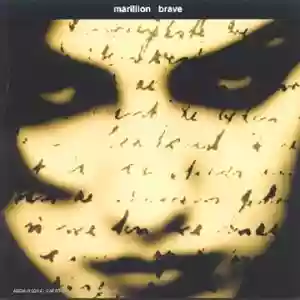
Finally, after meticulous and exhausting work, "Brave" appears on the shelves of stores and megastores. It's 1994. Just start listening to "Bridge" and "Living With The Big Lie" to realize that it is a masterpiece album in every aspect. Marillion have returned to prog, it's not the early days of "Script for a Jester Tear" or "Fugazi"...it's something different, something no one had done before, it's an alternation of romantic and dark melodies and majestic developments (I’m referring to "Runaway" and "Goodbye to All That") of vocal lines sometimes extreme and sometimes very low and gloomy, always superbly interpreted by the best Steve Hogarth, sparkling choral ensembles ("Alone Again In The Lap Of Luxury"), typically rock riffs ("Hard As Love") combined with atmospheres that we might also call ethnic ("Brave", "Paper Lies" or "Made Again") and the standout track, the fantastic "The Great Escape" which opens with a piano-voice of mystical reasoning to close in a whole so perfect as to send shivers down the spine. It's a masterful album that required particularly daunting commitment primarily for everything concerning the arrangement of pieces for live performances (in some tracks there are even up to nine guitar tracks), with all the band members sharing more tasks to perform in a unison that does not admit any smudge.
Marillion also decide not to shoot any video for "Brave" but to create a short film (also available in an excellent DVD version with many extras) capable of captivating the viewer's attention on both the musical pieces and the story being told. The film obviously narrates, with the fanciful corrections of the case, the story of the girl picked up on the Severn Bridge. The Marillion themselves appear in it several times, engaged in performing the pieces. How to conclude a dissertation on "Brave", unanimously defined by critics and listeners as "the symbol album of prog in the '90s"...I wouldn’t know...I would say with the only adjective it deserves: perfect. The ultimate absolute degree, perhaps unattainable, in Marillion's career.
Loading comments slowly
Summary by Bot
Marillion's Brave is hailed as a perfect progressive rock album marking the band's return to their core identity. Inspired by a mysterious radio story, Steve Hogarth and the band created a dark, emotional, and intricately arranged concept record. The album showcases superb vocals, rich arrangements, and a blend of rock and ethnic atmospheres. Boldly produced with minimal label interference, Brave also features a companion short film that deepens its narrative. Widely regarded as a landmark prog album, it cemented Marillion's artistic legacy.Tracklist Lyrics Videos
Marillion
Marillion is an English rock band associated with neo-progressive rock, first achieving major success in the 1980s with vocalist Fish and later continuing with Steve Hogarth from 1989, shifting toward more atmospheric and song-oriented approaches while maintaining a strong fan following.24 Reviews
