
 •
Rating:
•
Rating: THE REVIEW
1997: the Mansun debut. "Attack Of The Grey Lantern" opens a darker, more complex, and magmatic path within brit-pop. The second work is eagerly awaited. But it doesn't arrive. Instead, the sixth arrives: the Mansun, like ambitious pole vaulters, aim directly at significant heights. And here is "Six". A "concept album", or rather, a conceptual album, where brit-pop is mixed with progressive, punk, classical music ("Fall Out" opens with a modern interpretation of Tchaikovsky's Nutcracker), opera ("Witness To A Murder: Part Two"), and where one gets lost in a genuine labyrinth of sounds.
It is said that the Mansun entered the studio with about thirty ideas and sketches. Instead of eliminating some and drawing from the best excerpts 12 canonical songs, Paul Draper and company choose to keep them all and assemble them into a hypnotic 70-minute collage. The result is 13 songs of extremely unequal length (from the minute and a half of "Inverse Midas" - piano and voice - to the nine minutes of "Cancer"), and it results in an astonishing album.
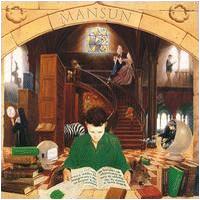
Like an Escher painting, like the library in "The Name of the Rose": along a religious (heretical, it is understood) and existential thematic plot, one is forced to follow an asymmetric jumble of absurdly (but geometrically) structured sounds. Some songs seem to have swallowed others, like the exceptional "Cancer", which moves from prog to hard rock, from a solo piano interlude to a finale of keyboards and whispered melodies, with a 15-second pseudo-Beatlesque freaky insert; or like "Six", a jumble of at least four different songs that intersect with each other. You descend, you ascend, you enter a song and emerge in another (while remaining in the same), with pieces that seem to blend and exchange with each other, creating a dizzying effect that, if bewildering and overwhelming at first listen, ends up being exciting, precisely because of the inability to bring order to a chaos that nevertheless manages to appear combined and orchestrated. Cases of loss and recovery, disappearance and recognition, are continuous: the finale of "Fall Out" is given by the guitar riff that will dominate the spectacular "Legacy" (the first single and the most melodic track); "Being A Girl" is a two-minute punk song, which (after unquestionably ending) has a five-minute prog tail; "Special / Blown it (delete as appropriate)", with its significant title of one and threefold, has an intro of more than two minutes (drums, piano and guitar processed with a dazed and unnerving outcome) that opens, at the least expected moment, into a high-level punk-rock release. And so do "Shotgun", "Television", the fantastic "Anti-Everything". The result is unclassifiable, impossible to categorize.
Calvino's combinatory made rock.
It is without a doubt the most courageous (and most enduring?) result of the Mansun and the entire brit-pop. Then Draper and company produced the meaningless "Little Kix", which rhymes with "Six" but has nothing to do with it. Then the breakup, not before almost completing a fourth album that saw the light maimed ("Kleptomania"), but at least leaves a good memory. These days comes the nostalgic "Legacy: The Best Of Mansun".
Certainly, "Six" is enough for the legacy of the Mansun to be decidedly reevaluated: it would not be fair for them to experience what, in the tail of "Legacy", Draper sings desolately ad libitum: "Nobody cares when you're gone...".
Loading comments slowly
Summary by Bot
Mansun's 'Six' is a daring conceptual album that pushes the boundaries of britpop by blending progressive rock, punk, classical, and opera. With its complex, labyrinthine structure and diverse stylistic shifts, the album challenges listeners but ultimately rewards them with a rich, hypnotic experience. It stands as Mansun's most ambitious and enduring achievement, reshaping their legacy despite later missteps and eventual breakup.Tracklist Lyrics Videos
Mansun
Mansun were a British alternative rock band from Chester, active from 1995 to 2003. Their debut, Attack of the Grey Lantern, topped the UK chart in 1997, and the follow-up Six became a cult favorite for its ambitious, genre-blending approach.02 Reviews
