 •
Rating:
•
Rating:
THE REVIEW
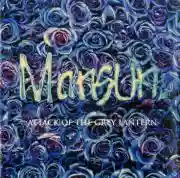
This debut album by the unforgettable Mansun had a strange life (much like the band's own career): released in March 1997 when the Chester quartet was practically unknown, this record shot to number 1 in the UK charts, dethroning none other than Blur.
During a Japanese tour that same year, Mansun were received as international superstars at the level of an actual "beatlemania"! It's not uncommon for English bands to receive such a welcome in the Land of the Rising Sun, but for a group that, until a few months earlier, was playing in modest clubs across Great Britain, it was still an extraordinary feat. The album's halved price led to a small cult success for Mansun in Italy as well, so much so that their subsequent works were much less followed: this does not take away from the fact that "Attack Of The Grey Lantern" is, in itself, a masterpiece, or almost.
It is a sort of concept album quite anomalous for the standards of 90s pop, with lyrics bringing forth situations and characters that seem to be taken from Oscar Wilde's works. In fact, aesthetically, Mansun presented themselves as a band halfway between typically dandy attitudes (reminiscent of both early Bowie and early Duran Duran) and a sound in any case closely tied to the independent scene, and conceptually, the lyrics by the singer Paul Draper (a perverse cross between Brett Anderson and Damon Albarn) address a dark tale of religion, sex, and love, transparently showing a polemic vein against the bourgeois hypocrisies of modern society.
The tracks are entwined with each other almost always through sudden noises, preserving the personality of each song... so it cannot be labeled as true prog style. The acoustic "The Chad Who Loved Me" opens the record as if it were to introduce an apocalyptic musical, with imperious strings that seem to fall like waterfalls, spilling over into a very acidic and very indie tune (for 1997). "The Only Mansun's Love Song," mocking right from the title, is a soft and subtly vicious ballad… but the best is yet to come.
"Taxloss", a polemical single (accompanied by a controversial video where the band members threw real banknotes in the London Underground), begins like electronic garage punk, somewhat à la Devo, only to freeze with a powerful dance interlude irresponsibly bolstered by electric guitars… in fact, the song's flow and its dissolved, "liquid" finale seem to suggest the idea of an orgasm. "You. Why Do You Hate Me?" is a brief ballad for voice and acoustic guitar also broken by the almost grunge intervention of the guitars, but it ends up being just a tasty appetizer for the album's peak: the stunning and ethereal "Wide Open Space", decadent and outrageous, immediately followed by the equally sharp "Stripped Vicar", a tale of a priest devoted to strip-tease, irresistible in the chorus (which freely borrows from "Changes", the David Bowie classic) supported by the ingenious indie/dance/pop/punk/new wave medley.
Throughout the album, Mansun seem to hit all the marks: the psychedelic soft jazz of "Disgusting", the pop halfway between Primal Scream, Suede, and XTC of "She Makes My Nose Bleed", the delicate and harmonious "Naked Twister", the guitar rock with glam nuances of "Egg Shaped Fred" (also featuring a keyboard inspired by "Hush" by Deep Purple), and the pyrotechnic finale entrusted to the epic Ashcroftian ballad "Dark Mavis", which not only represents the conclusion of the intricate story narrated between tracks, but also showcases a band capable of repeatedly striving for the sublime and, in the end, truly reaching it, with the endless string section that takes up the initial theme, a clamour of melancholy and, how shall we say, "romanticism" destined to be etched in memory for a long time.
If you ever find this album somewhere (the cover is beautiful), listen to this lost gem from the past decade: it also costs little and certainly won't do you any harm.
Loading comments slowly
Summary by Bot
Mansun's debut album 'Attack Of The Grey Lantern' arrived in 1997 to immediate UK chart success. The record is a distinct 90s concept album with dark, literary-inspired lyrics and a diverse indie sound palette. It mixes influences from Bowie to Britpop, standing out with its blend of rock, dance, and punk elements. The review highlights standout tracks and the band's unique aesthetic. This album remains a cult classic and a must-listen lost gem.Tracklist Lyrics Videos
Mansun
Mansun were a British alternative rock band from Chester, active from 1995 to 2003. Their debut, Attack of the Grey Lantern, topped the UK chart in 1997, and the follow-up Six became a cult favorite for its ambitious, genre-blending approach.02 Reviews
