
 •
Rating:
•
Rating:
THE REVIEW
Manowar is a complex band, much more so than critics and "experts" might think. I don't mean in a technical-compositional sense (we're certainly not dealing with a progressive group), but in the way they relate to the song, the sounds, and the lyrics, aiming to give that extra thrill to the listener, that sensation that goes well beyond super solos or mountain-crushing riffs.
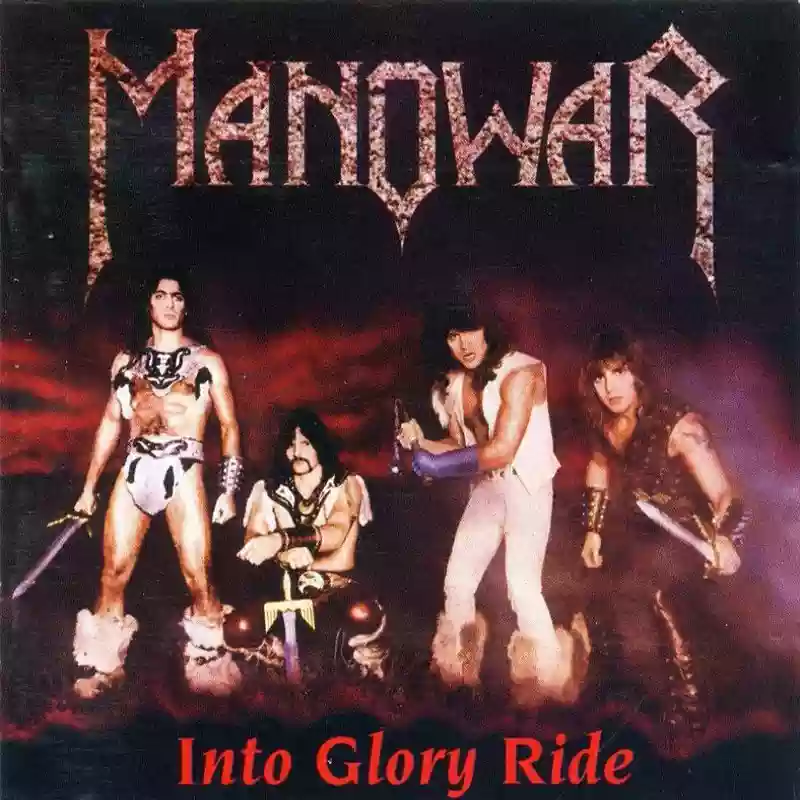
This philosophy is fully expressed in "Into Glory Ride," the second album by the New York band released in stores way back in 1983, a year after their debut album "Battle Hymns," which, though still immature, already made clear the intentions of the four young Americans. More determined than ever to assert their vision and concept of music, Manowar recorded in all respects an exceptional album, a bomb ready to explode, destined to give birth to and grow in parallel a genre of heavy metal founded on the aforementioned values and permeated with epic themes aiming to transport the listener to another world, perhaps a better one, where they can hide from modern greyness and unleash their imagination, now dead in the current metal (and beyond) scene. I'm talking about Epic Metal.
We then start with "Warlord," the only song on the record that stands apart from the others in both sound and attitude, introduced by a delightful recording now historic for every metalhead (which I'll let you discover on your own). We are indeed facing a carefree heavy song, purely eighties, finely adorned by Ross the Boss's guitar work. But the real album begins with the majestic stride of "Secret Of Steel" which manages to highlight the best features of each member and makes us notice that the journey has begun.
The journey continues with "Gloves Of Metal," which opens with one of the most beautiful riffs in the band’s history. Powerful and melodic at the same time, just like the rest of the song, which is perfectly orchestrated and leads us to sing our hearts out with Eric Adams in the liberating chorus, from which it is impossible to remain indifferent. The lyrics are an anthem to metal and to the fan who lives and supports it. A theme that, unfortunately, will be overused in the band's future lyrics.
We move to the fourth track. Here, a bass arpeggio by Joey DeMaio (famous for his melodic use of the instrument) literally opens the gates of Valhalla for us. Just close your eyes and they will appear before you, while, like a modern poet, the band's gifted singer will narrate to you of a Nordic warrior who, having died in battle, is about to sit beside Odin. This is precisely "Gates Of Valhalla," a gem of the genre, which captures and doesn’t let go, especially when the rhythm section and the guitar begin to make themselves heard, giving life to a phenomenal march where the sounds and atmosphere truly manage to move.
The subsequent "Hatred" perhaps does not reach this peak, an extremely peculiar song, to be listened to thoroughly to be understood, endowed with an atypical intermezzo where the evil and darkness contained here open to sudden flashes of musical sweetness. The track is extremely fierce and experimental and therefore probably not digestible by everyone.
With "Revelation (Death's Angel)" and "March For Revenge (By The Soldier Of Death)" doubts are dispelled. These epic steeds are true textbook trials for Manowar. In every sense. The first, centered on the theme of the biblical apocalypse, is electrifying, a powerful ride surrounded by exciting choruses with a Columbus behind the drums more relentless than ever... The second, with very violent lyrics, makes use of those sonic and melodic solutions that, combined with the granitic nature of metal, make it fantastic and rich in atmosphere, a perfect summary and finale of a journey that is, in every respect, epic.
Thus concludes, then, the second album of the most inspired Manowar, who in '83 reached a new and wonderfully classic peak unfortunately never reached again by the band, despite producing excellent works in the following years like "Hail To England" and "Sign Of The Hammer."
Now the "4 Kings" orbit around less incisive songwriting and a different musical offering that you may or may not like, leaving in the hearts of "old school" fans the hope of a glorious, epic return.
Loading comments slowly
Summary by Bot
This review praises Manowar's second album, Into Glory Ride, as a landmark epic metal release from 1983. It highlights the band’s vision to transcend typical heavy metal through immersive storytelling and powerful musicality. Key tracks like "Secret Of Steel," "Gloves Of Metal," and "Gates Of Valhalla" are celebrated for their iconic riffs and evocative themes. The reviewer acknowledges some experimental risks but overall finds the album an exceptional classic. The album is regarded as a high point unlikely surpassed by later works.Tracklist Lyrics Videos
Manowar
Manowar is an American heavy metal band formed in New York, known for epic, mythology-tinged lyrics, anthemic choruses and exceptionally loud live shows. Key releases include Kings of Metal, Into Glory Ride and Hail To England.47 Reviews
Other reviews
By mayhem
The soul is all in the immense voice of Eric Adams and the bass of De Maio, which in this work almost acts as a second guitar.
"Hatred" seems to be a contender for the worst track in Manowar’s history, but just listen to it without haste to realize that all things considered, it’s quite enjoyable.
