
 •
Rating:
•
Rating:
THE REVIEW
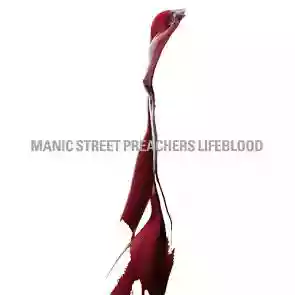
The Welsh group Manic Street Preachers brought out this other little gem in the fall of 2004, often, however, disparaged as just another album not "up to standard."
It is, rather, an unusually profound work, almost cerebral, exuding strong emotions while at the same time managing to come across as almost detached, without excessive personal involvement from the "actors": the clear, crystal-clear, almost cold guitar sound, and the effects, an integral part of the sound structures - albeit never overused - can only give the impression of a sort of spiritual testament, more than a deserved homage to themselves, a nod to the times gone by, besides being perhaps the main ingredient of a work perhaps not indispensable but at least extremely intriguing.
The Manics' music is intense, powerful, strongly emotional, yet without practically ever resulting from the use of distortions, fast riffs, or intense scales: their innate ability to be delicate while at the same time making the listener's inner chords resonate almost brings to mind, in some fragments, R.E.M. (forgive the comparison, it is not a stylistic similarity with Michael Stipe and his band, although I think it is not an entirely far-fetched hypothesis).
The first gem that oozes nostalgia without shame is "1985," dedicated to the year the group was formed, supported by a keyboard loop of a few but almost transcendental notes, while James D. Bradfield sings "So God is dead like Nietzsche said, superstition is all we have left" - in my opinion, the true essence of the Manics' new musical course lies precisely in combining few, almost sparse, components, in that magical and sublime - or perhaps subliminal? - way.
Next is "The Love of Richard Nixon," the true symbol of "Lifeblood," absolutely perfect in its simplicity, balanced, with the characteristic obsessively rhythmic synth, and the regular and without excessive variations on the theme - noteworthy are the sporadic guitar inserts - which but seems to be the perfect soundtrack for a clip on the White House. The lyrics almost seem to appreciate the work of the despised Republican president '68-'74, though mixed with the awareness that the good Nixon did was erased by the evident mistakes of his administration.
"Empty Souls" shines greatly for the dripping and crystal-clear initial riff, which frequently returns to give the typical flavor to the song, otherwise well made and without excessive frills, except, perhaps, for the words "empty souls" which in the singing seem almost thrown in at random. Much more traditionalist is "A Song for Departure," where there is more rock and less psychological engineering - a good song, all things considered; "I Live to Fall Asleep" is perhaps the first song to significantly drop in quality, and be a bit empty and certainly repetitive and poorly communicative.
At this point comes what I consider to be the best piece of the album: "To Repel Ghosts." Truly unique is the perfectly successful mix between the riffing and the supporting keyboard, a suitably moderate verse, a pre-chorus that recalls, with a bit of imagination, the more spiritual System of a Down, and a chorus that is absolutely over the top, the result of which can only be a shiver down the spine.
On the other hand, "Emily" disappoints, perhaps lacking the characteristics that played their part in the aforementioned wonderful pieces, even if not entirely foreign to the album's sound, "Glasnost'" is a curious piece that oscillates, with more or less good results, between the playful and the masterful chorus and brief solo.
Among the last four tracks, "Always Never" and "Solitude Sometimes is "do not add much to what has already been shown - my guess is that they were recorded at the same time as "I Live to Fall Asleep," when a bit of tiredness and lack of ideas began to set in. Although very slow and far from the canons of "1985" and "To Repel Ghosts," "Fragments" is pleasant and, in its small way, original. "Cardiff Afterlife" closes the album on average levels, without glory or infamy.
Ultimately, an album undoubtedly not comparable, in more than one respect, to the band's historical production, but which testifies, through some absolutely undeniable gems, that the Manics' career was not yet over by 2004.
A personal note: my compliments to James Bradfield, exceptional in hiding his horrible Welsh accent, and replacing it admirably with an American one that is very pleasant.
Loading comments slowly
Summary by Bot
Lifeblood by Manic Street Preachers is a profound and emotional album marked by a clear, almost cold guitar sound and subtle effects. Though different from their classic work, songs like '1985' and 'To Repel Ghosts' stand out with nostalgia and unique sonic blends. Some tracks fall short, but overall it shows the band’s continuing evolution. The album balances simplicity and depth, delivering a spiritual and memorable listening experience.Tracklist Lyrics Videos
Manic Street Preachers
Manic Street Preachers are a Welsh rock band formed in 1986, widely associated with 1990s British alternative rock and Britpop. The group’s history is closely tied to the disappearance of guitarist and lyricist Richey Edwards in 1995; he was declared legally dead/presumed dead in 2008. Their work is known for politically charged themes, literary references, and shifts from early abrasive guitar rock to more orchestral and pop-leaning records and later reinventions.22 Reviews
Other reviews
By francis
Lifeblood is without doubt the most accessible album of their entire career.
It is a pop sometimes a bit mild, this must be said, but it is refined and captivating like few others proposed in the music business.
