 •
Rating:
•
Rating: THE REVIEW
"She felt like a point, at the edge of a continent... she felt like nothing, the immense Atlantic before her..." This is what the Portuguese girl from Guccini's now-classic song felt, until she was overwhelmed. Many years later, this girl had become a woman, capable of communicating this sense of bewilderment through the splendid voice she had been gifted with: she was Teresa Salgueiro, singer and soul of Madredeus.
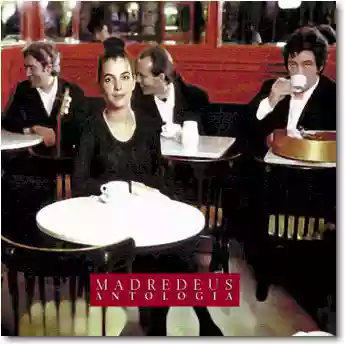
Well, things didn't quite go that way: Guccini's girl was just a symbol, but it's nice to imagine a vague and somewhat nebulous origin for this incredible group, sprouting almost out of nowhere to make the intense and painful nature of Portuguese music accessible to a large audience. Naturally, the star is Teresa, with her miraculous mix of bitter melancholy from fado singing and composed new age refinement (at times she seems like a Portuguese Enya), but the brains behind it is Pedro Ayres Magalhanes, author of most of the music and lyrics and a virtuoso guitarist, who together with the other excellent guitarist Josè Peixoto, creates delicate weavings of arpeggios, ideal for highlighting Teresa's vocal qualities. Completing the picture are a cello (yes, a cello, not a double bass and certainly not an electric bass) that gives body to the sound, and an accordion, a kind of accordion that in certain moments ("O pastor") evokes the legendary bandoneon of Astor Piazzolla.
A chamber ensemble, one might say, but capable of developing a sound balanced between Portuguese tradition and modern world music, with sporadic forays into other genres, like in "Oxalà", where the two acoustic guitars offer jazzy nuances, or like in the touching "As brumas do futuro", the most "international" of the collection, which captivates regardless of the almost total absence of "Portuguese color". This is instead particularly intense in a delightful little piece like "Andorinha de primavera", in a whirlwind and ghostly dance like "A vaca de fogo", with the accordion as the main protagonist, in "Alfama" and in "Guitarra", where it's needless to say which instrument dominates. But the moments that pin you down to listen in amazement, those that truly succeed in translating the feeling of standing before the Ocean into music, are others.
They are hypnotic songs, with an enchanted atmosphere, like "Vem" ("Come"), with the voice lingering sensually on these three letters for a time as long as an Atlantic wave, or like "O sonho" ("The Dream") so sweet and insubstantial that one wonders if it was really heard dreaming. And these aren't yet the highest peaks: what about "O Tejo" (The Tagus), the river of Lisbon which is both sea and river...? Just that it's there, you can see it. "Ainda" are free-flowing thoughts, cradled by the long wave of Teresa's voice and a fantastic, poignant crescendo motif, which surprises you by having to end. "O mar", a few verses to say that the sea is indescribable, so much wonderful music that instead makes the sea seep into your bones: behind you, you may have the most familiar and reassuring little houses decorated with azulejos (where they still remain), but in front of you, is the immensity. To be listened to with eyes closed, or at most with a book, perhaps by Antonio Tabucchi, now more Portuguese than Italian.
Loading comments slowly
Summary by Bot
Madredeus' album Antologia beautifully captures the essence of Portuguese music through Teresa Salgueiro's haunting voice and delicately crafted instrumentation. The blend of fado melancholy with new age and world music elements creates an enchanting and hypnotic sound. Highlights include richly textured tracks that evoke the Atlantic Ocean and Lisbon's rivers, making this album a timeless journey. The thoughtful arrangements by Pedro Ayres Magalhanes and the unique use of cello and accordion deepen the emotional experience.Tracklist Lyrics Videos
Madredeus
Madredeus is a Portuguese group formed in Lisbon in 1985, known for blending fado sensibilities with folk and world-music textures. The ensemble’s sound was defined for years by the voice of Teresa Salgueiro and compositions led by Pedro Ayres Magalhães. Their album Ainda served as the soundtrack to Wim Wenders’ film Lisbon Story.04 Reviews
