
 •
Rating:
•
Rating:
THE REVIEW
Everything has already been said. Everything has already been written.
It's beautiful, ugly, overhyped, disgustingly dance, it's "Donna Summer revived by Daft Punk", sex in search of sex, it's "the mirror ball of Danceteria crashing into Ground Zero", nothing more than a return to the past, nothing more than a clever, cultured anthology of references: sometimes subtle, sometimes not.
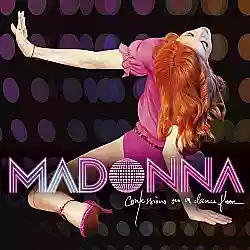
All true, all false. With just one fixed point: it's Madonna, and it works. Once again. Definitively abandoning the "electrorock" path of "Ray Of Light", Louise Veronica Ciccone, together with trusted Stewart Price (aka "Les Rhythmes Digitales" aka "Jacques Lu Cont", maybe not a genius, but certainly a master), chooses to revolve everything around a simple, simple motif, yet so damnably fashionable: the 80s dance.
And so she dances, sings, provokes, shimmies, quotes whoever comes to mind (Abba, Prodigy, New Order), falls into the purest self-celebration (the strings of "Let it will be" are an example, and then "Push", which so much recalls "Like a prayer"), snatches vocoder from the hands of Kraftwerk ("Sorry"), and is not ashamed to rob Daft Punk of their best instruments (filters) spreading here and there drops of spirituality seasoned with French Touch (Air).
It is an album to listen to, to dance to, all in one breath to preserve the illusion. Worth noting is the great fluidity in the transition from song to song: it's like listening not to a normal album but to a kind of “mix”, an uninterrupted continuum of “confessions”.
It starts off at a thousand with "Hung up", the first release, continues with the numerous retro references of "Get together", leading to the second explosive single, "Sorry", perhaps the most energetic and engaging track of the Twelve, and it goes on, always without discontinuity: "Future Lovers" (see Donna Summer), "I love New York", "Forbidden love" (see Kraftwerk), and then "Jump", whose rhythm manages to push even the shyest and most awkward "on the dancefloor".
Rounding it all off are "How high", "Isaac" (the voice at the end of the track is Yitzhak Sinwami, rabbi of the London Kabbalah Centre), and the dark, smooth step sequencer of "Like it or not". It's certainly cliché to emphasize the great style that characterizes the entire album, but it must be done because before being electronic-dance-celebratory to the point of nausea, it is above all pop, great pop, and if you take away the style, the pleasure of listening disappears. And of dancing.
Loading comments slowly
Summary by Bot
This review praises Madonna's 'Confessions On A Dancefloor' as a successful return to 80s dance music, expertly produced by Stewart Price. The album blends retro references with modern electronic pop, creating a seamless flow ideal for dancing. Tracks like 'Hung Up' and 'Sorry' stand out for their energy. Ultimately, it's a stylish and engaging pop album that revives disco influences while remaining fresh and enjoyable.Tracklist Lyrics Videos
Madonna
Madonna (born Madonna Louise Ciccone, August 16, 1958) is an American singer, songwriter, actress and cultural icon who rose to prominence in the 1980s and has had a multi-decade career marked by stylistic reinventions.55 Reviews
Other reviews
By CRAVESTMAN
This album is THE ESSENCE OF DISCO FROM THE 70s-80s-90s-00s.
The skill lies in always being able to rework the past to make something new and enjoyable for everyone as life should be: A CONTINUAL REINVENTION.
By manovalanza
Madonna chooses to make an anti-classical choice that overturns the expectations of the average listener.
The opposition between medicine and honey is already present in the project’s title (= "Confessions on the Dancefloor").
