
 •
Rating:
•
Rating:
THE REVIEW
The Anti-Classicism of Confessions On A Dancefloor
- General Context.
We are in the early 2000s, and the pop music scene is undergoing what I call a phenomenon of sowing and reaping: in a specific historical period, a significant number of new artists emerge, bringing changes to the music landscape, and often the already present artists struggle to surpass this process and get "reaped," meaning they stop selling. In this specific case, the new artists are: Britney Spears, Christina Aguilera, Beyoncé, Jennifer Lopez, Justin Timberlake, Nelly Furtado, Gwen Stefani, Timbaland, and Pharrell (to name the most well-known). While those being reaped are: Mariah Carey, Whitney Houston, Michael Jackson, Madonna, Prince, Lauryn Hill, Bjork, etc.
- "American Life" and the Decline.
Speaking of Madonna: she was not only a victim of this phenomenon but also shot herself in the foot. It's 2003, and Bush Junior has just been elected President of the United States, leading to the well-known consequences: wars in the Middle East, and the shock of the Twin Towers' fall was still fresh in Americans' minds. Madonna, in this precise historical moment, chooses to propose an album that aims to critique the American lifestyle: "American Life." The album is received anything but positively: it soon becomes the least sold in her entire discography and is considered by everyone as American ridicule. After the release of this album, Madonna suffers from media bullying, and the main ridicule was her age. She is a victim of what is called "ageism." Summarizing the narratives of the parodies and criticisms directed at her: "you're old and accept it, stop making music, stop showing yourself off, and believing in it."
- The Anti-Classicism of "Confessions on a Dancefloor"
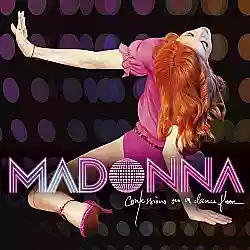
It is 2005, and Madonna releases the album: "Confessions On A Dancefloor." Madonna chooses to drench her songs with a layer of lightness characteristic of the "dance pop" music genre. While the music follows the lightness that the genre's prerogatives demand, this cannot be said for the lyrics and the messages transmitted. The prerogatives of a text belonging to this musical genre are lightness, talking about love in a frivolous way, and, finally, not focusing the listener on what is being said, but rather helping them escape any thought. Madonna decides to make an anti-classical choice that overturns the expectations of the average listener. The main subjects of the songs on this album are: anxiety, resignation, fear, a sense of uncertainty, abandonment, and a slight but bitter critique of the music world. All these subjects are dissected through both the twelve tracks of the album and the tour through a principle comparable to the one present in Lucretian poetry: the medicine in the glass is always present, but it is almost always coated or sweetened with a layer of honey on the rim so that the average listener won't ask too many questions. Madonna simply couldn't afford to present engaged lyrics: she is in the aforementioned situation precisely because of engaged lyrics; it was crucial that the lyrics, at least of the singles, seemed disengaged.
- Let It Will Be
The song that shows no traces of honey on the rim of the glass is number six, "Let It Will Be." We immediately understand that it is the most important track of all and serves as a key to the entire album because it is the only text printed in the album's booklet, and it is cited through just a few sentences that consequently become iconic for the entire album. These phrases are "I'm at the point of no return," "just watch me burn," and "I know you'll let it happen." Madonna selected these specific phrases to highlight among all she had written.
Text analysis:
It's immediately noticeable that the text is repetitive and direct, and this, in my opinion, succeeds in particularly effectively exalting the emotion that wants to be communicated: resignation. The phrases where this resignation is noted are the suffocating repetition of "let it happen": Madonna addresses the listener, inviting them to let her fall into anonymity. "You know it won't last long": Madonna, confirming the previous part, asserts that her career is almost at an end. "All those lights will go out," "I'm at the point of no return," and "just watch me burn." We are presented with a Madonna completely resigned to what she identifies as her inevitable fate, namely her irrelevance and career sunset. This is also deduced from the phrases "now I can tell you about success and fame, about all the ups and downs of the stars in the sky," "now I can tell you about the place I belong to, you know it won't last long, all those lights will go out." Worth noting is also the relationship established with the listener; there is a sort of reverence towards the listener: the singer's fate is placed in the audience's hands, just as a Christian's fate is placed in God's hands; furthermore, through the rhetorical question "won’t you let it will be?" it seems almost as if the singer feels neglected and forgotten by her listeners, exactly like a Christian might sometimes feel abandoned by God.
Performance analysis:
It's also very interesting how Madonna chooses to perform this track during the "Confessions Tour" (tour supporting the aforementioned album). In this performance, the artist chooses to exaggerate every movement type, moving across the stage as if willing to do anything, even getting hurt, just to capture the audience's attention, just to activate them. I believe in this performance, she makes a self-critique: Madonna is precisely representing what she has always done and what she is doing even at that moment: pleasing the audience, prostituting herself to the audience, and we see it in the fact that she tries in every way during this performance never to stop and to do all the movements that come to mind apparently in an uncoordinated way.
-Hung Up
Text analysis:
In this track, the Lucretian honey is present even in the lyrics, which are more vague than the previous one; however, it's certain that it's not about love: in the first verse of the song, Madonna cites a track of hers from 1989 called "Love Song," and the chorus of this song reads "this is not a love song!" The text of Madonna's quoted citation is as follows: "Time goes by so slowly, time goes by so slowly, time goes by so slowly, I don’t know what to do." The interpretation of the song that seems most plausible to me is that she is describing how the audience and the public perceived her during that precise historical period. In the chorus, the singer writes: "Everything you do, every word you say, I'm gonna knock you down." Madonna felt considered irrelevant and unheard. There is also a certain anxiety, communicated through a continuous obsession with time that culminates in a sentiment of frantic hurry that develops throughout the text. This refers to the extreme hurry society imposes on us; and the hurry Madonna experiences is the one linked to aging: according to public opinion, the older Madonna gets, and thus the more time passes, the more she would be irrelevant and ridiculed. We are thus described the bullying imparted by society against the artist, and artists in general: ageism. I find that in this song, there is a very intelligent way of criticizing society without it noticing, or perhaps it is simply the topic of societal hurry that fascinates me.
-Sorry
Text analysis:
This song, in my opinion, can be linked to another Madonna track: "Human Nature"; a song from 1994 taken from the album Bedtime Stories, which referring to the previous album "Erotica" and the erotic book of the same year "Sex," declared herself "unapologetic" for her actions. She should have "apologized," in the public view of that time, for adopting such a provocative image. And, in fact, Madonna in 1994 apologizes: both in the choice of a more commercial and conventional production sound and in the language that is careful to be as restrained as possible throughout the entire album.
In the song "Sorry," however, the public no longer demands apologies, quite the opposite: they don't want to hear any more. In this song, Madonna does the same thing she did in the previous track: she transcribes exactly what she believed the public opinion thought of her. The song opens with a phrase repeated six times, "I've heard it all before." This phrase would refer to the public having already heard the "apologies" in 1994 and no longer being willing to hear them again, no longer willing to see Madonna change style once more to erase a previous flop. (in this case, the previous flop is American Life)
The chorus goes, "I don't want to hear, I don't want to know, please don't say you're sorry" and then continues with other significant phrases, "don't explain yourself, words are meaningless, there are more important things than hearing you talk." The feeling of abandonment that pervades Madonna's pen is clear; and it's also evident the bitterness with which she describes this apathy from society: the image provided by the text is a clear photo of how the mass media approach her, and in complete complicity with "Hung Up" and "Let It Will Be" Madonna's feelings are not explicitly written, but are implied through the style and structure of the text.
-The "Confessions Tour" and Horses
A very interesting aspect of the Confessions Tour is the iconic image of the horse. Horses take on such importance that on the DVD cover of the tour there's Madonna dressed as a jockey with numerous images of horses. The performance that helps us understand the allegorical meaning of the horse the most is that of "Like a Virgin": Madonna, while singing the track from her second eponymous 1984 album, dances on a mechanical horse, and images of horses being hurt during obstacle races or competitions are projected on the big screens. There are also x-rays showing the horse's broken bones. The most plausible meaning is that the figure of the horses in the race represents the artist's figure in the show business: the artists as cannon fodder. Madonna makes a parallel between the exploited horse that runs (even risking its life) to enrich its owners through bets placed on him, and the artist, also cannon fodder of a business focused only on profit, often sacrificing the mental or physical health of the singer.
- Conclusions on Confessions on a Dancefloor
The confessions are what deceive the listener's expectations, what anti-classic Madonna performs in this project. The confessions consist of speaking about the unhappy and deep states of mind peculiar to the artist such as: anxiety, resignation, and a sense of abandonment. All of these caused by what show business and the mass media world represent: these are what led her to be a victim of the aforementioned unhappy feelings. Part of the confessions is therefore a critique both towards the narrative advanced by the mass media and towards the entertainment world, both promoting bullying centered on ageism. Particularly, the criticism raised against the entertainment world connected to ageism is to ceaselessly impose hurry and anxiety on the artist, so as to squeeze them, and thus make money, as much as possible. Parallel to these confessions, there is the almost omnipresent Lucretian honey that allows the listener not to be immediately overwhelmed by Madonna's feelings and criticisms, but to let loose on the dancefloor: this opposition between medicine and honey is already present in the project's title (= "Confessions on the Dancefloor"). The title is a summary of the phenomenon present in all the album's songs: intimate and heartfelt confessions are made but in an extremely frivolous context.
Loading comments slowly
Summary by Bot
This review examines Madonna’s 2005 album Confessions On A Dancefloor as an anti-classical dance-pop record layered with personal and societal confessions. It highlights Madonna’s response to career decline and media ageism, analyzing key tracks like “Let It Will Be” and “Hung Up” for their themes of anxiety and resignation. The review also discusses the symbolism in the Confessions Tour, portraying Madonna’s complex self-critique and artistic resilience.Tracklist Lyrics Videos
Madonna
Madonna (born Madonna Louise Ciccone, August 16, 1958) is an American singer, songwriter, actress and cultural icon who rose to prominence in the 1980s and has had a multi-decade career marked by stylistic reinventions.55 Reviews
Other reviews
By quadrispro
It’s Madonna, and it works. Once again.
It’s not a normal album but a kind of 'mix', an uninterrupted continuum of 'confessions'.
By CRAVESTMAN
This album is THE ESSENCE OF DISCO FROM THE 70s-80s-90s-00s.
The skill lies in always being able to rework the past to make something new and enjoyable for everyone as life should be: A CONTINUAL REINVENTION.
