 •
Rating:
•
Rating:
THE REVIEW
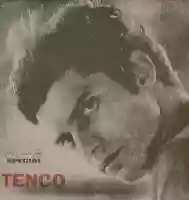
The album opens and closes with two songs that alone would secure a ticket to eternity, "Lontano lontano" and "Vedrai vedrai", two titles that are more than just a simple repeated word and risk truly remaining among the most beautiful episodes of our song.
The evocative power that Tenco's voice possesses is a miracle that is renewed with every listen, because Luigi is, first and foremost, his voice. This statement may seem trivial, but it's not uncommon to encounter singers lacking depth who seem to have their heads who knows where when interpreting their own texts. Legend has it, for example, that among the worst readers of their own verses are even some great poets of the Italian twentieth century (just a legend or is there a kernel of truth?). When we encounter a Tenco song, we see it and we blindly believe in what it says. Try listening to "Io sono uno", "Uno di questi giorni ti sposerò", or "Se sapessi come fai", you'll find more truth in those few minutes of song than in the entire discography of some self-proclaimed artist who built their career on heaps of lies. Another beautiful piece contained in the album is "Un giorno dopo l'altro", a song that leaves little hope for illusions; but seen from another perspective, it could represent a provocation aimed at awakening consciences that have been asleep for too long.
Ok, the arrangements might be a bit dated and reflect the years in which the album was recorded (1966) but Luigi's music, his lyrics, and above all his voice, are timeless.
Loading comments slowly
Summary by Bot
Luigi Tenco's 1966 album is celebrated for its emotional depth and timeless quality. The opening and closing tracks stand out as iconic pieces of Italian songwriting. Tenco's voice conveys unmatched authenticity and truth, making the lyrics resonate deeply. Although the arrangements reflect the era, the album's essence remains relevant and compelling.Tracklist Lyrics Videos
02 Io sì (03:27)
03 Se sapessi come fai (02:54)
04 Ah… l'amore l'amore (03:11)
05 Angela (02:46)
08 Tell Me That You Love Me (Parlami d'amore Mariù) (02:54)
10 Come le altre (03:05)
11 Una brava ragazza (03:43)
12 Pensaci un po' (02:14)
13 Il mio regno (04:12)
14 Quando (03:02)
15 La mia geisha (03:25)
16 Quello che conta (02:52)
17 Tra tanta gente (02:44)
18 I miei giorni perduti (03:19)
19 Tu non hai capito niente (02:14)
20 Triste sera (01:44)
21 Mi chiedi solo amore (02:09)
22 Io lo so già (02:36)
23 Non sono io (01:50)
24 No, non è vero (03:31)
25 Averti tra le braccia (03:08)
Luigi Tenco
Luigi Tenco (1938–1967) was an Italian singer-songwriter whose intimate, melancholic songs became touchstones of the 1960s cantautore era. Known for pieces like Vedrai vedrai, Lontano Lontano, Mi sono innamorato di te, and Ciao amore, ciao, he died in Sanremo in 1967.08 Reviews
