
 •
Rating:
•
Rating:
THE REVIEW
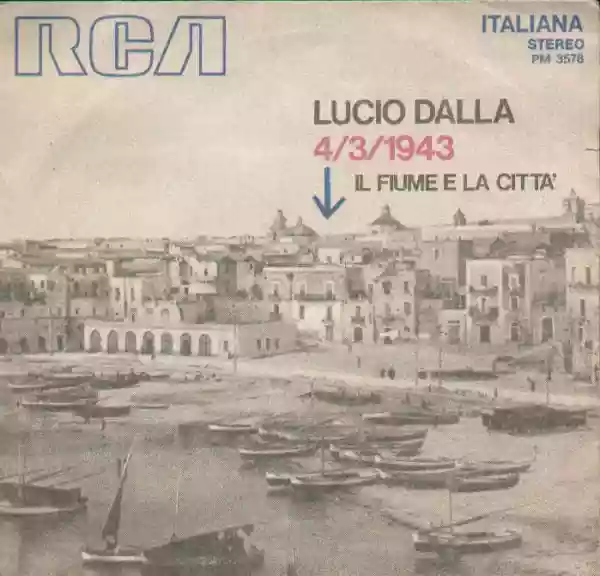
“She played at being the Madonna with the child to be swaddled.” It’s a phrase that always moves me when I hear it at Lucio's concerts. It’s a shame that in the official lyrics it has disappeared, like those thieves and those whores watching the baby Jesus cursing and drinking wine. There is all of life and all of faith in those few words. She played at being the Madonna. Is there anything more beautiful to say?
The genesis and evolution of the song are as significant as the song itself. I won’t be the one to repeat them to you, but I particularly like, it makes me happy to read that the lyricist Paola Pallottino wrote it as an ideal compensation to Dalla, who was orphaned at seven years old. It makes me think that in art, even in a pop song that comes third at Sanremo, there is always great consolation for life’s mishaps.
And what consolation if not embracing in God the shortcomings of existence? A game, a drama, and a joy, divine and roguish, the intoxicating smell of the sea and the worn-out scent of the port’s taverns. Contradictions that dissolve with surprising composure, reconciled. There is everything, a breath of life and dignity. A lullaby with tavern verses.
I like it more than Faber’s Pescatore, for example. It’s not mere exercise of prowess; there is an emotional participation that makes you think of this story as if it really happened, there’s not a single moment where the protagonist’s profile and that of the singer diverge. My mother, it is said. She waited for me as a gift of love. Holding me to her chest. These are wonderful images, and in the first person, they explode in their evocative power.
Jesus as the child of a rape or almost, the Madonna half prostitute, the Father soldier killed. The son who ends up scraping by in the underworld. Yet this song is an idyll, there’s not a single moment where sadness prevails. Sadness doesn’t exist here. This is the Gospel and this is the moral compensation of a friend to Lucio.
Musically, it seems like a little song. And in fact, it is. A light whistling. One day I played it, and my father was surprised, starting to hum it like those ballroom tunes about women and wine. But that’s okay, I read it as the unexpected point of contact between my musical universe and his, which otherwise do not even touch.
Then, and I swear I’ll stop after this, the story of baby Jesus reminds me so much of Elsa Morante's novel, La storia. There’s Iduzza, there’s Gunther, there’s Useppe, the war and death, life in hardship that strengthens. The novel came out a couple of years after the song.
Loading comments slowly
Summary by Bot
This review praises Lucio Dalla’s song 4/3/1943 for its deep emotional resonance and lyrical richness. It highlights the song’s themes of faith, life’s contradictions, and consolation found through art. The reviewer appreciates the intimate and evocative first-person storytelling and the song’s simple yet profound musical style. Connections to literature and cultural context enrich the song's significance.Tracklist Lyrics
02 Il fiume e la città (03:48)
Lucio Dalla
Lucio Dalla (Bologna, 4 March 1943 – Montreux, 1 March 2012) was an Italian singer-songwriter, musician and actor. Clarinetist by training, he blended jazz roots with pop and canzone d’autore, rose with the Roversi trilogy (1973–76), and reached a peak with Com’è profondo il mare (1977), Lucio Dalla (1979) and Dalla (1980). He co-led the 1979 Banana Republic tour with Francesco De Gregori and wrote the classic Caruso (1986).50 Reviews
