
 •
Rating:
•
Rating:
THE REVIEW
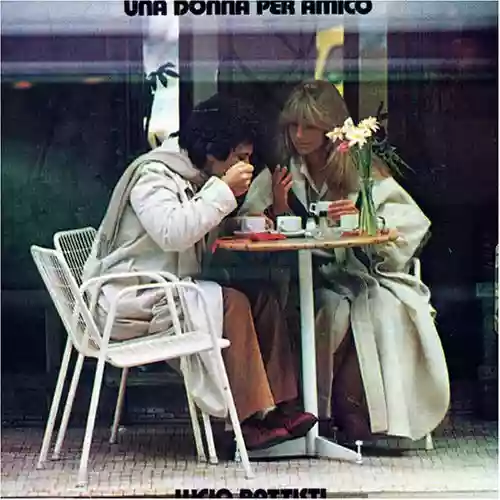
Probably, together with "Umanamente uomo: il sogno" (1972), it is the best album of the early Battisti period (that is, pre-Panella). "Una donna per amico" is an album rich in intriguing sounds and curious jazz and blues contaminations. Clearly superior compared to "Anima latina" although this time there are no traces of either insane experimentation or avant-garde electronics. Yet certain musical intuitions are more brilliant, and perhaps even more insane, than in the previous "Anima latina". It's a mature Battisti, unsurpassable in his histrionic playfulness, capable of illuminating the lyrics (excellent as they are) of a Mogol in an evident state of grace.
The album consists of eight songs, among which "Prendila così" and "Aver paura d'innamorarsi troppo" stand out. The first is a splendid pop composition with clear jazz influences (the long final tail is amazing and extremely elaborate) while Battisti's voice seems to blend perfectly with the guitars that, in the background, sweeten a slightly mischievous lyric ("E tu sai che io potrei purtroppo anzi spero non esser più solo"). It is worth remembering that the arrangements of the track (and the entire album) are by Geoff Westley, an Anglo-Saxon super boss who vainly attempted to export the Battisti phenomenon to England. Westley performs a miraculous job on Battisti's beautiful music, and for Lucio, having changed work city (from Lombardy to London), is a source of wonder and inspiration. "Aver paura di innamorarsi troppo" is also a super pop track for permanent hits in which Battisti tries to sing using his proverbial hoarse voice as a rogue instrument of seduction. It's impossible to resist him when he whispers "Non farsi vivo e non telefonare, parlar di tutto per non parlar d'amore, cercar di farsi un pò desiderare è proprio un vero dolore". And it's complicity, seduction, irony, the weapon that Lucio uses almost without scruples: Mogol's words seem like real shots, impossible to dodge. The most famous track is, of course, "Una donna per amico": a typical song for stable and solid first places, it's one of those tracks that will never grow old even in a million years. It's a cunning (yet beautiful) dance song, built around a very slender sequence of notes and a harmonic loop that remains constant. Battisti's talent, and Westley's cunning, make the song an eternal evergreen: after the experiment, partly unsuccessful, of "Ancora tu" where pop rhythms gave way to dance beats, Battisti finally finds the long-sought-after solution. "Una donna per amico" will remain in the hit parade for almost six months and will not leave the charts at least until 1980. There must be a reason, right? Furthermore, "Donna selvaggia donna", a portrait of an atypical, unconventional, dazzling, and trendy woman, is a beautiful track in which Battisti unleashes all his blues soul (and he had a lot, believe me). It's impossible not to love "Perché no", a wonderful composition in which the very violent sound of the piano seems to sweetly accompany Battisti's voice in languid and romantic verses ("In un grande magazzino una volta al mese, spingere un carrello pieno sotto braccio a te, e parlar di surgelati rincarati, far la coda mentre sento che ti appoggi a me"): a more romantic and optimistic version of "Anche per te" (1972). Finally, a somewhat underrated triptych: "Nessun dolore" is splendidly pop (with clear rock hints) and revolves around a sequence of notes and instruments that would make any modern musician envious. Listen carefully to Lucio's voice during the very first chorus: doesn't it seem to touch almost heavenly notes? (perhaps not even Aretha Franklin could have done so); "Maledetto gatto" is the classic ironic and simple song, yet absolutely fun; "Al cinema" is a seemingly silly yet very complex song: the chorus is extremely elaborate and the verses never give in to gratuitous sentimentality or experiences felt and relived. In short, a great album. Anything else to add?
Loading comments slowly
Summary by Bot
Una donna per amico stands as one of Lucio Battisti's finest early works, blending jazz, blues, and pop with masterful arrangements by Geoff Westley. The album features standout tracks like "Prendila così" and "Aver paura d'innamorarsi troppo," showcasing Battisti's compelling voice and Mogol's inspired lyrics. Its timeless melodies and clever compositions secured long-lasting success and remain influential. The review praises the album's musical maturity and emotional depth, highlighting it as a classic masterpiece.Tracklist Lyrics Videos
Lucio Battisti
Lucio Battisti (1943–1998) was an Italian singer, composer and producer from Poggio Bustone. He rose to prominence in the late 1960s and 1970s with lyricist Mogol, crafting many of Italy’s most beloved songs, and later pursued a radical electronic and linguistic shift with Pasquale Panella (1986–1994). From 1980 onward he withdrew from concerts, TV and interviews, insisting the art should speak for the artist.104 Reviews
Other reviews
By cece65
This album represents, in my opinion, Lucio Battisti at one of his highest musical pinnacles, with some points of absolute excellence.
If Lucio had been English or American, his fame would have been worldwide.
By Martello
"A chocolate of dark hue, harmless in the wrapper and bitter on the tongue, like that little song."
"I still owe a lot for being the adult I am now. Wherever you are, take it as it is and don’t make a drama out of it."
By JpLoyRow
A flawless and timeless classic that blends emotive lyrics with unforgettable melodies.
Una donna per amico remains a vital and deeply resonant work in Italian pop music.
