
 •
Rating:
•
Rating:
THE REVIEW
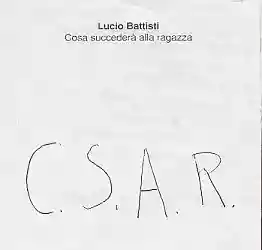
"Cosa Succederà Alla Ragazza" (1992) emerges as the most extreme point of the dismantling process of the pop toy initiated by Lucio Battisti and Pasquale Panella with Don Giovanni in 1986.
The sounds are derived from funky-dance, characterized by a synthesis between a very elaborate electronic rhythm (sometimes tight, sometimes more swinging, even with interesting dub hints), and the melodic evolutions that Battisti has always accustomed us to.
The sound is always very well-crafted and tracks, composed through a cut-up technique, are the result of an elaboration of the best dance scene of the early 90s: the Battisti-Mogol purists may wrinkle their noses, but if one forgets about blonde braids and blue eyes, it can happen more than once to jump out of their chair while the foot cannot help but go in time.
Panella's enigmatic poetic language this time bends to the portrayal of a day experienced by a female protagonist from her awakening until late at night.
The lyrics, full of linguistic games, range from pure stream of consciousness to descriptions of absolutely everyday life scenes.
Any subway ride, a morning of shopping, or a meeting in a crowded square constantly offer cues for a continuous flow of free associations and complicated fantasies.
The reading is further confused by disorienting and sudden reversals of the narrating self, which seems to be the ultimate mutation of the cinematic storytelling typical of Battisti/Mogol.
The irony of previous albums transforms here at times into amused malice where Battisti seems to chuckle at the absurdity of what he sings or seems to enjoy repeating random text fragments with strange emphasis, without any further meaning except the purely phonetic and expressive one.
Paradoxically, it's perhaps the album closest to the everyday life scenes of historical works like "Io Tu Noi Tutti" or "Lucio Battisti, La Batteria, Il Contrabbasso etc.", except that here the same everyday life is seen and blurred through a kind of crazed inner camera and the protagonist of the Battistian poetics is no longer the couple, but rather the reflection of a dissociated personality in the chaos of a labyrinth-like city.
The beauty is that the result more than a philosophy essay resembles a film by the most mocking Fellini where no one ever stands still and the narrative levels are completely tangled.
Complex yes, but damn fun.
Loading comments slowly
Summary by Bot
‘Cosa Succederà Alla Ragazza’ marks Lucio Battisti's boldest departure into electronic funky-dance rhythms paired with complex, enigmatic lyrics. Pasquale Panella's poetic style guides the album’s narrative, depicting a day through a female protagonist’s perspective with disjointed storytelling and playful irony. The production embraces early 90s dance influences while maintaining Battisti’s melodic inventiveness. It's a complex yet captivating work blending cinematic storytelling with infectious beats.Tracklist Videos
Lucio Battisti
Lucio Battisti (1943–1998) was an Italian singer, composer and producer from Poggio Bustone. He rose to prominence in the late 1960s and 1970s with lyricist Mogol, crafting many of Italy’s most beloved songs, and later pursued a radical electronic and linguistic shift with Pasquale Panella (1986–1994). From 1980 onward he withdrew from concerts, TV and interviews, insisting the art should speak for the artist.103 Reviews
Other reviews
By Viva Lì
It’s like a Picasso painting, you know it’s beautiful but you don’t fully understand why.
Battisti hits the masterpiece: 'Cosa succederà alla ragazza.' The process of musical disintegration has now been completed.
By Battisti
CSAR is an album that is stratospheric, spatial, universal, metaphorical, Felliniesque, erotic, sensational.
The masterpiece of masterpieces is reached in 'Però Il Rinoceronte' – this is the apotheosis of Battisti’s repertoire.
