
 •
Rating:
•
Rating:
THE REVIEW
It's 1972, a memorable year for rock. Jethro Tull releases "Aqualung", Deep Purple's "Machine Head" comes out, and Genesis rise to the top of progressive with "Nursery Crime", while radios continuously play "Stairway To Heaven" by Led Zeppelin, released a few months earlier, and Pink Floyd are working on "The Dark Side of The Moon".
But '72 is also a crucial year for glam-rock. Roxy Music stands out, backed by a young keyboardist... Brian Eno and David Bowie, who is already an established star. During that period, a new talent known only to a few for his past in Velvet Underground emerges on the glam scene: Lou Reed.
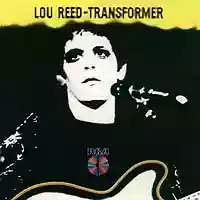
The young New Yorker is not discouraged by his not very successful solo debut the previous year, and in '72 he records "Transformer", an album destined to become a milestone for future generations. The album is produced (not by chance) by Bowie himself, who has always shown a particular vocation for launching new talents, and it positions itself as a direct rival to "Ziggy Stardust" by dear David.
The first track "Vicious" can be understood as the manifesto of the entire album, the lyrics, suggested by Andy Warhol, center on being vicious and ironically address a problem frequently discussed by both the solo artist and the Velvet Underground: sadomasochism. In the track, Reed's ever-present voice helps give it a sense of completeness that would be missing with just a guitar riff, essential for the rhythm but at the same time monotonous. "Andy's Chest" is a slow track characterized by the use of a choir that serves as a backdrop to the vocal performance of the former Velvet Underground. Then it moves to "Perfect Day" which remains today one of the highest expressions of Lou Reed's compositional ability, with a piano that seems to narrate alongside the singer's melancholic and subdued voice, harmonizing perfectly with a string section that does not appear excessive at all, but on the contrary, lightens everything. To break the gentleness of "Perfect Day" comes "Hangin' 'Round", an energetic track where the guitars make themselves heard again, accompanied by an unexpected rock'n'roll-derived piano. "Walk on the Wild Side" remains one of the author's most famous tracks, with the bass taking center stage, the rhythm marked by a great use of cymbals, and the sax contributing to making the final part more substantial. In "Make Up", characterized by Herbie Flowers' tuba, Lou Reed declares his sympathy towards gays and transvestites. This track has the privilege of introducing "Satellite of Love", one of the most beautiful glam ballads ever, where the piano takes on the role of leading instrument, and from the chorus emerges Bowie's unexpected voice, reaching very high notes. According to an urban legend, Bowie himself would be the author of the rockin' "Wagon Wheel", yet nothing confirms such a thesis, on the contrary, the lyrics with typical Reed-esque canons disprove it.
David Bowie, who is omnipresent in the second part of the album, doubles Reed's voice in some verses of "New York Telephone Conversation", which stands out for the use of the piano in full Cabaret style. "I'm so Free" offers us a beautiful solo by Ronson on the guitar and describes a happy and carefree moment of the protagonist. The album concludes with "Goodnight Ladies", created thanks to the collaboration of Herbie Flowers on the tuba (already present in "Make Up") and a typical dixieland orchestra.
The themes addressed in "Transformer" appeared in '72 as uncomfortable, embarrassing, and scandalous, but the author's intent was to put on sheet music his own vision of the place where he grew up: New York, highlighting its most hidden and ignored aspects. Therefore, Lou Reed's art is not limited to the undisputed compositional ability for which he is often praised but should be placed in a broader context, in which Reed represents the stereotype of the modern metropolitan poet.
Loading comments slowly
Summary by Bot
In 1972, Lou Reed released Transformer, a landmark glam-rock album produced by David Bowie. Despite a modest start, Reed crafted songs addressing themes of sexuality and New York life with unique musical textures. Standout tracks such as "Walk on the Wild Side" and "Perfect Day" exemplify his poetic vision. The review praises the album as a milestone and highlights Bowie’s influence on its success.Tracklist Lyrics Videos
Lou Reed
Lou Reed (born Lewis Allan Reed, March 2, 1942 – October 27, 2013) was an American musician, singer-songwriter and founding member of the Velvet Underground. He had a long solo career noted for albums such as Transformer, Berlin and New York and for experimental works including Metal Machine Music.71 Reviews
Other reviews
By francis
An album still 'on the fringe' that simultaneously achieves success and reaches the masses without betraying his glorious past.
Under the festive and cheeky outfit of classics like 'Vicious' and 'Walk On The Wild Side,' there's a universe of alienated and eccentric freak artists, drugs, madness, and despite everything, hope and utopia.
By sellami
The legendary Lou Reed gives us a small masterpiece of music!
Impossible to resist the force of the song.
