
 •
Rating:
•
Rating:
THE REVIEW
NORMAL OR SUPER 7/10
"Normal or Super", 1976, can be considered in all respects the first real commercial success for Bertè, after the unfortunate "Streaking", 1974, shamelessly boycotted by RAI (the accusations were those of "provocative content" and an osé cover). Bertè found herself with the song of her life in her hands, the one that would throw open the doors of success: "Sei bellissima". This is how things went: Bertè had a love story with the Sinner of the 1970s, Adriano Panatta. A stormy relationship that filled the front pages of scandal magazines of the era (and Borg was still far from showing up—clearly, Bertè had a thing for tennis players), and she wrote the lyrics almost on impulse, with the help of Malcom Pagani (music by Gian Pietro Felisatti). However, since she was not yet registered with S.I.A.E., she had to have the couple Daiano/Felisatti sign the song, who, in hindsight, made a nice profit as the song—despite its sensational elimination from Un disco per l'estate in 1975—immediately achieved overwhelming success. Hit parade guaranteed and one hundred thousand copies sold, in two versions. The first (censored) contained the "scandalous" lyrics: "A letto mi diceva sempre/non vali poco più che niente" (funny, Panatta...) replaced by the more innocent "e poi mi diceva sempre/non vali poco più che niente" three months after the first (the first version was released in April, the second in July). Various covers (Iva Zanicchi, Dolcenera, Syria, Alessandra Amoroso, Fausto Leali, even a Portuguese version by Vanessa Barum in 1997), but for sure the success of that single could not remain “dead letter,” and so it was decided to build an album around it: "Normal or Super."
An album that includes the entire ghota (elite) of Italian music at the time (and much of that world that would make Bertè a top star, at least until 1984). Not everything lives up to expectations: of the 12 songs present, at least a dozen (maybe more) have ended up forgotten (some without reason, since none were truly contemptible), and abundance, as always, impacts the result negatively (the album lasts the right amount, 43', but almost all the tracks are very short). Standing out is "Indocina" (Avogadro – Pace – Lavezzi): oh my, a political song on a Bertè album, I believe—at least as far as I remember—the only one, but it's beautiful, with its “fabbrica occupata” (the other “fabbrica occupata” sung in the Italian songbook was by Venditti, 1973, the song “Le tue mani su di me”) but "a tutto questo amore/tu non ci pensare/un po' di cielo, un po' di sole e un po' di mare" (the single reached 15th on the charts). Cocciante also sang Indocina, but this one is better.
Also worth remembering is the very rhythmic "Serenade" (on an album that turns strongly toward rock), again from the aforementioned award-winning trio. There's also Fossati, still (almost) unknown (he had released 4 albums which had little, very little, success), who "gifts" Bertè the excellent "Per effetto del tempo" (music by Oscar Prudente), the first of many collaborations between the two (which later led to cult "Non sono una signora", 1982). I'd like to mention "Meglio libera", which closes side A, and was written not only by Avogadro and Pace, but also Mario Tessuto and Umberto Napolitano: the song, feminist to the core, is beautiful, and Bertè’s interpretation almost magically accentuates its tragic and at the same time liberating tone. Alberto Salerno also contributed, though less convincingly (for newcomers: he wrote, among others, "Io vagabondo" and is the husband of Mara Maionchi): his are “L'attrice”; “Aiutami”; “Piccola io”, the latter being the best of the three. There is also (could he be missing?) Mogol with the interesting "Gli orologi", while the rather evanescent closer "Spiagge di notte" is signed by Daniele Pace alone. Plus two other minor (very minor) tracks: "Adesso che è mattino" (written by eight hands, too much grace) and "Brucerei" which also involves the legendary Lorenzo Pilat.
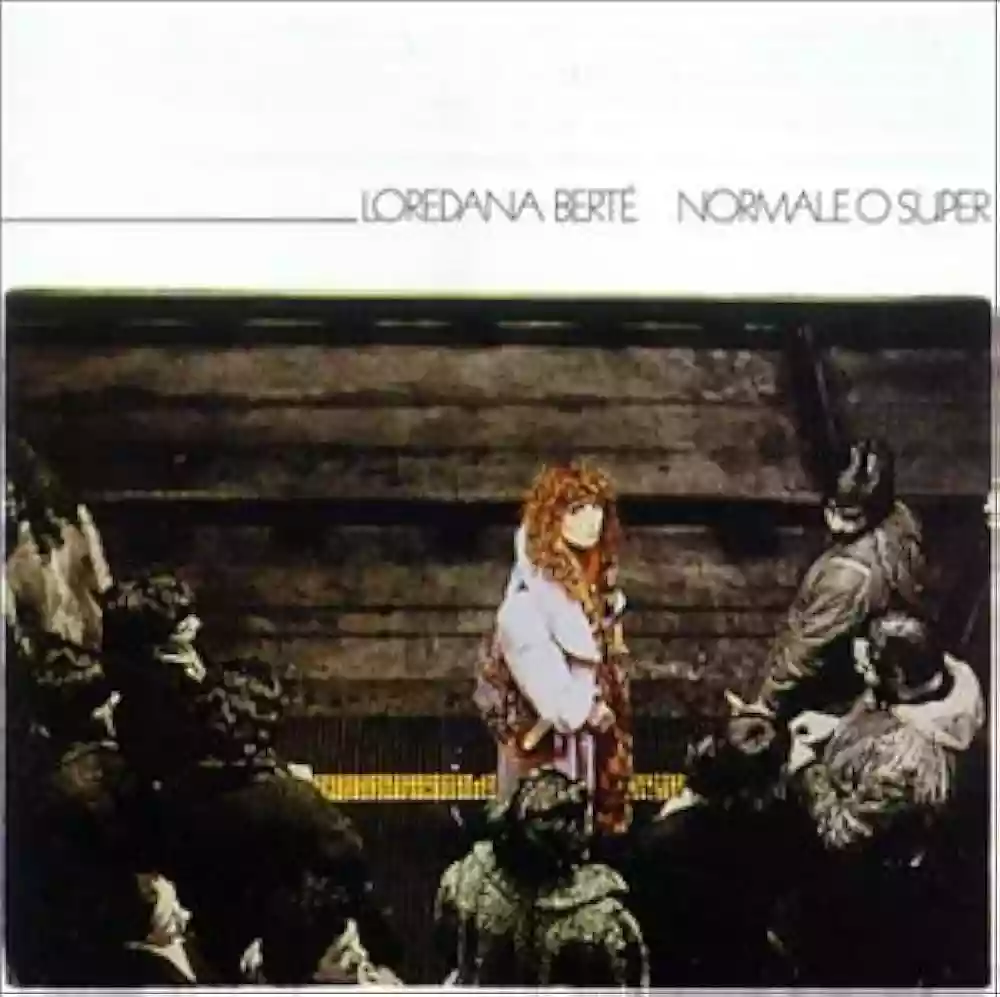
Given that nude covers were being boycotted, Mauro Balletti, photographer, came up with a cover in which Bertè, lost among the crowd in a subway station, appears heavily covered (heavy coat, scarf: everything’s there). The album, like many by Bertè from that period, was magnificently reissued and remastered in 2022 by NAR at €12.99. Worth rediscovering.
Loading comments slowly
Summary by Bot
This review evaluates Loredana Bertè's album 'Normale o Super.' It offers a balanced perspective on the album's strengths and weaknesses. The reviewer gives it a mid-range score, indicating a mix of notable qualities and areas for improvement. Musical style and vocal performance are discussed. Production and artistic direction are also addressed.Tracklist
Loredana Berté
Loredana Berté is an Italian singer and performer known for a powerful voice, provocative imagery, and a run of major hits from the late 1970s to the early 1980s. Sister of Mia Martini, she helped inject reggae and rock into Italian pop and remains active on stage and in the studio.09 Reviews
