
 •
Rating:
•
Rating:
THE REVIEW
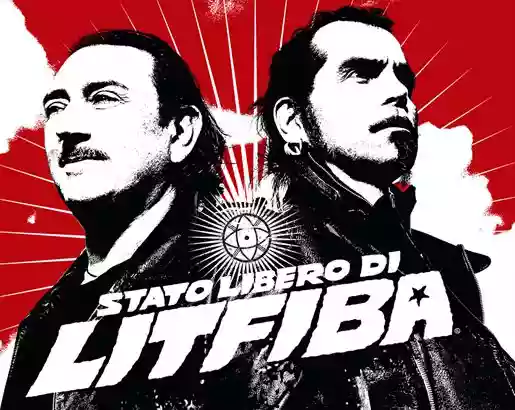
Last April, I went to Rome and in a very hot PalaEur, I watched an entertaining performance by the revitalized duo 'Renzulli-Pelù'. Strong stuff, at least historic because it was unexpected. It was a night full of honest and 'working-class' rock n roll: no stroboscopic special effects, no moving stages. Just music and nothing more. I wanted to wait before writing about it because I was waiting for the release of this new double live album. A usual format for our Florentines, the double album, already used for Colpo di Coda and Croce e Delizia. Indeed, the price seemed a bit off to me—I have in my hands the limited edition version, with an exceptional 36-page booklet of very suggestive photos and drawings, in Frank Miller style—for a reunion that had been awaited for eleven years. But by reading the tracklist, the possibilities were all there.
Having the entire discography at their disposal and being able to calmly choose what to bring to the show and what not (see the album of discord Infinito, completely ignored), the sequence is truly captivating. Even though they had to skim through equally historic pieces, the Lit attempted to get the crème de la crème of their production, in a collage at least nominally very successful. The troubles (if you can call them that) occur during actual listening. Because the two unreleased tracks (Sole Nero and Barcollo) are easy to listen to but seem more like an enhancement of the last period of Pelù's solo career than a real return to the golden era of the '90s, as had been proclaimed. And because some of the tracks that most excited me during the show in the Capital lose their effect when put on a record. Thus, the classic Dimmi Il Nome, Maudit, Lo Spettacolo, El Diablo, Proibito, and Spirito, though offering genuinely honest and technically perfect interpretations, and not unpleasant to listen to, appear a bit conventional. In particular, the backing band is made up of competent but mercenary musicians, who don’t always seem to know how to follow the escapades of the two rock champions to whom the name Litfiba is tied. The drums at times lose power, the presence of the keyboard is not always evident, the bass often has a marginal role. Even the mixing (done at O-Zone studio, an eco-friendly facility in Florence) seems to want to highlight at all costs the voices and guitars of the two prima donnas, putting the rest of the instrumentation a bit in the background. It’s inevitable that, under careful analysis, the best and most heartfelt tracks are the least expected ones: a new version of Ferito, sung over the theme of Tex, the tough A Denti Stretti and Cuore di Vetro, the playful Ritmo 2, a fantastic Resta (perhaps the best of the bunch, along with the revamped performance in Dio). In these moments, it truly feels like a return to the essence of the old-style Litfiba, and in a curious mix, the mentioned tracks don’t stray too far from the peaks touched, on the record, by pieces with a more demanding history, like Lulù & Marlene, Gioconda, or Fata Morgana.
Ultimately, this probably wouldn’t be the album I’d recommend to someone wanting to get educated about the Tuscan band. Pelù, a real stage beast, gives it all he’s got. He takes aim at politicians, who in his view are promoters of a new form of freedom, which, however, has nothing to do with the people's reality. He mocks the pope, dedicating Bambino to him and replacing the name 'Ratzinger' with the expression '666' in El Diablo. Ghigo is very inspired, never intrusive, but knows when to indulge in strong and enveloping solos. He even references the distortion of the American anthem (a la Hendrix) already presented on record with the historic live Aprite i Vostri Occhi (another world, another era). But maybe it's still not enough. Sure, the fan in me will push me to listen, re-listen, and listen again to this further proof of how rock (or the fame for money!) can survive all storms. And if once upon a time I would have ended the review with the classic "que viva el bandido"—by the way: nice performance in Gangaceiro—I now realize I have to update my motto:
WELCOME TO THE FREE STATE OF LITFIBA!
Loading comments slowly
Summary by Bot
This review covers Litfiba's double live album 'Stato Libero Di Litfiba,' documenting their highly anticipated reunion after eleven years. The live show delivers honest, working-class rock without gimmicks but the album's listening experience reveals mixed results. While some new tracks lean more toward Pelù’s solo style, classic hits feel technically solid yet somewhat conventional. The backing band and mixing decisions at times lessen the album’s overall impact, though several revamped tracks evoke the band's old essence. Ultimately, a thoughtful listen for fans but not the best entry point for newcomers.Tracklist Lyrics Videos
Litfiba
Litfiba is an Italian rock band formed in Florence around 1980. They were central to the Italian new wave/post-punk scene of the 1980s and are widely associated with the early trilogy of albums Desaparecido, 17 Re and Litfiba 3. The core public figures in reviews include Piero Pelù and Ghigo Renzulli.87 Reviews
Other reviews
By REUTER
Finally, good music is back in Italy.
They understood their place was together and not ruining each other’s reputations.
