
 •
Rating:
•
Rating:
THE REVIEW
When the passion for music persists through difficulties and unfortunate events, it means we are dealing with a talented artist. Kottke is indeed one of them. In fact, despite his hearing being seriously damaged during his military service in the Navy, and suffering a tendonitis in the early '80s, he steadfastly continues his musical pursuit. DeB & Guitar (Vol 1.4).
The six-string and especially twelve-string acoustic guitar is a fascinating instrument. With its rich harmonies, it can give the listener profound and unforgettable emotions. Kottke is among the most meticulous musicians in the vast guitar world. His virtuosity is characterized by a personal technique and an extraordinary speed. But it's the sensitivity of his touch that makes him so appreciable to listen to. In fact, the first instrument he started playing was the trombone, and only later did he turn to the guitar. Even though there are slight influences of J. Fahey, Kottke has a unique style due to more incisive and powerful, almost percussive, sounds that will inspire prominent guitarists like M. Hedges. In the '70s, he would release the masterful "6 & 12 string guitar" (Takoma) and the astonishing live album "My feet are smiling". A
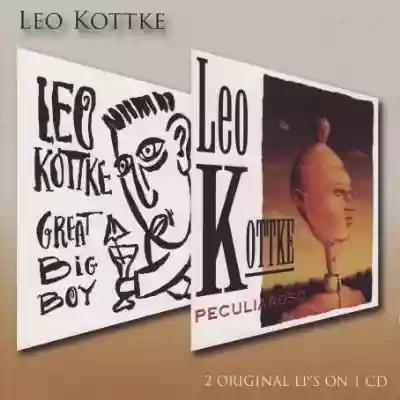
highly creative period like the '70s contrasts with the less lucid '80s. The '90s brought him back to a revitalized compositional energy. These two discs included on a single CD (about 71 minutes) are examples of this. Both works are of notable musical depth. His pieces are infused with an unusual 'humor' and a deep, subtle, polite, and elegant tone at the same time, difficult to imitate. His baritone voice, confidential and playful, though not endowed with a broad vocal range, always remains pleasant because it can stimulate the listener's sensitivity. "Great big Boy" (1991) was the first album to feature all vocal tracks. Among the most remarkable pieces, I would like to mention: "Running Up The Stairs", "Driver", "Great Big Boy" with a suggestive flute, both imbued with a veiled melancholy, while "Big Mob On The Hill" for its carefree tone. "Peculiaroso" (1994, produced by Rickie L. Jones), differs from the previous one as it has a clear predominance of instrumental tracks. Moreover, it features guests of the caliber of Dean Parks (electric guitar), Van Dyke Parks (Accordion), and R. L. Jones (Harmonies). "Poor Boy", where Kottke also plays the acoustic slide guitar, "Wonderland By Night", and the small masterpiece "World Made to Order" quickly won my heart. The essential booklet contains comprehensive notes on the musician. As for the covers, while that of "Great Big Boy" is mediocre, that of "Peculiaroso" is surreal.
In the end, these are two excellent albums full of dreamy, reflective, and intimate atmospheres. If I had to make a choice between the two albums, I would lean towards the second. Here the essence and spirit of the guitarist are best expressed, with a more elaborate and refined result in the composition. Peculiar greetings ©.
Loading comments slowly
Summary by Bot
This review highlights Leo Kottke’s resilience and exceptional guitar skills despite his physical challenges. It compares his albums Great Big Boy and Peculiaroso, noting their distinct styles—vocal-led versus mostly instrumental. Both albums showcase Kottke’s unique tone, humor, and refined composition. The reviewer favors Peculiaroso for its deeper expressiveness and collaborative richness. Overall, these works offer intimate, reflective musical journeys.
Leo Kottke
American acoustic guitarist and composer known for virtuosic fingerstyle on 6- and 12-string guitars. Early landmark recordings include 6 & 12 String Guitar (Takoma) and the live album My Feet Are Smiling. Recognized for a percussive touch, subtle baritone vocals on some later records, and links to John Fahey's circle.02 Reviews
