
 •
Rating:
•
Rating:
THE REVIEW
The Beginning of Zeppelin's Fall.
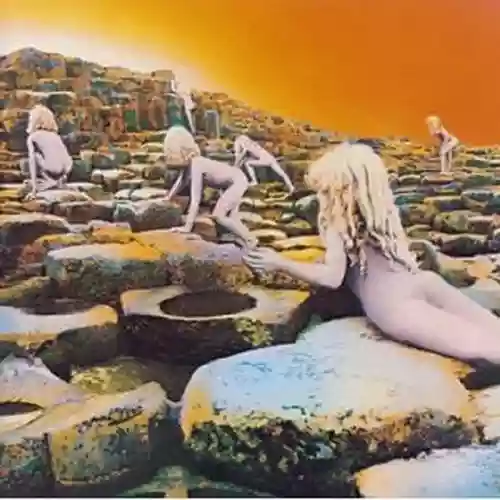
1972: The Led are the most popular and celebrated band in the world. The success of "ZoSo" is incredible, but, as is known, too much success has two consequences: it leads to the temptation of wanting novelty and brings about a delusion of omnipotence - as shown by the stories of the Beatles and U2. For the Led, it is no different and "Houses of the Holy" is proof of that.
The delusion of omnipotence and the desire for novelty result in the fourth-rate funk of "The Crunge" and the insipid reggae of "D'yer Maker" (probably their most irritating piece). Two tracks that prove Page now thought he could turn everything he touched into gold.
But it doesn't end there. The banter of "Dancing Days," the mediocrity of "The Ocean," and the routine of "Over the Hills..." testify to the distance between the creativity of the first four albums and this one.
The great songs (signed Page-Plant) would be two: "The Rain Song" and "The Song Remains the Same." "Would be" because the potential of the tracks does not come to full fruition.
"The Rain Song" could be excellent, but it has a guitar-mellotron intro which is truly soporific, a prog pretentiousness of a group good at making songs, and which had no vocation for prog - except the vain desire to follow the trend of the moment. Again, delusion of omnipotence and a spirit of novelty. Without this useless intro, the song would be great. It should have lasted 4 minutes because "The Rain Song" is not "Since I've Been Loving You," which can afford to last 7. A bit of "song sense" (never lacking in the first four albums - whether one likes them or not) would have avoided diluting the track this way. The live version of "The Song Remains the Same," with the folk-electric intro, significantly elevates the piece, but the intro remains too long anyway.
Instead, "The Song Remains the Same" (initially written by Page as an instrumental) features one of the most beautiful riffs in the repertoire, perfectly aided by Bonham. However, when the riff ends, one would expect to find Plant's voice, which is instead absent (also due to the fanatical reverb and echo effects on his voice), and thus its emotional-melodic impact is practically non-existent.
Thankfully, "No Quarter" is saved, a delightful masterpiece of psychedelic blues, which in this genre even surpasses "Dazed and Confused." This track could last 20 minutes without becoming boring. A masterstroke by John Paul Jones, the humble and silent bassist of the group.
Loading comments slowly
Summary by Bot
The review discusses Houses Of The Holy as a turning point where Led Zeppelin's creativity faltered due to experiments with funk, reggae, and prog trends. Despite some weak tracks, highlights like "No Quarter" and riffs in "The Song Remains the Same" show the band's enduring musical talent. The album reflects a tension between ambition and overreach.Tracklist Lyrics Videos
Led Zeppelin
Led Zeppelin were an English rock band formed in 1968 by Jimmy Page with Robert Plant, John Paul Jones and John Bonham. They became one of the most influential rock groups of the late 1960s and 1970s; the band disbanded after John Bonham's death in 1980.109 Reviews
Other reviews
By Antonino91
"Houses Of The Holy is none of that. It is more, much more, more. This album was underrated, and perhaps someone wanted it to be judged better."
"No Quarter, undoubtedly a milestone...Power and refined creativity characterize both 'No Quarter' and 'The Ocean.'"
By Miki Page
"No Quarter... gives the piece tension, drama, mystery, and intensity, enveloping it in an unsettling fog."
"Houses Of The Holy needs to be re-evaluated because it is truly a great album, but such re-evaluation has not yet fully occurred."
By killrockstar76
"Houses of the Holy, for me, is certainly not a lesser album."
"No Quarter, a marvel that should instantly... drive you to recover it, buy it, steal it, listen to it!!!!"
By claudio carpentieri
The opening of the work is a complex activity of instrumental coordination with Page’s layered guitars and Bonham’s hard-hitting style taking center stage.
"No Quarter" offers seven minutes of immense auditory pleasure and showcases Page’s memorable finishing activity with a crystalline sound.
