
 •
Rating:
•
Rating:
THE REVIEW
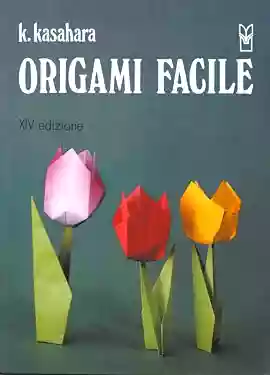
Flying eagle, penguin, swan, peacock, grasshopper, water lily, shark, sailboat, lunar rocket... all this can be achieved with Origami! The use of our manual skills, despite changing times, remains fundamental to create extravagant works. A clear example of creativity is precisely the description of origami contained in this short but precious volume. To create them, you need: our hands, a good dose of patience, and plenty of paper.
The history of origami, or Japanese folded paper, dates back over eight hundred years. Born in a distant period of peace, it has been an integral part of Japanese culture and has reached us through a multitude of developments and changes. The basic techniques are: folding, inserting, twisting, pulling, twisting. The book, divided into a few chapters, contains a vast category of origami, including houses, animals, aquatic creatures, abstract shapes, masks, and some inevitable 'classic' paper airplanes. The chapters are organized in order of increasing difficulty, up to the study and development of faces and human figures. Origami is suitable for everyone, both adults and children, and no scissors or glue are necessary. It translates into a pleasure that is not only linked to the folding of paper but also in admiring the result of what has been created. To learn the fundamental principles that will later allow you to tackle more challenging works, a certain passion is required.
Masterpieces like: the praying mantis, the (inflatable) bee, the astronaut (made of two parts), the crane (Orizuru), will require commitment and concentration. A good origami, however, does not necessarily have to be elaborate or sophisticated, because the true essence of this art is to capture the most peculiar characteristics of the object. The intrinsic meaning lies in the simplification of forms and the use of a limited number of techniques. Kunihiko defines origami as a simple game and not an art that requires recognition and evaluations. I don't agree with him, as some wonderful compositions fall into truly artistic craftsmanship forms. Therefore, it is a book full of evocative images. With few but incisive words, it is able to convey its profound meaning of immediate visual receptivity, but more complex to explain in words.
Origamistic regards ©.
Loading comments slowly
Summary by Bot
Kunihiko Kasahara's Origami Facile is a concise and creative manual on the art of Japanese paper folding. The book presents a variety of origami models arranged by increasing difficulty, suitable for both adults and children. It emphasizes patience, manual skill, and passion to create beautiful paper figures without scissors or glue. While Kasahara views origami as a simple game, the reviewer highlights its artistic value. Filled with evocative images and clear instructions, it's an inspiring guide for origami enthusiasts.
Kunihiko Kasahara
Author of the instructional book Origami Facile; in that book Kasahara is quoted defining origami as a "simple game" rather than an art requiring evaluation.01 Reviews
