
 •
Rating:
•
Rating:
THE REVIEW
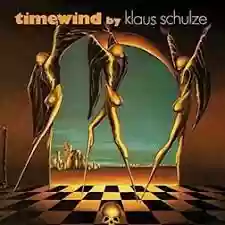
From an artistic point of view, the best musical period for Klaus Schulze is undoubtedly the '70s. In the '80s, the Master of electronics still released masterpieces (I recall the double album “Audentity”) but also many flops. He also had serious alcohol problems, which he seems to have painstakingly overcome today. Starting from the '90s, his production took a hypertrophic turn that, in my opinion, created some confusion and saturation amidst excessive celebratory boxes like “The Ultimate Edition” (50 CDs of music!), preceded by “Silver Edition” (10 CDs), “Historic Edition” (10 CDs), and “Jubilee Edition” (25 CDs). Meanwhile, he continues to periodically release respectable albums but without further flashes of genius, where his exquisite craftsmanship nevertheless shines through. Being naturally nostalgic, I always return to his historical albums of the '70s such as “Picture Music”, “Blackdance”, and “Timewind”, which I listen to even more than the acclaimed “Irrlicht” and “Cyborg” (which I consider, for the sake of clarity, 2 masterpieces). Schulze was making his music more accessible and melodic without trivializing his proposition. If you've fallen in love with electronic music, the mentioned albums are true must-haves. In fact, “Blackdance” is a beloved album by Steven Wilson of Porcupine Tree. “Timewind” in particular is perhaps his most magnificent, decadent, and epic work. “Timewind” is dedicated to Richard Wagner, a very important influence for the German musician. To understand his musical background, one must immerse oneself in the Teutonic culture, in the imagery evoked by the aforementioned Wagner and the philosophy of Friedrich Nietzsche. But don't worry, Klaus Schulze was never a Nazi. “Timewind” still shines today with a cosmic aura of infinite sadness. On side A, “Bayreuth Return” is calm, quiet, and meditative, foreshadowing what will become the classic “Schulze sound”. Some might think it’s just sonic wallpaper, but that's not the case: here, the music is deep and meaningful while being relaxing. On side B, “Wahnfried 1883” is instead a true timeless masterpiece, characterized by the drones generated by the organ that progressively layer and literally project us into space in a timeless and metaphysical dimension, a bit reminiscent of the ending of “2001: A Space Odyssey” (he liked Ligeti) without any concession to kitsch. Many have fed off this record: it's unthinkable to imagine the music of the celebrated Jean Michel Jarre without considering what Schulze achieved. But even Steve Roach had this album for breakfast, and all ambient and new age music owes him a lot.
Loading comments slowly
Summary by Bot
The review praises Klaus Schulze’s 1970s period as his artistic peak, highlighting 'Timewind' as an epic and decadent album influenced by Wagner and Nietzsche. It notes the album’s deep, cosmic atmosphere and its lasting influence on electronic and ambient music. While acknowledging Schulze's later prolific but uneven output, the review celebrates 'Timewind' as a masterpiece and a must-listen for electronic music enthusiasts.Tracklist Videos
Other reviews
By Rocky Marciano
"In 'Timewind,' Schulze brings his music back to more abstract and properly 'cosmic' territories."
"'Wahnfried 1883' is one of Schulze’s best compositions and of electronics as a whole."
By Eliodoro
A perfect alchemy between the kosmische musik of the origins and the electronic pulsations of the future.
It transports us in the absence of gravity to dance in infinite spaces where the kosmische music takes the podium.
