
 •
Rating:
•
Rating:
THE REVIEW
Is there no review of Discipline?! Aibò dé, I definitely have to do it!
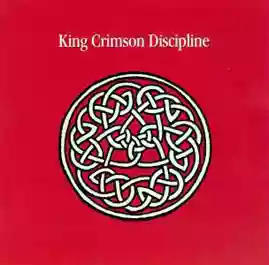
So, moving straight to the album, the year was 1981, notoriously famous for Genesis's Abacab, when many fans of the old progressive rock were shaken by news: a new album from the reformed King Crimson was released!
Personally, I still cannot, after about 2 years of listening, figure out what genre the album belongs to (other than rock, of course), but it's still excellent. The album spans various influences, supported by an excellent rhythmic base (Bill Brudford!), a bass that's not outstanding but played with good technique (Tony Levin), a voice that integrates well into the songs (I have no idea who it is...:-), and two guitars... yes indeed, our dear Fripp decided to accept another guitarist besides his vast talent: Adrian Belew.
The various songs that make up the album are divided between exercises of excellent guitar style, like "Elephant Talk" (where Belew stands out by making his guitar roar) and the pseudo-psychedelic "Frame By Frame," the first being of great substance, the second... well, it doesn’t exactly leave you indifferent, but it's not magnificent either... Then there's the grand clash between "Matte Kudasai," a sweet ballad, though a bit cold, and the chaotic "Undiscipline," epic songs that certainly leave a mark. "Thela Hun Ginjeet" is a song in the vein of "Indiscipline," a bit less appealing, but impactful; towards the end of the album, we find two instrumentals: "The Sheltering Sky," the only song I feel I can consider bad, and the title track, which slightly echoes "Frame By Frame" while standing on its own. The bonus track is an alternative version of "Matte Koudasai," but it's nothing special.
An album, in short, maybe not exactly a masterpiece, but definitely a beautiful and recommendable one (in my opinion).
Loading comments slowly
Summary by Bot
King Crimson's 1981 album Discipline marks a bold reformation blending various rock influences. The album features notable guitar work by Adrian Belew and Robert Fripp, strong rhythms from Bill Bruford, and genre-defying songs ranging from complex rock exercises to melodic ballads. Though not considered a masterpiece by the reviewer, it remains an excellent and recommendable album.Tracklist Lyrics Videos
King Crimson
King Crimson is an English progressive rock band formed by Robert Fripp in 1968. The group is known for seminal late-1960s/1970s albums, frequent lineup changes, and a long-lasting influence on progressive, art and experimental rock.74 Reviews
Other reviews
By Elephantalk
The relationship is based on the interaction between guitars, which takes the form of: dialogic network, "Call and Response" dialogues, overlaps, and recordings.
"Frame By Frame" is, in my opinion, the most beautiful piece on the album; it starts immediately with a guitar dialogue.
By Emme.
The new sound perfectly blends progressive rock with the strong New Wave influence of those years.
"Discipline" was not only important in the context it was found but also gained value for the strong influence it gave in the future.
By Giammotto
Discipline is never an end in itself, only a means to an end.
Never has Fripp written a piece so complex and yet seemingly so simple.
By Caspasian
The discipline necessary to train for the "jump," and the work is necessarily rigorous.
He gives and demands deep involvement... "let's dissolve in the shadow..."
