
 •
Rating:
•
Rating:
THE REVIEW
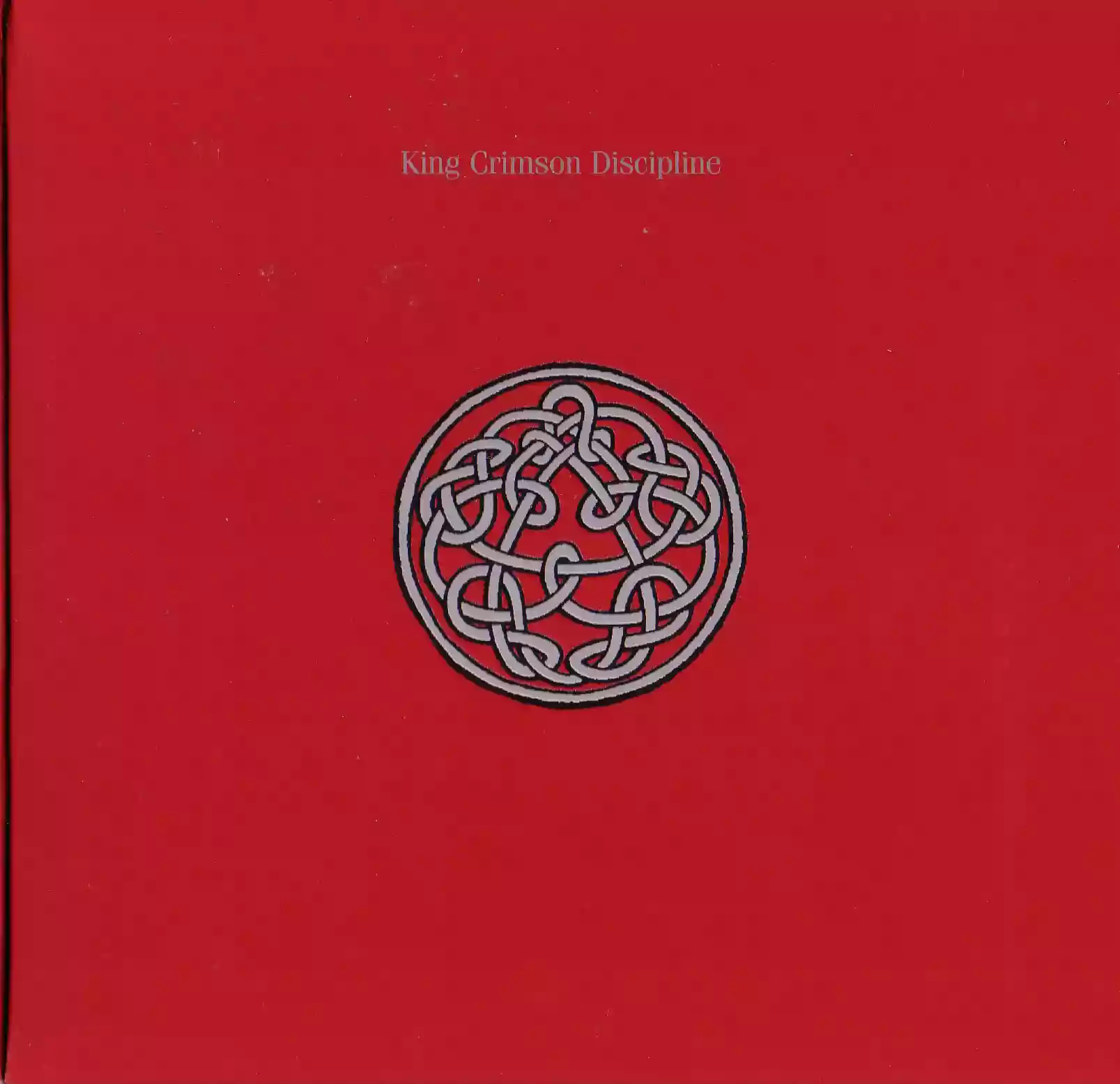
Discipline, King Crimson 1980
"Discipline is never an end in itself, only a means to an end."
King Crimson, after the magnificent and very sad farewell of Red in 1974, returned at the dawn of the '80s with a totally renewed and revised formula, free from labels and reference points.
The only confirmed member was Bruford (technically more terrifying than ever), joined by two virtuoso American musicians: Adrian Belew (rhythm guitar) and Tony Levin (Chapman Stick and bass).
Naturally, all the instrumentalists revolved around the stern master Robert Fripp, who, in his impeccable English style, did not fail to amaze all audiences and especially the critics.
What Fripp and Bruford wanted to create was something new and totally uncontrollable, allowing free expression to the two contrasting sides of the brilliant guitarist: absolute artistic rigor and total madness, with the addition of cohesion, a cohesion between instruments that had never been heard before, not only in terms of sound mixture but especially in the ability to naturally accommodate the virtuosic outbursts of their companions (as demonstrated by the track "The Sheltering Sky").
The album opens with the biting "Elephant Talk" dominated by Belew's distorted guitar simulating elephant trumpets and sounds of a decidedly unorthodox nature. The song best reflects the most brilliant and creative soul of KC, always in search of the future and innovation, always saddened by the stagnant present. A very interesting track from different perspectives, starting from the lyrical one: for the first time KC let themselves go in a song, albeit dripping with irony and satire, full of sense of humor and cheerfulness, elements absolutely unusual for the British band. Bruford's drumming perfectly outlines his African style, which precisely originates from Fripp and co.'s primal intention to draw inspiration from the hypnotic rhythms of Gamelan, African dance, creating Gamelan Rock.
However, the virtuosity of this new incarnation of KC resides in the second song, the (technically) terrifying "Frame By Frame", which distinctly gives the impression of coming from a future era.
Fripp supports Belew's genuine guitar bursts with absurd speed, Levin accompanies with an elementary but fearsomely incisive bass, joining Bruford's fresh and irregular drumming with jazzy ease, all the way to the sad refrain, where Belew recites a Japanese Haiku with a plaintive voice and the tension is discharged with powerful bass drum hits supported by timpani blows of African might, along with the rest of the instruments that resume the initial theme at their usual speeds. A continuous alternation of full and empty that forms a truly timeless song. Noteworthy is the authentic feat performed by the two guitars at the refrain's reprise, where one of the two keeps the rhythm normally and the other replicates it by missing a single note each time, but magically the guitars find themselves in sync at the sixteenth repeat of the measure.
Next is "Matte Kudasai", a slow, sweet, and romantic piece not particularly remarkable, although truly emblematic of Robert's ability to infuse emotions, even before claustrophobia and aversion in abundance.
The track proceeds with a magnificent full/empty alternation until the final apex, dominated by a total unleashing of instruments in an irregular 13/8, which can only remind us of the immortal Starless... The dark side of discipline, indiscipline "I LIKE IT!" as Belew’s final scream declares.
Follows the exciting and very fast "Thela Hun Ginjeet", which narrates with a real-time recording an experience undergone by Fripp and Belew in New York, where they encountered a gang. The piece is performed at high speeds and partly anticipates the style that will belong to U2.
Following is perhaps my absolute favorite track. "The Sheltering Sky" is the album's long song, tense between dreamlike vibrations and pure frippian math-rock. Spectacular and reflective, yet at the same time intimate and tormented, rich in combined breaks of the two guitars on the soft Stick carpet of dear old Levin. But the most spectacular thing about this song is its layering. After hundreds of listens, I think I can affirm that never has Fripp written a piece so complex and yet seemingly so simple. It's an 8 minute and 24-second dialogue between all instruments, no more, no less, first Levin converses with Belew, then he reports to Fripp what was said, then Fripp bursts into a monologue towards the end acclaimed by Belew, who joins his guitar in the chorus. Listen to believe.
Next is "Discipline", the album's most "classic" track, based exclusively on the magnificent dialogue of the two guitars, the crazy and more pronounced improvisational ability of these KC, cold and mathematical yet so boiling over with creativity.
In the bonus edition, there is another version of Matte Kudasai more rocking, which then to be honest is completely a new track of a style almost similar to Rush's, really beautiful and lively. I know this review has already been written, but I would have liked to leave my opinion on my favorite album. Go easy on me, I'm only 14 years old xD
Loading comments slowly
Summary by Bot
This review praises King Crimson's 1980 album Discipline as a bold and innovative return, highlighting the technical brilliance of Robert Fripp and bandmates. It explores standout tracks that blend complexity with emotion, emphasizing the band's unique fusion of math rock and world rhythms. The review admires the album’s creativity, cohesion, and timeless impact on progressive rock.Tracklist Lyrics Videos
King Crimson
King Crimson is an English progressive rock band formed by Robert Fripp in 1968. The group is known for seminal late-1960s/1970s albums, frequent lineup changes, and a long-lasting influence on progressive, art and experimental rock.74 Reviews
Other reviews
By Egli
Personally, I still cannot, after about 2 years of listening, figure out what genre the album belongs to (other than rock, of course), but it’s still excellent.
An album, in short, maybe not exactly a masterpiece, but definitely a beautiful and recommendable one (in my opinion).
By Elephantalk
The relationship is based on the interaction between guitars, which takes the form of: dialogic network, "Call and Response" dialogues, overlaps, and recordings.
"Frame By Frame" is, in my opinion, the most beautiful piece on the album; it starts immediately with a guitar dialogue.
By Emme.
The new sound perfectly blends progressive rock with the strong New Wave influence of those years.
"Discipline" was not only important in the context it was found but also gained value for the strong influence it gave in the future.
By Caspasian
The discipline necessary to train for the "jump," and the work is necessarily rigorous.
He gives and demands deep involvement... "let's dissolve in the shadow..."
