
 •
Rating:
•
Rating:
THE REVIEW
I discovered "The Killing Joke" thanks to the beautiful single "Love Like Blood" after reading some statements by Nirvana, it was love at first listen and then a continuous discovery immersed in their discography.
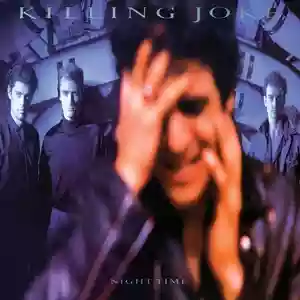
"Night Time" is the album of the big leap for Killing Joke: a fundamental band in the rock, post-punk scene from the eighties onwards. It is certainly the most accessible (and always original) work of their entire career as well as their greatest commercial success that best represents the new wave evolution undertaken by the group. It was the first time that Killing Joke achieved such vigorous mainstream success.
This is an album that clings to the mind thanks to dark and irresistible melodies, lustful guitar riffs that only Geordie Walker can create, accompanied by the magnetic voice of Jaz Coleman, Ferguson on drums, and the tried and tested Paul Raven on bass. Probably my favorite lineup despite the results of their electrifying 1980 debut. "Night Time" is an album that is never lackluster, always sounding fresh despite a marked sound that recalls that decade, never lower moments, an irresistible rhythm.
The tracks that compose it are eight powerful gems that weave through dark yet danceable atmospheres: "Night Time", "Tabazan", "Europe", the exquisite "Kings & Queens", "Darkness Before Dawn", "Multitudes", the quintessential dark ballad "Love Like Blood", and the finale with the excellent "Eighties" (a fierce attack on Margaret Thatcher's policies), as well as the mother of "Come As You Are". Listen to believe, in fact, it's no mystery that Nirvana, and many others, loved Killing Joke. Later, Dave Grohl ended up playing drums on their 2003 album.
"Night Time" was recorded in Berlin, at Hansa Ton Studios, between August and September 1984. Coleman stated: "Berlin is the place where you can observe perfect human insanity". The album was promoted with a world tour that for the first time also included Japan and Australia, in addition to the United States and Europe. The first self-titled album is rightly remembered as their landmark (with a bang) but "Night Time" also deserves equal attention because both, although different, represent two essential periods of the band's golden decade: the seminal post-punk explosion of the beginnings and the new wave phase before the subsequent episodes from the nineties to the present day. A recent release of the album has been noted, remastered and accompanied by b-sides, various versions of the tracks, and other unreleased material.
Seminal, unrepeatable.
Loading comments slowly
Summary by Bot
Night Time marks a pivotal point in Killing Joke's career, blending dark, catchy melodies with new wave accessibility. The album features memorable tracks like "Love Like Blood" and "Eighties," showcasing the band's powerful lineup and influence on future rock acts like Nirvana. Recorded in Berlin, it captures the essence of 1980s post-punk evolution with fresh energy and timeless appeal.Tracklist Lyrics Videos
Killing Joke
Killing Joke were an English band formed in London, known for blending post-punk with electronic, tribal rhythms and a harsh, industrial-leaning attack, fronted by vocalist Jaz Coleman and guitarist Geordie Walker.24 Reviews
Other reviews
By Fidia
"Night Time" is a work that cannot be divided or analyzed piece by piece distinctly. It must be treated and adored as a great work, like when one is dazzled in front of a Renaissance painting or a Gothic cathedral.
I don’t use the phone, I don’t watch television, I still write letters. I don’t belong to this twentieth century, in a certain way. Or maybe it is the century that still has to catch up with me.
By Algeone
Their records from forty years ago still sound contemporary and charming today, convincing us that their motto (Semper Imitatum Numquam Idem) was adopted without presumption.
'Night Time ... was the one that summed it up and made it accessible to a larger audience.'
