
 •
Rating:
•
Rating:
THE REVIEW
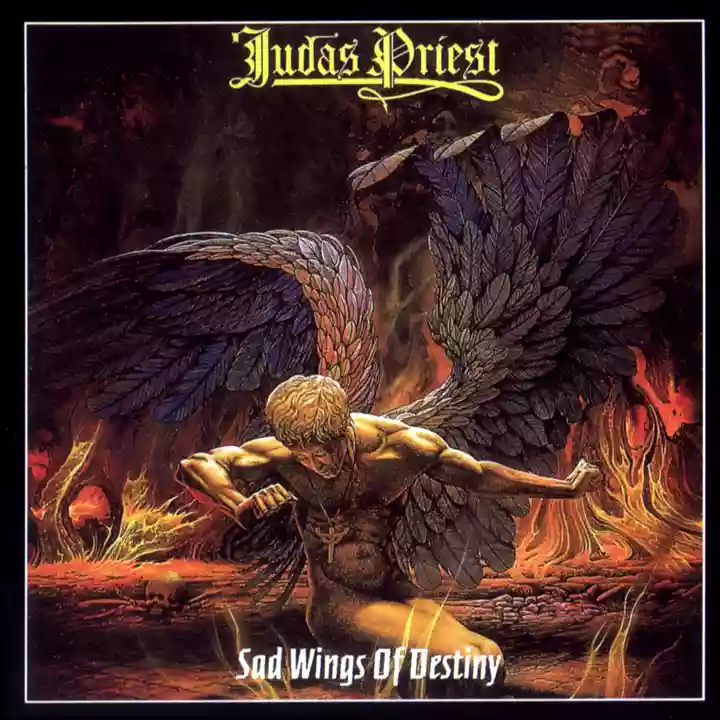
Year 1976: the genre of Heavy Metal is officially born, and if this happens, we mainly owe it to the second work of Judas Priest, with the poetic name of Sad Wings of Destiny. The English quintet led by Rob Halford gives birth to an absolute masterpiece, destined to remain in history for the talent with which the songs were composed (mostly by the brilliant guitarist Glenn Tipton) and the mastery with which they were performed, but above all for the musical revolution it represented. Although stages worldwide had already been haunted for some years by the legendary Black Sabbath of Iommi and Osbourne, who are credited with inventing the genre, the first true album considered 100% metal is precisely the one in question.
The album immediately starts with a myth, the Judas Priest pearl, the indestructible and unbeatable "Victim Of Changes," a song that talks about changes and is the symbol of the aforementioned musical change sought and found by the group. An unforgettable guitar phrase guides us to the crushing riff, followed by the verse where Halford showcases all his class and the originality of his piercing voice (a feature that makes him absolutely indispensable for hundreds of subsequent metal singers), while the atmosphere darkens more and more, the deadly guitars of Tipton and Downing hammer simultaneously, leading to the black finale where Rob explodes with screams worthy of a soprano. Sharp are also the notes that start the second track, also historic, revolutionary, and metallic. "The Ripper" is in every way a stunning metal song, still unmatched today, and at the time, simply devastating (we're in '76! It would be 4 more years for Iron Maiden! I mean, do we realize? Eh?), the story of the bloodthirsty Jack the Ripper is told at a rampant pace of squared guitars and climbs on ingenious key changes, all duly seasoned with the usual vocal feats of the most famous bald head in metal. The track is number three, but the quality level doesn't change: this time, it defines the genre of metal ballads, and some even consider "Dreamer Deceiver" the best of all time: the atmosphere is surreal and soothing, the composition superb, the melody timeless, Roberto's final vocalizations, unreachable just to change, and the guitar solo, the true heart of the song, in a word heavenly. We have finally reached the first piece of the album that isn't also a masterpiece: "Deceiver" is fast and lively, doesn't amaze but doesn't disappoint either. What follows are two melancholic instrumental minutes where the piano makes its appearance, representing the prelude ("Prelude," indeed) to another historic band piece: the fast and powerful "Tyrant," in full Judas style, with a well-crafted chorus and a great moment where Bobby (um... still talking about the singer, eh? I don't know what else to call him...) is accompanied by a second voice; the Tyrant will remain for many years a staple of Judas Priest's live shows. "Genocide" is a more hard rock piece than the previous ones, with powerful and fitting riffs, presenting in its lyrics an apocalyptic scenario where the human race is completely annihilated (much luck...), "Epitaph" is a serenade where the piano is the only instrument supporting the voice, and surprisingly it harks back to the sounds and tones of Queen, while "Island Of Domination" closes the album, which from a typical fast and heavy ride becomes at times a slow and gloomy blues.
In conclusion, Sad Wings of Destiny, probably the group's best album, was not one of its biggest sales successes (like Turbo or Painkiller), nor does it contain many of its most famous tracks (as British Steel or Screaming for Vengeance do), but its merit lies solely in one feature: the music. Let's give thanks to the Gods of Metal.
Loading comments slowly
Summary by Bot
Sad Wings of Destiny by Judas Priest is a seminal 1976 album that played a crucial role in shaping heavy metal music. Led by Rob Halford's distinctive vocals and Glenn Tipton's guitar genius, the album features iconic tracks like "Victim Of Changes" and "The Ripper." Though not a commercial blockbuster, its influence and musicianship remain undeniable. The album blends powerful riffs, innovative songwriting, and emotional ballads to set a new metal standard.Tracklist Lyrics Videos
Judas Priest
Formed in Birmingham in 1969, Judas Priest are among the pioneers of heavy metal, known for twin-guitar attack and Rob Halford's high vocals. Their career spans classic studio albums and acclaimed live records.49 Reviews
Other reviews
By Nero
When "Victim of Changes" stops halfway and you follow with your ear, eyes, and heart that echo that fades into the distance... this is METAL.
Sad Wings of Destiny is something you absolutely did not plan to do but became a perfect synthesis of metal's story-songs and dark emotion.
