
 •
Rating:
•
Rating:
THE REVIEW
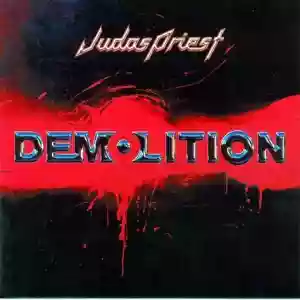
In a scenario of the early new millennium, after a nice "Jugulator" (1997), after Tim "Ripper" Owens managed to prove he could fight against the high notes of His Majesty Rob Halford, the ingenious and unpredictable inventors of Metal come out in the open with this "Demolition." The album in question is considered by far the worst of Judas Priest. Rightly or wrongly? Let's find out.
The good "Jugulator," containing the mighty "Cathedral Spires" and the anthem "Burn In Hell," was subjected to harsh criticism from fans of Classic Heavy Metal, while a part of the band's followers tried to appreciate it, succeeding with great difficulty and commenting positively through gritted teeth, while others mercilessly trashed it. Four years after that genetic mutation, which marked the definitive turning point from the now "dusty" (so to speak) "Painkiller," what will KK and Glenn offer us? In my opinion, a decent dose of futuristic Metal, belonging to a world dominated by industrialization and killer machines of a distant technological era. It might be just a personal impression, but both the lyrics, the tight rhythms of guitar and drums (excellent Scott Travis), and the nebulous, gray atmospheres, all call this to mind very closely.
I consider the path taken to be the natural evolution of a historic band, captured by the 90s. This "Demolition" is inferior to its predecessor, but it's not at all an album to discard. Of course, for someone not passionate about the new style, it turns out to be nearly indigestible. The structure is more or less similar for all the tracks. Some acoustic interludes, a lot of heaviness and little speed, non-static compositions, but too many tracks, and some of them decidedly too long. It opens with "Machine Man," which shows all the new sound of the Priest, from the Fear Factory rhythms to a pseudo Nu-Metal text that is truly embarrassing. The exuberance of electronics is felt in "One On One," while "Hell Is Home" is the acid test for Owens, who for attitude and height reached by his voice, could be considered the Robert Halford of the new millennium. Passed. If "Jekyll And Hyde" is the exteriority of the new Judas, all heaviness and zero emotion, "Close To You" is the best track on the album, a slow one that knows how to transport thanks to icy melodies, and a voice suspended between an intimate Layne Staley and the attitude of an Owens who has plenty of class to sell. Terrible "Devil Digger" and that’s enough, boring until the end, powerful, but one that you can do without. "Bloodsuckers" is the hard piece that stands out, for the experience of seasoned musicians who still know how to scratch, for the riff stolen from "Painkiller" and for the massive dose of Nu-Metal.
The voice becomes very warm and enveloping in "In Between," a slow-paced track with sharp tone changes, while "Feed On Me" is just a polished Hard Rock ready for the new millennium. It feels very artificial. "Subterfuge" is overwhelming boredom, "Lost And Found" the ballad with little appeal that couldn’t be done without, much practicality and experience at the service of uselessness. In "Cyberface" arrive the Metallica of the cocky period, with some clever findings and a modern and captivating sound nonetheless. A pumped-up bass and an anthemic title (forgive the ridiculous term) are not enough to transform "Metal Messiah" into the anthem for future metal generations. It closes with "What's My Name," yet another opportunity to fire off blasts of violence. At the end, this album with mediocre sounds brings to mind factories, presses, welders, pneumatic hammers. Metal is also this.
It may be the worst album of the Judas for a Judas fan, but trying to give an objective final judgment, it manages to pass thanks to a lot of technique, a great singer, and some good ideas, but interpreted with confusion, too much craft and really little feeling.
Rating: 6
Loading comments slowly
Summary by Bot
Demolition by Judas Priest is seen as a controversial follow-up to Jugulator, marked by a futuristic and industrial metal style. While inferior to its predecessor, it presents technical skill and memorable vocal performances. The album’s experimentation with nu-metal and electronic elements divides fans, and some tracks feel overlong and repetitive. Ultimately, it is a flawed but worthwhile listen for those open to Judas Priest's evolution.Tracklist Lyrics Videos
Judas Priest
Formed in Birmingham in 1969, Judas Priest are among the pioneers of heavy metal, known for twin-guitar attack and Rob Halford's high vocals. Their career spans classic studio albums and acclaimed live records.49 Reviews
Other reviews
By Starblazer
"A record with a highly restless and more introspective soul than its predecessor, seventy minutes of genuine sonic orgasm that can unsettle or stir."
"Ripper Owens' performance is truly breathtaking: to the incredible vocal range and boundless charisma... here is added versatility."
