
 •
Rating:
•
Rating:
THE REVIEW
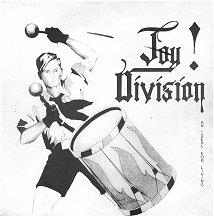
It is National Socialism that haunts what is presented as the first demo recording (on vinyl) by the Macclesfield band. Year of recording 1978. The cover alone, depicting a teenager explicitly dressed in Hitler Youth attire, intent on striking the membrane of his own unawareness, expresses what the record tries to impose in a totalizing manner.
A CD that immediately appears faded, in the shades that flow between a bass full of obsession, and a guitar practically stripped of its own soul.
Four tracks:
-WARSAW: Legend has it that this name was initially chosen by Curtis as the band's name, in honor of David Bowie, a detail that becomes irrelevant when listening to and studying what, as far as I am concerned, is one of the most obscure lyrics I have ever had to interpret. "350-125 GO!!" With this phrase, which introduces the track, one is left stunned, almost amazed by the coldness of Curtis's voice. An order, or rather, the Order. That is what you just perceived. This numerical sequence, ingeniously inserted, consisted of the serial number assigned to Rudolph Hess in the prison where he served the life sentence imposed on him by the Nuremberg trials. Hess was Hitler's most fervent follower, chosen, not by chance, for his explicit tendencies and obsessions with mysticism that so fascinated the unfortunate Ian. The sound and lyrics proceed rigidly, marching in time, stiffened by an overdrive so rough it surpasses the meaning of crunch to definitively diminish it.
-"NO LOVE LOST" aspires to be a true link between what is the soul of Joy Division and their occult way of going beyond the "macabre." The title of this track was chosen and uprooted from the novel "House of Dolls" by Karol Cetinsky, a novel that also influenced Curtis for the definitive name of his band. The straightforwardness of Ian's words is fabulous: they belong to the cold, darkness, and desolation of distant 1945.
-"LEADERS OF MEN" addresses in the third person the figure of the leader, whose duty is to lift a suicidal bourgeoisie from an abyss of poverty and frustration through the aspiring "Ideal for Living." Here Curtis's voice subverts into a distinctly off-key melody, almost as if engaged in a Wagnerian parody.
-"FAILURES" finally appears in all its essence as the negative response that the recording aims to stimulate. Broken at times, almost deliberately incomplete, it embeds in your limbs the certainty that there is no going back once the journey has begun: no future. Personally, I believe this is one of the many pearls that Joy Division has left behind. Rich in allure like propaganda, seductive and dispersive as a rally. Cold as the barrel of a gun to the neck.
Loading comments slowly
Summary by Bot
The review delves into Joy Division's first demo, 'An Ideal For Living,' released in 1978. It highlights the album's dark themes, including provocative National Socialist imagery and haunting lyrics. The reviewer praises the raw, obsessive bass and stripped guitar, alongside Ian Curtis' cold vocal style. Each track is analyzed for its unique contribution to the album's eerie, post-punk atmosphere. The album is considered a compelling and intense introduction to Joy Division's influential sound.
Joy Division
Joy Division were an English post-punk band formed in the late 1970s (Ian Curtis, Bernard Sumner, Peter Hook, Stephen Morris). They released two studio albums, Unknown Pleasures (1979) and Closer (1980). After the suicide of lead singer Ian Curtis in May 1980 the remaining members later formed New Order.43 Reviews
Other reviews
By SUPERVAI1986
'An Ideal For Living' is born, a testimonial that presents itself as a sort of hope for future generations.
This song represents the clear proof of Joy Division’s art, the combination between the most delicate soul of the English quartet and their scenic approach through Curtis’s digressions and movements.
