
 •
Rating:
•
Rating: THE REVIEW
On DeBaser, someone had already predicted that Lorenzo Cherubini would soon take a path that would lead him to try in every way to ruin singer-songwriting, but at the time it hadn't fully materialized, and fortunately, I would add... since, for me, Jovanotti was (or rather has been) anything but a singer-songwriter, and I emphasize that it is pure blasphemy to associate him with such a term.Unfortunately, those who predicted this, I am now increasingly convinced, and I say this as a former fan of Jovanotti, were right. Why? Simple.
Even a stone knows that Cherubini has gone through a very particular evolutionary phase from the mid-'80s until today. From the beginning, under the wing of Claudio "fregatura" Cecchetto (the hilarious "Gimme Five", "La Mia Moto", and the like), he moved on to cheerful and fun rap, with some influence from other genres, thanks to albums like "Una Tribù Che Balla," "Lorenzo 1992," or "Lorenzo 1994." After the compilation released a year later, the turning point arrived. That turning point would split the audience in two. Those who still admired him and those who were starting to loathe him because maybe he was composing songs that were too childish or generic. A turning point that starts with "Lorenzo 1997: L’Albero" and ends (for me) with the excellent "Buon Sangue."
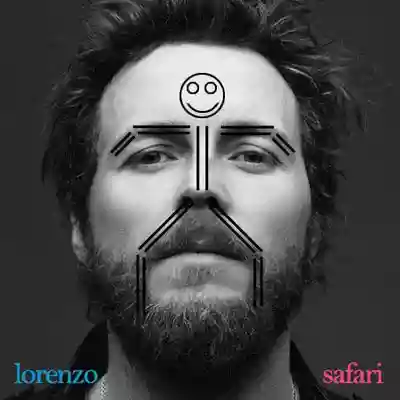
In January of this year, his new work, "Safari" was released. And it is disappointing. But seriously.
From the first listen, this shortfall is evident, due to the fact that in most of the songs on the CD, those extra touches that made Cherubini's works interesting seem almost entirely absent: a certain energy that sometimes spilled over into world music ("L’Albero," his only masterpiece, is concrete proof of this), the funky bass of Saturnino Celani (undoubtedly a musician with guts), or the class of drummer Pier Foschi.
But above all, what sinks the CD in question is exactly what I said at the beginning: trying a route that, in my opinion, does not really belong to Lorenzo, who now seems determined to become a real singer-songwriter. This is where it all falls apart.
Jova would like to try with pieces like the first single, "Fango" (with the good Ben Harper on guitar), "Dove Ho Visto Te", "In Orbita", "Come Musica", "Innamorato", and "A Te". Of these, the only ones that deserve more than one listen are the last three. Nothing transcendental, however. Not to mention the fake rock of "Mezzogiorno", a little song for two or three listens that is forgettable.
And then another question arises: why do I give three stars to this CD?
Well, there is still something salvageable, even if it's very far from the previous things. There's the ska-like "Temporale" (the song closest to the Jova that was), there's the title track which, all things considered, is not to be discarded, it’s quite lively, and strangely, even the ever-despised-by-me Giuliano Sangiorgi of Negramaro (second voice on the track) manages to handle it, there's "Punto", where you can hear echoes of samba, there's "Antidolorificomagnifico", which, even with a not entirely convincing chorus, has fairly catchy sounds, and there's "Mani Libere 2008", composed with African-American singer Michael Franti (the two had already collaborated for the excellent "Dal Basso" in 1999).
However, overall, the result is what it is, and it's obvious from a mile away that Mr. Cherubini has now almost completely thrown his ideas out the window, since this CD doesn't even seem like his.
Those who already considered "Capo Horn" and "Il Quinto Mondo" indecent (to me, anything but indecent, and surely not masterpieces) I believe will change their minds upon hearing this "Safari." Or maybe not.
It's appropriate to say: "No, Lorenzo, I'm not falling for it!".
I'll go listen to "L’Albero" again, then...
Loading comments slowly
Summary by Bot
The review expresses disappointment in Jovanotti's latest album, Safari, criticizing his attempt to transition into a singer-songwriter style. The reviewer, once a fan, believes the album lacks the energy and distinctiveness of his earlier works. While some tracks show glimpses of his former style, the overall result feels forced and uninspired. The album receives a moderate rating due to a few redeeming songs but fails to meet past standards.Tracklist Lyrics Videos
01 Fango (feat. Ben Harper) (04:34)
04 Dove ho visto te (04:30)
05 In orbita (04:33)
06 Safari (feat. Giuliano Sangiorgi) (04:25)
07 Temporale (feat. Sly & Robbie) (05:53)
08 Come musica (03:50)
09 Innamorato (02:38)
10 Punto (feat. Sergio Mendes) (04:10)
11 Antidolorificomagnifico (04:26)
12 Mani libere 2008 (feat. Michael Franti Spearhead) (04:24)
13 Come parli l'italiano (03:10)
14 Nel mio tempo (05:06)
15 Il gioco del mondo (07:28)
Jovanotti
Jovanotti (born Lorenzo Cherubini) is an Italian singer‑songwriter and rapper who debuted with Jovanotti for President (1988). Evolving from a radio‑DJ/rap persona to pop, world and electronic hybrids, he’s known for chart staples like Penso positivo, L’ombelico del mondo, Ragazzo fortunato and A te, plus high‑energy tours and festival shows.40 Reviews
Other reviews
By Enkriko
In this album, you won’t hear echoes of melancholy but only a great desire to fight against the progressive petty bourgeois invasion of melancholy tout-court.
Jova has studied man thoroughly, and you can feel it, seeking that emptiness of meaning which in everyday life brings us back to historical topics of little interest on a music review site.
By mondo.marco
"A Te" needs no introduction: 8 weeks at number one in Italy and 20 in the top 10.
"Safari" is a great CD that puts Jova directly back among the main Italian singers.
By DEMIAN
"Every scar is God's autograph."
His latest work is selling a ton of copies and has been charting for more than a year and a half.
