
 •
Rating:
•
Rating:
THE REVIEW
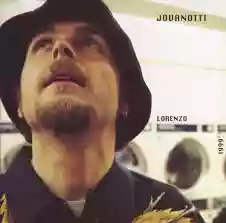
Year: 1999. End of the century, of the millennium, of many things. And the end of Jovanotti. By now already hailed as a “no-global” guru, environmentalist, champion of the Third World by a certain (olive tree) left, and already two years earlier the author of the pretentious “Lorenzo 1997 – L’albero” (where ethnic sound and world music struggled to coexist, though with a few roses here and there), our man is by now light years away from his initial “pirla” phase (the one of “La mia moto”) and also from the best one, that of “Lorenzo 1992.” On May 10, 1999, “Lorenzo 1999 – Capo Horn” comes out: it sells a lot (not massively), but it will mark the longest period of artistic and commercial crisis for Jovanotti (“Il quinto mondo,” 2002, will be a tough flop to swallow) up until his rebirth with “Buon sangue” (not a masterpiece, but hey, we settle), 2005.
“Lorenzo 1999 – Capo Horn” is truly Jovanotti’s Third World-inspired album, so much so that the following year he is invited to Sanremo (and of course he goes, not a fool) to tell it straight to the world’s governments about the cancellation of Third World debt. No one listens to him: obviously. But 1999 is also the year of the chart-busting single “Il mio nome è mai più” in cahoots with Ligabue and Piero Pelù (never again wars: yeah, sure thing). In 1997 he had founded his own label, SoleLuna, which he runs a bit like a sort of Warholian factory, and between 1997 and 1999 he throws himself into lots of a latere activities: he exhibits his paintings; he acts in a (bad) film by Alessandro D’Alatri, “I giardini dell’Eden,” 1998; he writes a book, “Il grande Boh!” (exactly, ndr.) with Fernanda Pivano’s endorsement; he raises funds for the Zapatistas and has a daughter, Teresa, to whom he dedicates “Per te,” the album’s most successful single. Of course, in the summer he is the absolute star of the Festivalbar, with the utterly forgettable “Un raggio di sole.” Basically, he does everything, too much for someone who candidly admitted years before that “out of a hundred things I’ve done, maybe half came out right,” and maybe writing good music doesn’t really matter to him anymore. Especially considering the massacres he commits: the year before he infamously released the insipid “I got rhythm” (yes, that Gershwin song) onto which he sticks lyrics worthy of a criminal code (this is terrible: “Il mio pisello è allegro e sorridente, lo guardo e lui mi guarda senza dirmi niente”—already a red pencil for “lui mi” and “senza dirmi,” not to mention the concept itself). But it seems everyone wants him: from 99 Posse to C.S.I., from Gialappa’s Band to Serena Dandini.
Now, the album is incredibly long (65’), there are loads of tracks (14), the musicians involved (some truly outstanding) are countless (from loyal Saturnino to Michele Centonze, from Pier Foschi to Micheal Franti, plus a roster of exceptional instrumentalists on double basses, English horns, oboes, flutes, violas, violins, cellos, various synthesizers), and in this entire kaleidoscope of sounds, there is not a single decent song. “Per te” is a basic lullaby that falls in line with the many, far too many, songs fathers have dedicated to their newborns (first Stevie Wonder, then Baglioni, with Jovanotti in between and finally Fedez: from bad to worse, I’d say) and just the choice of such a song as a single should have made us wonder. On top of that, our man is increasingly convinced he’s a refined experimenter, so alongside more conventional songs (“Un raggio di sole”; “Dolce fare niente” or “Stella cometa” on the Israeli-Palestinian conflict that never goes out of fashion), he adds (almost) exclusively instrumental tracks: a mess like you’ve never heard, partly because he throws in a few random words now and then, partly because they are simply failed experiments slapped on to fill a record that is not poor, but rather lacking in ideas. On the cover photos he poses busy as ever, traveling the world and trying out new instruments, thus new sounds. Maybe he’ll develop them better over time (aside from the flop that it was, “Il quinto mondo” did have something to save), but here we are still in the embryonic phase, and, moreover, he stretches it out forever: (forgotten, of course) tracks like “Funky beat-o” and “Non è ancora finita” reach almost 5 minutes, while “Dal basso” even passes the 6 minute mark. And those are minutes, believe me, of nothing.
And honestly, “Third World-inspired” only to a point, considering that (except for a partial stop in Forlì) he didn’t exactly record the album in Chiapas, but rather at the Globe Studio in New York (where he conveniently sits for 6 months straight). In the end, he sells about 650,000 copies (which today would be insane numbers, less so at the time) and more or less keeps his fanbase close. If they’re happy, good for them.
Loading comments slowly
Summary by Bot
This review critically examines Jovanotti’s 'Lorenzo 1999: Capo Horn,' expressing disappointment with the album’s direction. The reviewer gives it a poor rating, arguing that the music fails to live up to expectations. The assessment focuses on the album’s perceived lack of originality and uninspired composition. Readers are cautioned about investing time in this release.Tracklist Lyrics
Jovanotti
Jovanotti (born Lorenzo Cherubini) is an Italian singer‑songwriter and rapper who debuted with Jovanotti for President (1988). Evolving from a radio‑DJ/rap persona to pop, world and electronic hybrids, he’s known for chart staples like Penso positivo, L’ombelico del mondo, Ragazzo fortunato and A te, plus high‑energy tours and festival shows.40 Reviews
Other reviews
By Kobe-Bryant
It is indeed the ethereal notes produced by violins, violas, and cellos that serve as the leitmotif of the album.
The following two songs... constitute the last two pleasant moments of the album, before a second side of inferior quality.
