
 •
Rating:
•
Rating:
THE REVIEW
I knew it would be my kind of book since I read the premise in a Debaser's review.
Immediately, I read the first line:
The following day, no one died.
Nothing more was needed.
I took the bait.
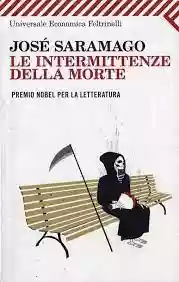
What followed were the dilemmas and uncertainties of institutions that relied on death: The government and the church, nursing homes and funeral agencies. It told the story of the man who first received a letter from death. And it told the story of a cellist who simply didn’t want to heed death's call.
A novel that is read all in one go.
Yet, the narrator descends with a slow pace on the anonymous, but blatantly recognizable, nation and observes the various reactions to this absurd collective upheaval that has befallen there. He flies high then glides down, here and there, onto the people representing the institutions that run that country and watches with an amused and satirical eye their reactions.
Narrates, describes, reasons.
We are used to Saramago's narrators. Obvious and playful, intricate and digressive, explorers of realized and unrealized narrative possibilities. Expert dispensers and skillful dismantlers of idioms.
They play with the reader.
The narrator of Death with Interruptions keeps the reader hooked, even through small episodes that show the consequences of two opposing calamities that will befall a nation.
The tone of the story is not tragic, but reflective and ironic.
And so the narrator waits, delays, is in no hurry to show us the protagonist and antagonist of this story.
Until, at a certain point, death comes onto the scene first, and then the cellist, and, in a surreal crescendo, in a grotesque climax, they prepare for the showdown, which resolves, in the final pages, in a literal apotheosis.
Thus, once again, the following day, no one died.
A novel that is read all in one go, but that resonates long in the reader's mind.
Loading comments slowly
Summary by Bot
This review praises José Saramago's novel for its unique premise where no one dies, exploring how society and institutions respond to this upheaval. The narrator's playful and intricate storytelling keeps the reader engaged, blending satire with reflective tones. The novel culminates in a surreal and impactful climax, leaving a lasting impression. It is described as a book to be read in one go, resonating deeply long after.
José Saramago
José Saramago (1922–2010) was a Portuguese novelist and essayist, awarded the Nobel Prize in Literature in 1998. Known for long, flowing sentences and ironic, allegorical what‑if premises, he explored power, faith, identity, and mortality in works like Blindness, Seeing, Death with Interruptions, The Double, and Cain.07 Reviews
Other reviews
By alekosoul
Saramago. Architect of storytelling.
A great lesson in style, of what a true writer must (also) be capable of doing.
