
 •
Rating:
•
Rating:
THE REVIEW
Even before the official breakup of the Beatles, John embarked on his solo career, recording three essential singles in his discography (released under the name of Plastic Ono Band): the epochal anthem Give Peace A Chance, the heartbreaking Cold Turkey which spoke of his drug addiction, and Instant Karma!, a brilliant track that began the collaboration between Lennon and Phil Spector.
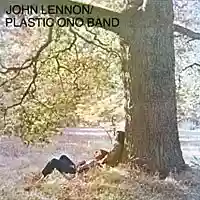
After the breakup of the Fab Four, he began work on his first album. Influenced by the American psychiatrist Arthur Janov, he gave vent to his suffering with songs with a raw, lamenting sound. John, in fact, only collaborated with Ringo on drums and his friend Klaus Vormann on bass.
Plastic Ono Band opens with Mother, introduced by rather macabre sounding bells; the opening track is nothing more than a scream toward his parents who were the cause of his unhappiness.
The following track Hold On, certainly more positive but less impactful, urges the couple (John & Yoko) to hold on because everything will turn out well. However, the positive aura soon fades with the angry I Found Out, an indictment against hippies, drugs, sex, religion, that is, everything that distracted him from the search for himself.
Working Class Hero is a song composed of two chords that speaks of the molding of the working class, despite Lennon having never been part of this social class, the song sounds inspired and pleasant despite the monotony.
Isolation, a modest track, speaks of his vulnerability while in Remember he puts together some flashbacks. The delicate and perhaps too silent piano introduction by producer Spector introduces Love, a song rightly very dear to John, which simply speaks of love...
Well Well Well is another angry song (reminiscent of I Found Out). Look At Me, written in 1968, is a sweet little tune not to be forgotten.
But we come to the best track, God. Opened by the moving piano notes of Billy Preston (already a Beatles collaborator), in the first part it speaks precisely of God, then lists a series of concepts and people he claims not to believe in, from magic to Kennedy to the Beatles.
In the last part, the most melancholic, he bids farewell to the Beatles and "greets" his old friends.
Plastic Ono Band concludes with a very simple and chilling track, a distorted voice sings a childish nursery rhyme: My Mummy’s Dead.
In POB, Lennon gains spiritual independence and writes about his world, his life, distancing himself from his typical Beatles songs. This perhaps makes POB Lennon's best solo album, raw but also melodic. Sincere.
Loading comments slowly
Summary by Bot
John Lennon's Plastic Ono Band is a raw and emotional album reflecting his pain, spiritual growth, and breakup from The Beatles. Influenced by psychiatrist Arthur Janov, the songs express deep personal struggles and independence. Highlights include the anguished 'Mother', the critical 'I Found Out', and the iconic 'God'. The album remains a sincere and melodic milestone in Lennon's solo work.
John Lennon
John Lennon (1940–1980) was a British singer-songwriter and a member of the Beatles, later pursuing a highly influential solo career. His solo work spans raw, autobiographical rock (John Lennon/Plastic Ono Band), melodic and idealistic pop/rock (Imagine), mid-’70s introspection (Walls and Bridges), and a late return to recording with Double Fantasy-era material.24 Reviews
Other reviews
By Mr_Iko
John Lennon was the greatest philosopher of the twentieth century.
This album narrates the black death of the soul.
By SydBarrett96
John Lennon’s voice is very direct and clear, almost resigned to the events. I can describe it as a sort of primal scream, a desperate cry.
The final line 'The dream is over' represents for the author the end of the Liverpool quartet’s myth.
