
 •
Rating:
•
Rating:
THE REVIEW
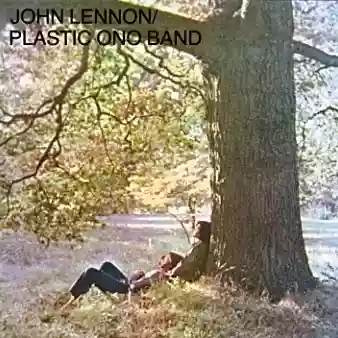
John Lennon\Plastic Ono Band is generally considered one of John Lennon's best solo albums and a benchmark in the field of rock music. Perhaps it is the somewhat dark tone and the strongly autobiographical aspect that make it one of the best, or perhaps because of its historical importance, as it is the first after the official breakup of the Beatles.
Historical context
We are in 1970: after the release of "Let It Be," the Fab Four officially decide to go their own ways, partly due to internal subsidies between the two leaders Lennon and McCartney. While the greatest phenomenon of the '60s was ending, another was already emerging: indeed, the Flower Power was in full swing, a pacifist movement that greatly influenced the world at that time, especially the USA (heavily criticized for the Vietnam War). John Lennon was certainly one of the promoters of this movement along with other musicians of the era (notably Janis Joplin, Jim Morrison, and Jimi Hendrix) and thus released the single Give Peace a Chance, which later became a symbolic song of the Liverpool musician. Finally, after this solo experience, he decided to release his first solo album alongside the Plastic Ono Band. Thus, the album we know was born, and which I will now talk to you about.
The album
The opening track is the somber Mother (introduced by a peal of bells). As I mentioned earlier, already in the first track, that autobiographical vein that characterizes almost the entire album is evident: indeed, although the title is "Mother," it is a cry of pain addressed to both of Lennon's parents, who "abandoned" him during his childhood. John Lennon's voice is very direct and clear, almost resigned to the events. I can describe it as a sort of primal scream, a desperate cry. Hold On is a simple song lasting about a minute that highlights the author's vocal timbre: not bad. With I Found Out, the tones start to rise, thanks to a harsh electric guitar that contrasts with the voice, as in a sort of duel; the first cacophonous compositions typical of the "Lennonian genre" begin. I much prefer Working Class Hero, also with an autobiographical slant. Built on three acoustic guitar chords, the song speaks of the numbness caused by social conditioning. Numerous sources say that by working class hero John Lennon was referring to himself, although we have no sources on this. The track is certainly one of my favorites and one of the best on the album.
Isolation is a brief but intense piano-centered ballad, accompanied by strong timpani in the chorus. It is followed by Remember which brings back a bit of the theme of the initial track, especially in the rhythm. The pairing of these two songs characterizes one of the main cores of the album, as the subject matter is presumably love: the interlude then closes with Love, dedicated to Yoko Ono (John's second wife). The song, although one of Lennon's simplest and most minimal, is certainly one of the most beautiful sentimentally inclined songs ever, in my opinion second only to Love Of My Life by Queen and Thank You by Led Zeppelin. After this little parenthesis, the album's central theme returns: Well Well Well is a return to cacophonous and melodically less catchy atmospheres. It is certainly the album's most "hard" track, as well as the longest. It is definitely not the Lennon I prefer since I don't particularly love this kind of composition. Oh well, let's move on: Look At Me is decidedly more melodic, and the light guitar arpeggio proves it; it connects to the sentimental songs of the album. The best track on the album is undoubtedly God, where the ex-Beatle delivers one of his best musical performances, both as a singer and a composer and musician. Lennon describes God as "a concept by which we measure our pain." In the second section of the track, John lists a series of idols he no longer believes in (including the Beatles), ending by stating that he believes only in himself and Yoko Ono. The final line (the most significant) "The dream is over" (The dream is over) represents for the author the end of the Liverpool quartet's myth. The concluding track is My mummy's dead, a ghostly composition recorded amateurishly.
Conclusions
An album that certainly deserves a high score because it encompasses all the great compositional genius of the most important member of the Beatles.
Loading comments slowly
Summary by Bot
John Lennon's Plastic Ono Band is widely regarded as one of his best solo works, notable for its dark tone and autobiographical depth. Released after The Beatles' breakup in 1970, it captures raw emotions and social critique. Key tracks like 'Mother,' 'Working Class Hero,' and 'God' highlight his compositional genius. The album blends simplicity with intense musical expression, marking a significant moment in rock history.
John Lennon
John Lennon (1940–1980) was a British singer-songwriter and a member of the Beatles, later pursuing a highly influential solo career. His solo work spans raw, autobiographical rock (John Lennon/Plastic Ono Band), melodic and idealistic pop/rock (Imagine), mid-’70s introspection (Walls and Bridges), and a late return to recording with Double Fantasy-era material.24 Reviews
Other reviews
By Mr_Iko
John Lennon was the greatest philosopher of the twentieth century.
This album narrates the black death of the soul.
By TomSkar
Plastic Ono Band opens with Mother, introduced by rather macabre sounding bells; the opening track is nothing more than a scream toward his parents who were the cause of his unhappiness.
In POB, Lennon gains spiritual independence and writes about his world, his life, distancing himself from his typical Beatles songs.
