
 •
Versione 2
Rating:
•
Versione 2
Rating:
THE REVIEW
The awakening of the world, the rise of the day, the teeming of a thousand little creatures...
Ok, I started too poetically, but in my embarrassing simplicity, these are the images that came to mind,
However, you might want to reset.
__________________________________
And so...
Small infinitesimal rhythmic reverberations. Percussive fragments blown by a very light wind. Bells and drums like brush strokes on a canvas.
An infinite scattering of voices, an intricately woven web of tribal impressionism. A miraculously springing sound environment that gives birth to the song of Africa.
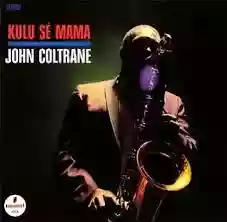
This is more or less how the first minutes of “Kulu se mama” are. With the song that, ancestral and hypnotic, is the second step into the void, while the first was the rhythm.
The third step is the breaking in of Coltranian purity, that clear and expansive sound that, by the time of this album, has reached a territory of absolute freedom. Its finding its way through that magical rhythmic naturalness and the shamanic voice of Juno Lewis is the first apotheosis of this umpteenth masterpiece.
Then chaos, a kind of tussle of guiding spirits, with Africa (percussions and singing) doubling its strength and intensity. Something beautiful that is useless to try to explain.
Who knows, maybe all that sixties talk of expanding consciousness finds its meaning here.
Then a kind of melting away, the fabulous playing of Mc Coy Tyner, who was previously the glue between rhythmic impressionism and free delirium, now with that rhythm is alone and paints who knows what hidden aspects of being...
Like, I thought of maternal waters, but you pretend not to have heard...
In any case, everything is incredibly vibrant and perhaps that's why that singing returns, which had been hidden away for a while...
When we hear the wind instruments again, it's no longer chaos though (or, if so, just a little bit)... It's just the end of the journey.
As the voice slowly fades away, the instruments disappear. And only that rhythmic teeming from the beginning remains, slowly dying out...
Trallallà...
PS... ah, there are the two tracks from the second side, don't worry they're beautiful...
Loading comments slowly
Summary by Bot
This review captures the evocative, hypnotic quality of John Coltrane's Kulu Sé Mama. Merging tribal percussion and free jazz, the album creates a vibrant soundscape full of spiritual intensity. The collaboration with vocalist Juno Lewis and pianist McCoy Tyner is highlighted as essential to the album’s organic flow and emotional depth. The reviewer praises the album as a masterpiece that invites listeners on an immersive, transformative journey.Tracklist Videos
John Coltrane
John William Coltrane (1926–1967) was an American jazz saxophonist and composer, a major figure in 20th-century jazz who helped pioneer modal jazz and later free jazz. He is known for his intense improvisations, 'sheets of sound' technique, and landmark recordings on Atlantic and Impulse! Records.38 Reviews
