
 •
Rating:
•
Rating:
THE REVIEW
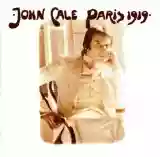
The most attentive will surely notice that I am about to diverge on these web pages, at least this time, from my initial idea of reviewing only albums never reviewed here, as I am about to speak again, with great emphasis, about this “Paris 1919” by John Cale, even though it is already among the Deb-exhibits, because it is a cornerstone of my listening experience since I discovered it many decades ago.
A masterpiece, though not sufficiently appreciated, it is a perennial favorite from March '73, born from the gentle and cultured, albeit troubled, creativity of its Author, who, despite being laden with a subtle sadness, embarks on a beautiful journey through a very sweet “English Music”, empowered by its meticulously crafted arrangements and his powerful and at the same time delicate voice, offering us a kaleidoscopic minimalism of enchanting beauty, despite such apparent simplicity.
An experimental and creative artist, in my opinion, John Cale is not widely known, especially for this work, although so melodically accessible, but rather for his diverse musical interpretations, among rock, pop, punk, classical, and avant-garde music, as well as for important soundtracks, and also for his invaluable contributions to the works of Artists like The Stooges, Nico, Patti Smith, Nick Drake and Jonathan Richman.
To the best-informed, besides the splendid “Paris 1919” discussed here, he is more widely known, in addition to his past, as a prominent figure of the late '60s New York epic, already a founding member of the Velvet Underground alongside Lou Reed, whose shadow he has always endured despite his own great value.
In short, a brilliant Artist, though introverted, he is the Protagonist here of an excellent performance such as “Paris 1919”, the listening of which, due to an excess of perfection, flows so quickly that, in the case of first times, it is impossible to fully appreciate it, so much so that you find yourself listening to it again immediately afterwards, knowing that it will never bore you, at least for the writer.
Except for one or perhaps two songs that lie there as fillers, everything flows perfectly and charmingly, without any hesitation, thanks also to the contribution of talented session men, among whom, extracted from the sanguine sounds of the Little Feat of which they are part, excel true number ones like Lowell George on electric and acoustic guitar, Bill Payne on keyboards, and Richie Hayward on drums, joined equally by the great Wilton Felder of the Jazz Crusaders on bass and saxophone, and Chris Thomas, famous engineer and producer, on percussion.
Rich in refined and delicate melodies, John Cale, having abandoned experimentalism, conducts in just 31' and 19'', the duration of the original version, a compendium of perfect arrangements, enriched in its grooves by small great musical gems, of which I am about to write my very modest Bignami below, with the talent of the last of the reviewers.
With a light and melancholic proceeding, it is the ballad “A Child's Christmas In Wales” that has the burden of starting Side A, pleasantly bringing us back to splendid past sounds.
With the same Music Appeal, but more folk-like and airy, it continues with “Hanky Panky Nohow”, masterfully immersed in its naive and melodious chant.
Equally magical, the orchestral “Endless Plain Of Fortune” echoes immediately after, perfect and moving, incredibly poignant and dramatic, capable of bringing you back to your most distant memories with the force of a well-placed punch in the stomach.
The sequence continues melancholically, I would say perfectly, with the simple and ethereal “Andalucia”, melodiously constructed between one faint chord and another.
Side A concludes with the dissonant and filler hard-rock “Macbeth”, musically “awkward” compared to the rest of the perfect state of the art, though played to perfection.
With the elegant and orchestral title track “Paris 1919”, I would say the emblem of this Album par excellence, Side B restarts magnificently, confirming the enchantment of the entire work.
Swaying and amusing orchestrations characterize the next somewhat naive “Graham Greene”, charming and easy to listen to, but not as excellent as the best tracks of the Album.
We are at “Half Past France”, the penultimate of the Album, splendid enough to once again deserve our enthusiastic listening, thanks to John Cale who gently oscillates with his own fluctuating vocals as is his custom.
Dreamy and whispering “Antarctica Starts Here”, enriched by the electric piano and the voice of John Cale, and by the central and anguished growing harmonium, concludes the Album appropriately, so much so that it might be considered perhaps his best track.
For those who like John Cale, “Paris 1919” is an essential Album in his discography, wonderful and loving, recommended even to those who know little or nothing about him.
Enjoy Listening Friends !!!
Loading comments slowly
Summary by Bot
Paris 1919 is a beautifully crafted album by John Cale, blending delicate orchestral arrangements with melancholic songwriting. The review highlights the album’s timeless appeal and refined melodies, praising its emotional depth. It also acknowledges a small flaw in a couple of filler tracks but overall finds the work a masterpiece. The album’s accessibility and musical richness make it essential listening for new and existing fans alike.Tracklist Lyrics Videos
John Cale
John Cale is a Welsh musician, composer and producer, and a founding member of the Velvet Underground. His solo work spans orchestral songcraft, raw balladry, rock experimentation, and later electronic-driven albums.17 Reviews
Other reviews
By psychrockblues
"Paris 1919 is the most European album John Cale has ever recorded."
"The creative pinnacle of the work is the 'title-track' itself: the driving accompaniment of the violins and the refined melody are the perfect recipe for an absolute masterpiece."
