
 •
Rating:
•
Rating:
THE REVIEW
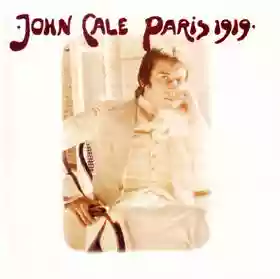
What Cale hinted at in "Vintage Violence," is radically forgotten in "Paris 1919."
The music is no longer the same: the viola that once accompanied guitar and drums is swallowed by the entire orchestra, the sound gradually approaches that of Europe, and the electric guitar finally (though only occasionally) explodes.
"Paris 1919" is the most European album John Cale has ever recorded: the sweet ballads, the orchestral arrangements, recall a typically "British" style of music, a music foreign to the influences that the American Sound exerted in previous works. From the very beginning, with the engaging riff of "Child's Christmas in Wales," the musician takes us back in time, to his beloved Wales, blending this atmosphere of joy with nostalgia for his homeland. The melancholic vein becomes increasingly pronounced in the moving "Hanky Panky Nohow" (what a piece!), and in the gloomy "The Endless Plain Of Fortune."
"Andalucia" clearly echoes the melancholic tones of the first track, while the sighs of "Antarctica Starts Here" and the melody of "Half Past France" complement the rest of the album. Great importance should be given to "Macbeth," which is undoubtedly one of the most aggressive tracks in the entire "caleian" repertoire (only with the subsequent "Sabotage" will we encounter such a raw sound again). The creative pinnacle of the work is the "title-track" itself: the driving accompaniment of the violins and the refined melody are the perfect recipe for an absolute masterpiece. Only "Graham Greene" does not hold up to the other songs, resulting in a cloying ditty.
Thus, I conclude my review, avoiding clichés like "John Cale is a genius"… "his music will never die"… and so on, leaving any further judgment to you.
Loading comments slowly
Summary by Bot
Paris 1919 marks a distinct shift in John Cale's music toward a rich, orchestral European style. The album blends nostalgic ballads with melancholic melodies. Standout tracks include the title track and Macbeth. Despite one weaker song, the album is regarded as a masterpiece that highlights Cale’s creative peak.Tracklist Lyrics Videos
John Cale
John Cale is a Welsh musician, composer and producer, and a founding member of the Velvet Underground. His solo work spans orchestral songcraft, raw balladry, rock experimentation, and later electronic-driven albums.17 Reviews
Other reviews
By Bearry
A masterpiece, though not sufficiently appreciated, it is a perennial favorite from March ’73.
The listening of it, due to an excess of perfection, flows so quickly that, in the case of first times, it is impossible to fully appreciate it.
