
 •
Rating:
•
Rating: THE REVIEW
Ziggy Stardust is an invention, a fictional character, Jobriath is the demonstration of how reality is much more prosaic and ruthless than imagination, of how rock 'n' roll and everything that revolves around it often proves to be a deceitful and mocking trap... it is a tale of splendor and misery, that of this talented and forgotten artist, who touched the sky with his finger only to be brutally thrown off without a rock 'n' roll suicide to immortalize him for posterity. Bruce Campbell, the man behind the makeup and extravagant costumes of Jobriath, had three great misfortunes, one consequential to the other: being born on the wrong side of the Atlantic Ocean, not being shrewd and calculating enough to realize it, and getting caught up in the cynicism of the record industry which, given the (very predictable and expected) failure of the marketing operation organized around him, decided to metaphorically throw him into the trash.
Creating a clone of David Bowie, the David Bowie of “Hunky Dory” and “Ziggy Stardust” in 1973, in the USA, hoping to achieve the same success and commercial response. A stupid operation, inevitably destined for failure, and indeed Jobriath turned out to be the biggest marketing flop in the United States since the Edsel. I wonder if the people at Elektra Records under the vampire David Geffen ever asked themselves a very simple question about the musical tastes of the average American before investing loads of money in creating the Jobriath phenomenon; the average American of those years loves the country of the Grand Ole Opry, votes Nixon, believes in the WASP dogma, and sometimes proudly displays the Confederate flag. A character like Jobriath, also known for being the first openly gay rock musician to sign a major label deal, with his explicit lyrics and androgynous look, was something totally alien and unsellable, at least as a mass phenomenon.
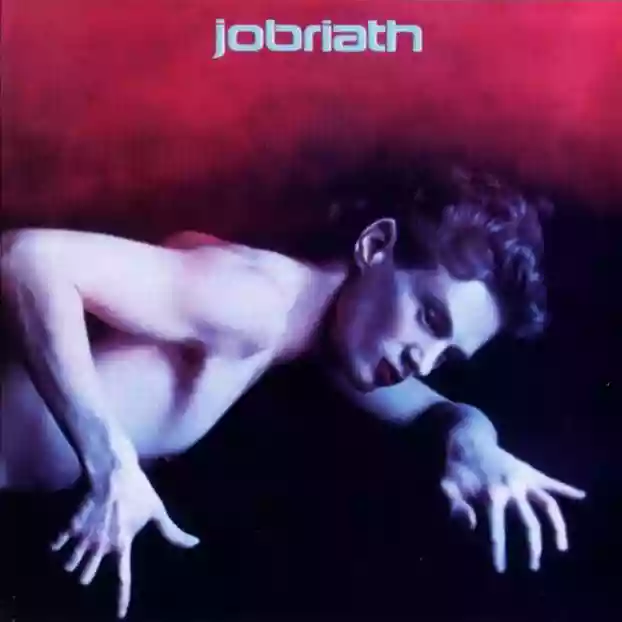
Launched by a massive and grandiose press and image campaign, an 'hype' to use a technical term, Jobriath's first album presents itself as a sonic blend between the aforementioned Bowie and Marc Bolan's T-Rex, in England the genre is at the peak of splendor, in the same year Donovan also throws himself into it with “Cosmic Wheels,” and it’s truly a beautiful record, the record of a talented artist, and it hurts to think how badly it was burnt out. Jobriath is an excellent pop composer, relying as much on guitars as on piano, a voice not exceptional in the strict sense but scratchy, expressive, and endowed with great theatrical charisma and his glam rock is refined and elegant even if catchy and easily accessible. The S&M anthem "Take Me I'm Yours", enriched by soul choirs and perhaps the most stylistically representative and prominent track on the album, stands out, but the dish is rich and very tasty. The highlights include the majestic ballad "Be Still", the riff and the pulsating bass of an engaging ride like "World Without End", the almost neoclassical refinement of "I’maman", the galloping rock 'n' roll of "Rock Of Ages", the "Hang Onto Yourself" of the album to make a comparison with “Ziggy,” the slight folk hints of "Morning Star Ship" (Like Marc Bolan, also our artist began his career in the early '70s in an obscure folk band, Pidgeon), and the brief and fascinating piano interlude of "Movie Queen".
The success of the album, despite the predictions of the hungry executives at Elektra, who were already savoring the creation of a new global phenomenon, was predictably negligible, and Jobriath, after an equally valid "Creatures Of The Street," left the music-biz, attempting unsuccessfully to reinvent himself as an actor and finally as a cabaret performer and gigolo, in the most total anonymity; being thrown to the sharks in this way and then ostracized like a pariah, this was the fate that the mythological world of rock, which is anything but golden, reserved for this boy as talented as he was fragile, who died of AIDS in 1983, exactly ten years after the release of this album, just when Morrissey offered him to return to the stage to open the concerts of his Smiths, the same Morrissey who subsequently took care of the reissue of his two albums, thus ensuring at least a worthy tribute to this victim of the music business.
Loading comments slowly
Summary by Bot
Jobriath’s 1973 debut album showcases his talent in glam rock, blending Bowie and T.Rex influences with a theatrical style. Despite a grand marketing campaign, the album failed commercially due to cultural and industry factors. The review highlights his role as a pioneering openly gay rock musician and the tragic fallout of his career in a hostile environment. The record remains a richly crafted but overlooked gem in rock history.Tracklist Lyrics Videos
Jobriath
American glam-rock performer celebrated for his 1973 debut 'Jobriath' and a theatrical, Bowie-influenced style; later marginalized and died in 1983.01 Reviews
